Your exchanger is fouling faster, outlet temperatures are drifting, and the shutdown window is short. Buying new feels like the safe move, until the quote and lead time arrive.
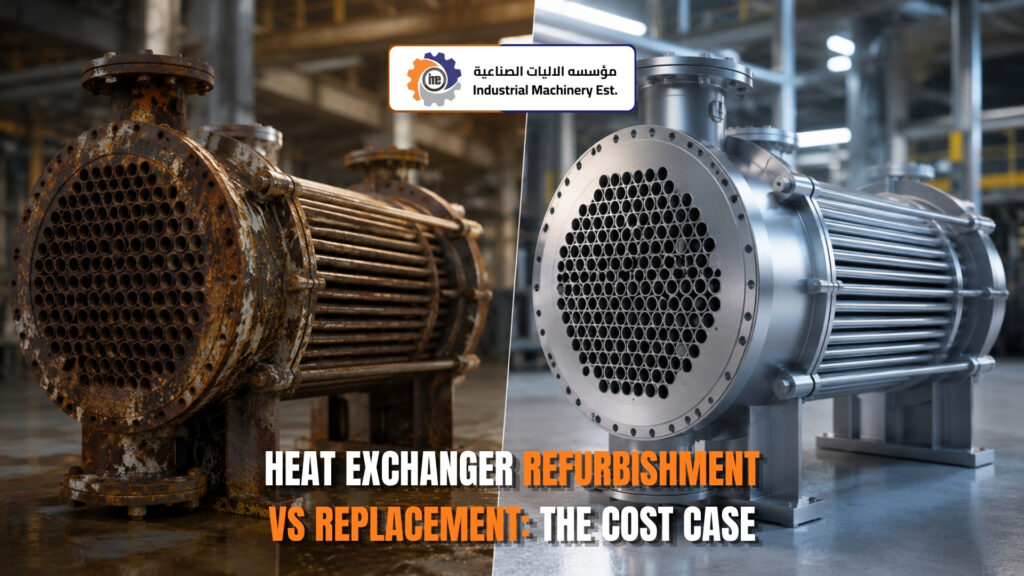
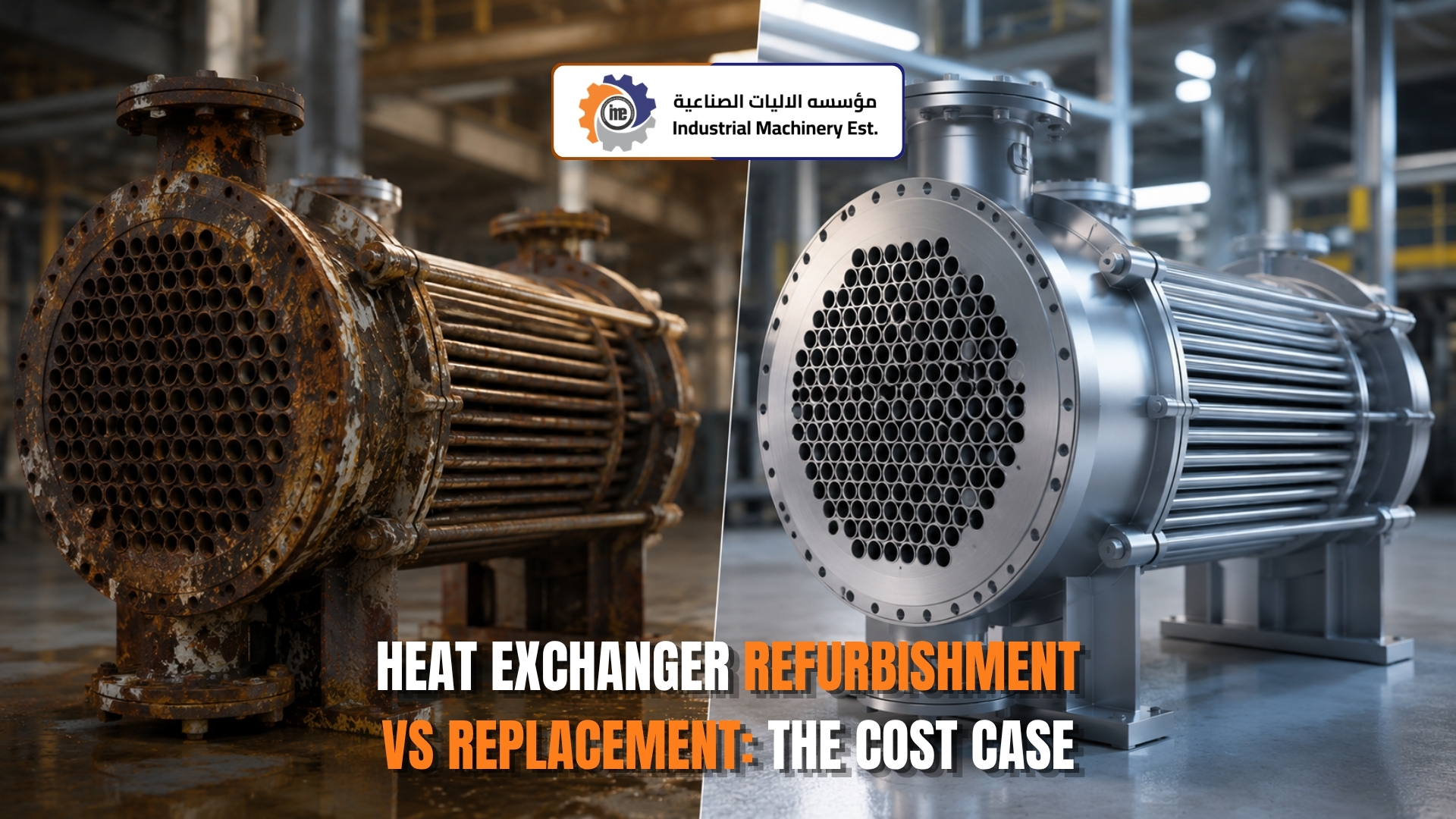
If the shell, tubesheets and nozzles are still sound, heat exchanger refurbishment restores performance at a fraction of the replacement price. Replacement only wins when the pressure envelope is damaged or the process has outgrown the design. Read on for the full cost breakdown.
Why the Cost Question Comes Up
Most shell and tube units are designed for 15 to 25 years, but real service life depends on fluid chemistry, velocity and cleaning history. Tube walls thin, baffles wear, and performance slips long before the shell itself fails. That gap is where money is saved or wasted. Choosing heat exchanger refurbishment over a new unit is a techno commercial decision, not a habit.
What Heat Exchanger Refurbishment Includes
A proper heat exchanger refurbishment is far more than a wash and a hydrotest. Typical scope covers:
- Chemical or mechanical cleaning to strip scale, coke and biofouling
- Eddy current or IRIS inspection to map real tube wall loss
- Tube plugging for isolated leaks, or full retubing when loss is widespread
- Tubesheet resurfacing, baffle and tie rod repair, new gaskets
- Hydrostatic testing to ASME Section VIII before return to service
Also Read: Process Of Storage Tank Chemical Cleaning
Where the Savings Come From
Shells, channels, tubesheets and nozzles are the expensive, long lead items. Heat exchanger refurbishment reuses them, so you pay mainly for tubes, labour and testing. Retubing a bundle usually lands well below a new unit of the same duty, and skips the procurement cycle. On a congested plot, heat exchanger refurbishment also avoids rigging and pipework costs that never appear on a vendor quote.
When Replacement Is the Better Buy
Heat exchanger refurbishment is the wrong answer in a few clear cases. Replace the unit when the shell sits close to minimum wall thickness, or when tubesheet ligaments are cracked and corrosion has reached the pressure envelope. Replace it when throughput has grown past the original design, because heat exchanger refurbishment only returns you to a duty you have already outgrown. Replace it when the tube material was wrong from day one and failures keep repeating.
The Costs Plants Forget to Count
Heat exchanger refurbishment economics live in life cycle cost, not invoice value. A fouled exchanger burns extra fuel or steam every hour it runs, and that energy penalty often dwarfs the repair bill. A heat exchanger refurbishment planned inside a turnaround costs far less than an emergency replacement mid run. Add disposal, spare holding cost and warranty position.
A Simple Decision Rule
Start with data, not opinion. Get NDT results, remaining wall thickness and a fouling trend before asking for prices. Then apply one test: if the pressure envelope is sound and the duty still suits the design, refurbish. If either fails, replace. In the Eastern Province, heat exchanger refurbishment wins most of the time, because imported bundle lead times are long and turnaround windows tight.

Getting Your Own Numbers
Industrial Machinery Est. has supported petrochemical, refining and power plants since 1990 with chemical cleaning, retubing and complete heat exchanger refurbishment. Send us your datasheet and last inspection report, and we will tell you honestly whether heat exchanger refurbishment or replacement costs less per year.