A single corroded tube can shut down an entire process line, and by the time a leak shows up, the damage has been building for months. Unexplained efficiency loss, sudden tube failures, and rising maintenance bills are the everyday reality for teams running shell and tube units in harsh conditions. The root cause is almost always one of the recognized heat exchanger corrosion types, and knowing which one you face changes how you fix it.
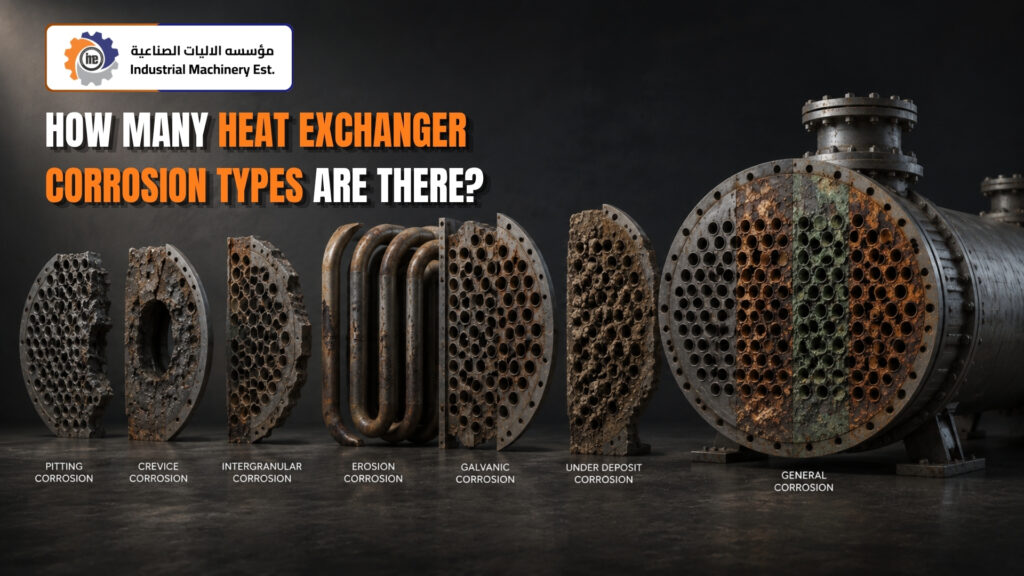
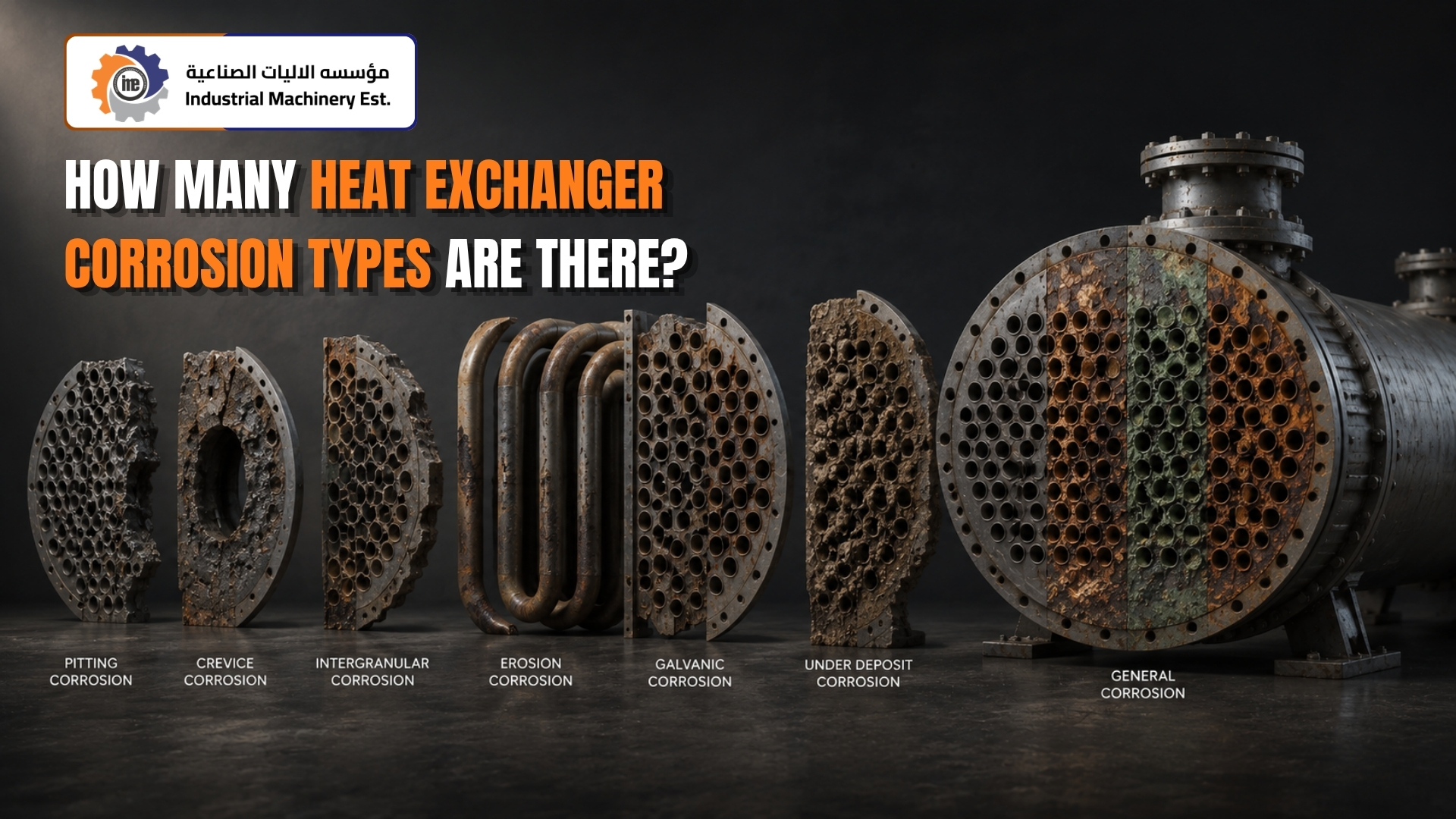
There are eight major corrosion mechanisms that engineers commonly track before heat exchanger cleaning, ranging from uniform metal loss to microbiologically driven attack. Each behaves differently, targets different materials, and needs its own prevention strategy. If you only needed the quick list, you now have it. If you want to understand how each type forms and how to stop it before it becomes a shutdown, keep reading below.
Why Counting Corrosion Types Actually Matters
Plant engineers rarely lose a heat exchanger to a mystery cause. Most failures trace back to a specific, documented mechanism that could have been caught earlier with proper inspection. Understanding the full range of heat exchanger corrosion types gives maintenance teams a checklist instead of guesswork.
1. Uniform Corrosion
Uniform corrosion, also called general corrosion, spreads evenly across the metal surface rather than attacking one spot. It is caused by prolonged contact with acids, alkalis, or hot fluids containing sulfur compounds. Over time it thins tube walls until they can no longer hold pressure. This is the most predictable of all heat exchanger corrosion types, easier to monitor through regular thickness surveys.
2. Pitting Corrosion
Pitting is far more dangerous than uniform attack because it is localized and hard to detect visually. Small pits form on the surface and dig deep into the wall, often under deposits or in stagnant zones with poor flow. A tube can look almost new outside while a pinhole leak forms underneath. Chloride-rich cooling water is a classic trigger for this in stainless steel tubing.
3. Crevice Corrosion
Crevice corrosion develops in tight, shielded gaps such as under gaskets, tube supports, or scale deposits where oxygen cannot circulate freely. The stagnant chemistry inside becomes more acidic over time, accelerating metal loss in that hidden pocket. Because the damage sits out of view, it is one of the harder heat exchanger corrosion types to catch during a routine check. Regular cleaning and tighter fit tolerances reduce the risk.
4. Galvanic Corrosion
This occurs when two dissimilar metals sit in contact while an electrolyte, such as water or steam, is present. The more active metal becomes the anode and corrodes faster than it would alone, while the less reactive metal is protected. Mixed-metal tube bundles are particularly prone to this. Careful material pairing and insulating gaskets are the standard fix.
5. Erosion Corrosion
High-velocity flow carrying suspended solids or bubbles can wear away the protective oxide layer on a metal surface. Once that layer is stripped, fresh metal underneath corrodes rapidly, and the cycle repeats. Bends, tube inlets, and turbulent zones are the usual failure points. Slowing flow velocity and adding impingement plates are common fixes.
6. Stress Corrosion Cracking
This happens when a susceptible metal is under tensile stress while exposed to a specific corrosive environment, such as chlorides acting on austenitic stainless steel. Cracks can grow through the wall with very little visible surface damage beforehand. This makes it one of the more unpredictable heat exchanger corrosion types, since failure can happen suddenly without warning.
7. Intergranular Corrosion
Intergranular attack targets the grain boundaries within the metal rather than the surface as a whole, often after improper heat treatment or welding. Chromium carbide can form along these boundaries in stainless steel, leaving the surrounding area depleted and vulnerable. The metal can look sound outside while losing strength internally.
8. Microbiologically Influenced Corrosion
Bacteria and other microorganisms can colonize wet surfaces, forming biofilms that create chemical conditions different from the bulk fluid. Sulfate-reducing bacteria are a well-known culprit behind rapid, pitting-like attack under these biofilms in cooling water systems. This often gets overlooked until fouling and corrosion appear together, which is why biological monitoring belongs in any serious inspection program.
How These Types Overlap in Real Equipment
In practice, a single failed tube often shows more than one mechanism at work. A crevice can start the damage, chlorides can accelerate it into pitting, and stagnant flow can invite bacteria to finish the job. That overlap is why relying on one prevention method rarely works. A layered approach covering materials, water chemistry, and inspection frequency addresses the full spectrum of heat exchanger corrosion types rather than just one.
Practical Steps to Manage Heat Exchanger Corrosion Types Risk
A few consistent habits go a long way toward controlling damage across all of these different mechanisms, no matter which fluids or metals are involved:
- Schedule regular thickness and visual inspections, focusing on crevices and low-flow zones
- Match tube and shell materials to the actual process chemistry, not just cost
- Control cooling water chemistry, including chlorides, pH, and biological activity
- Keep flow velocities within the design range to avoid erosion damage
- Apply protective coatings or cathodic protection where dissimilar metals are unavoidable
Also Read: Complete Inhibited Acids In Chemical Cleaning Explained
Final Thoughts
So, how many heat exchanger corrosion types are there? Eight mechanisms cover most real-world failures, though several often act together on the same unit. Knowing the difference between uniform thinning, pitting, crevice attack, galvanic action, erosion, stress cracking, intergranular attack, and microbial corrosion gives engineers a real starting point for diagnosis.
Pair that with routine inspection and the right materials, and most failures become preventable long before they turn into a shutdown.