A reliability study commissioned by Alfa Laval covered 309 plate heat exchangers in offshore oil and gas service and found that external leaks came mainly from gaskets that had shifted out of place or worn out. In a petrochemical plant, the part that holds those gaskets firmly in place is the pressure plate. When it is set correctly, your exchanger stays sealed and efficient. When it is not, you face leaks, lost heat transfer and unplanned shutdowns.
Service Page: Plate Heat Exchanger Cleaning Services
What Is a Pressure Plate in a Plate Heat Exchanger?
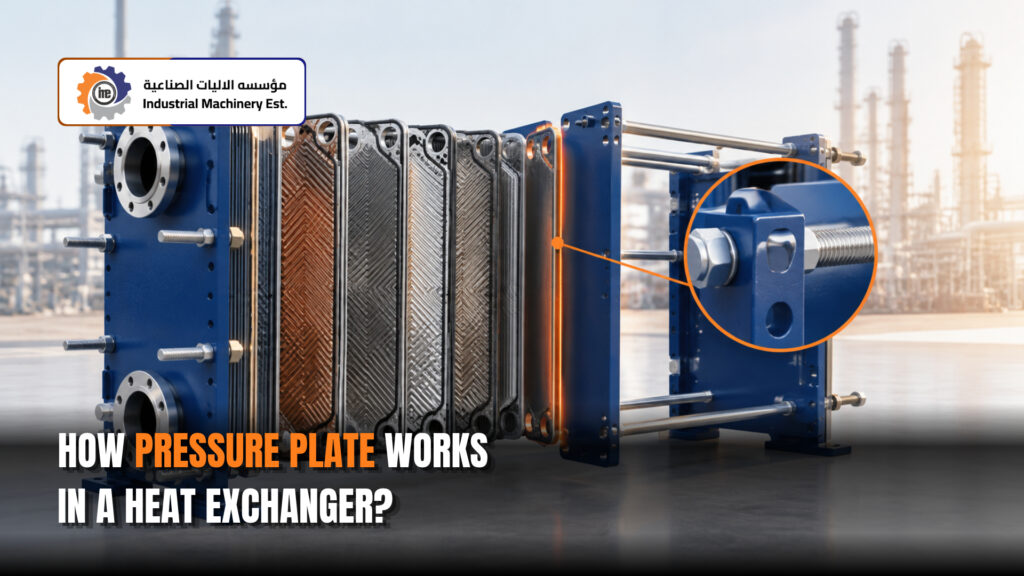
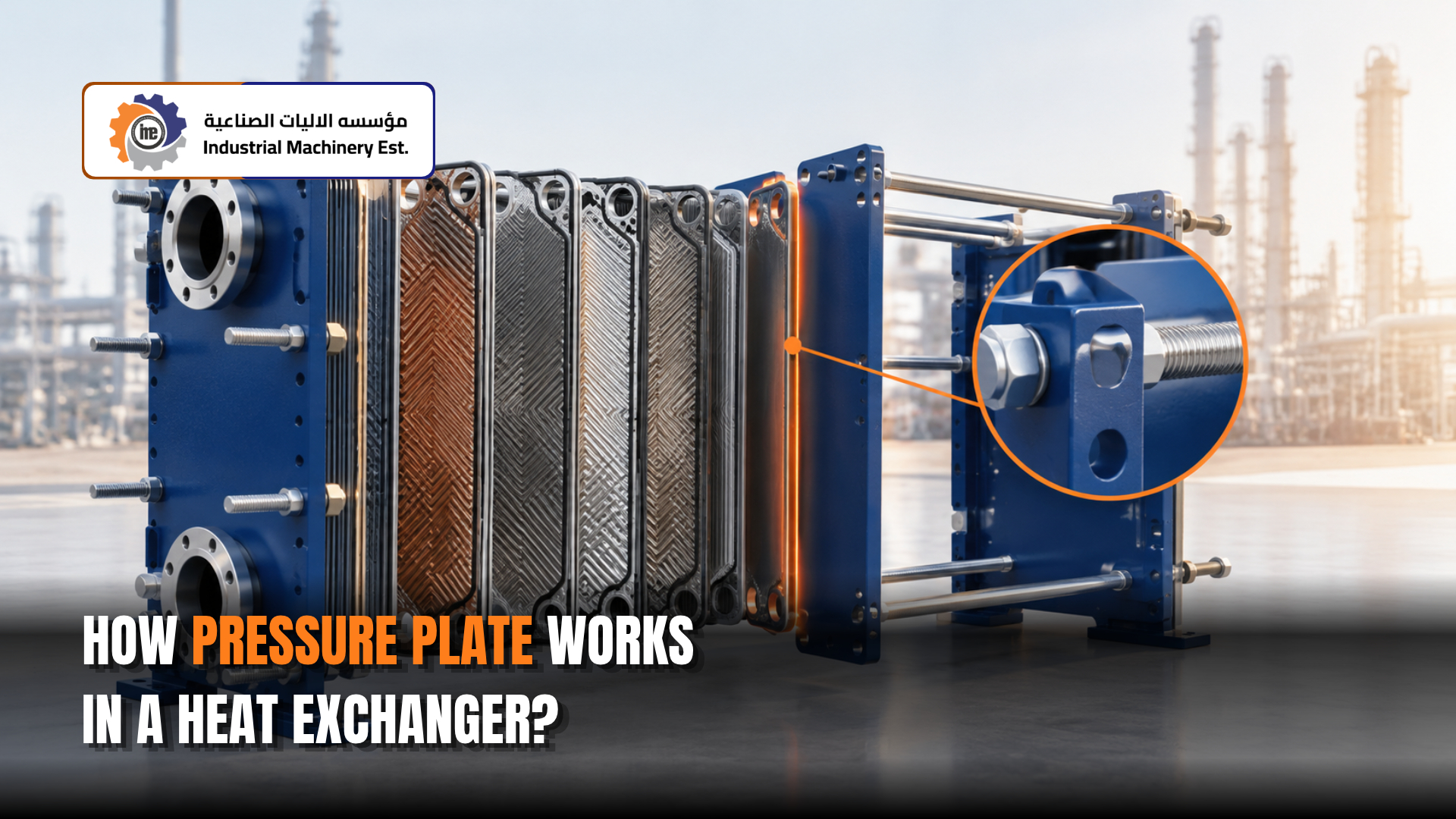
The pressure plate is the movable end plate of a gasketed plate heat exchanger. It sits opposite the fixed frame plate, with the heat transfer plates packed between them. Tightening bolts pull the pressure plate toward the frame plate and squeeze the plate pack so the gaskets seal.
It works together with these parts:
- Frame plate: the fixed end plate, which usually carries the inlet and outlet nozzles
- Plate pack: the corrugated plates and gaskets that form the flow channels
- Carrying bar: the top bar that holds the weight of the plates and the pressure plate
- Guide bar: the bottom bar that keeps the plates in line
- Tightening bolts: the long bolts that pull both end plates together
How the Pressure Plate Works, Step by Step
- The heat transfer plates hang from the carrying bar and sit in the guide bar.
- The pressure plate moves along the carrying bar, often on a roller, and rests against the last plate.
- Technicians tighten the bolts evenly, which moves the pressure plate toward the frame plate.
- The plate pack is compressed until it reaches the tightening dimension given by the manufacturer.
- At this dimension, the gaskets are squeezed just enough to seal, and the plates support each other at their contact points.
You Might Also Wanna What Is the Function of Port Liners in a Heat Exchanger?
How the Pressure Plate Keeps the Plates Sealed
- It spreads the bolt force evenly across every gasket in the pack.
- It holds the gaskets in their grooves so process pressure cannot push them out.
- It is thick and rigid, so it resists bending when the process pressure tries to push the plates apart.
If the pressure plate is not parallel to the frame plate, one side of the pack is squeezed harder than the other. The loose side is where leaks usually start.
How the Pressure Plate Keeps the Plates Aligned
The plates and the pressure plate share the same carrying bar and guide bar, so the whole pack stays in one straight line. Even compression stops plates from sliding, which keeps the ports lined up and the corrugations meeting at the right points. Poor alignment leads to uneven flow, hot spots and damaged gaskets.
Why Correct Compression Matters in Petrochemical Service
| Condition | What Happens |
| Under-tightened | Gaskets do not seal, causing external leaks of hydrocarbons or chemicals |
| Over-tightened | Gaskets get crushed and plates can deform or crack, causing internal leaks between fluids |
| Correctly tightened | Stable channel gap, design flow, full heat transfer and safe operation |
The right channel gap keeps flow velocity and turbulence at design levels, which is what gives a plate heat exchanger its high heat transfer rate.
Good Practices for Plant Teams
- Tighten bolts in the sequence the manufacturer gives, usually in diagonal pairs and in small steps.
- Measure the distance between the end plates at the top, bottom and both sides to confirm they are parallel.
- Never go below the minimum tightening dimension.
- Keep the carrying bar and guide bar clean, and check that the roller moves freely.
- Replace bolts with damaged threads before reassembly.
Quick Answers
What does a pressure plate do?
It compresses the plate pack against the frame plate so the gaskets seal and the plates stay aligned.
Can I tighten the bolts more to stop a leak?
No. Extra tightening can crush gaskets and crack plates. Find the cause first, such as a worn or shifted gasket.
Does the pressure plate have nozzles?
In single pass units, nozzles are usually on the frame plate only. Multi pass units can have connections on the pressure plate as well.