Corrosion costs the world about US$2.5 trillion every year, roughly 3.4% of global GDP, according to NACE International’s IMPACT study. The same study found that good corrosion prevention could cut 15 to 35% of that damage.
In a plate heat exchanger, corrosion often starts in a spot few people check: the inlet and outlet ports of the frame plate. A small sleeve called the port liners stands between your process fluid and a carbon steel frame.
When it fails, the frame rusts from the inside, leaks start at the nozzles, and a cheap liner change can turn into a frame replacement and an unplanned shutdown.
Quick Answer: What Does a Port Liner Do?
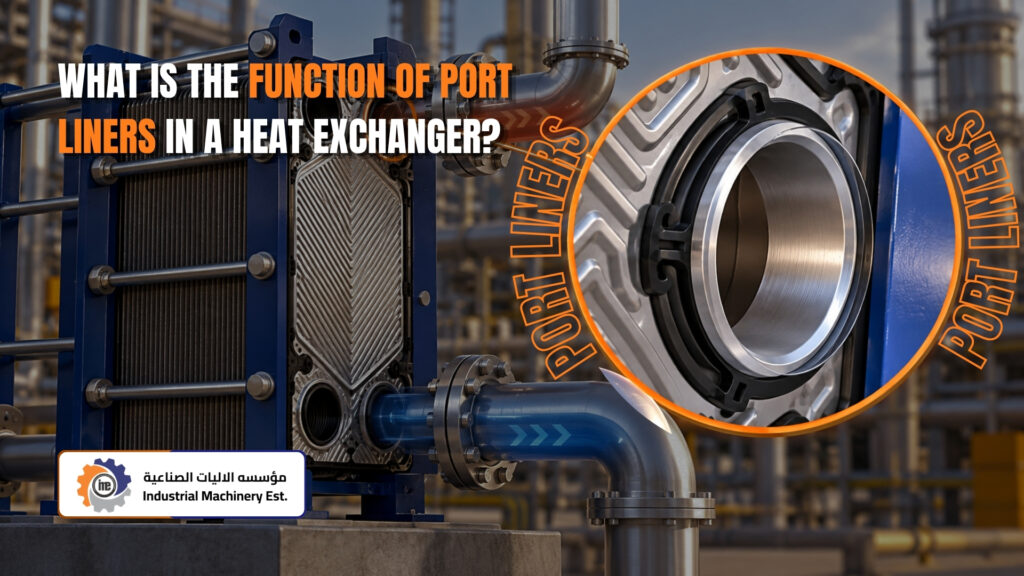
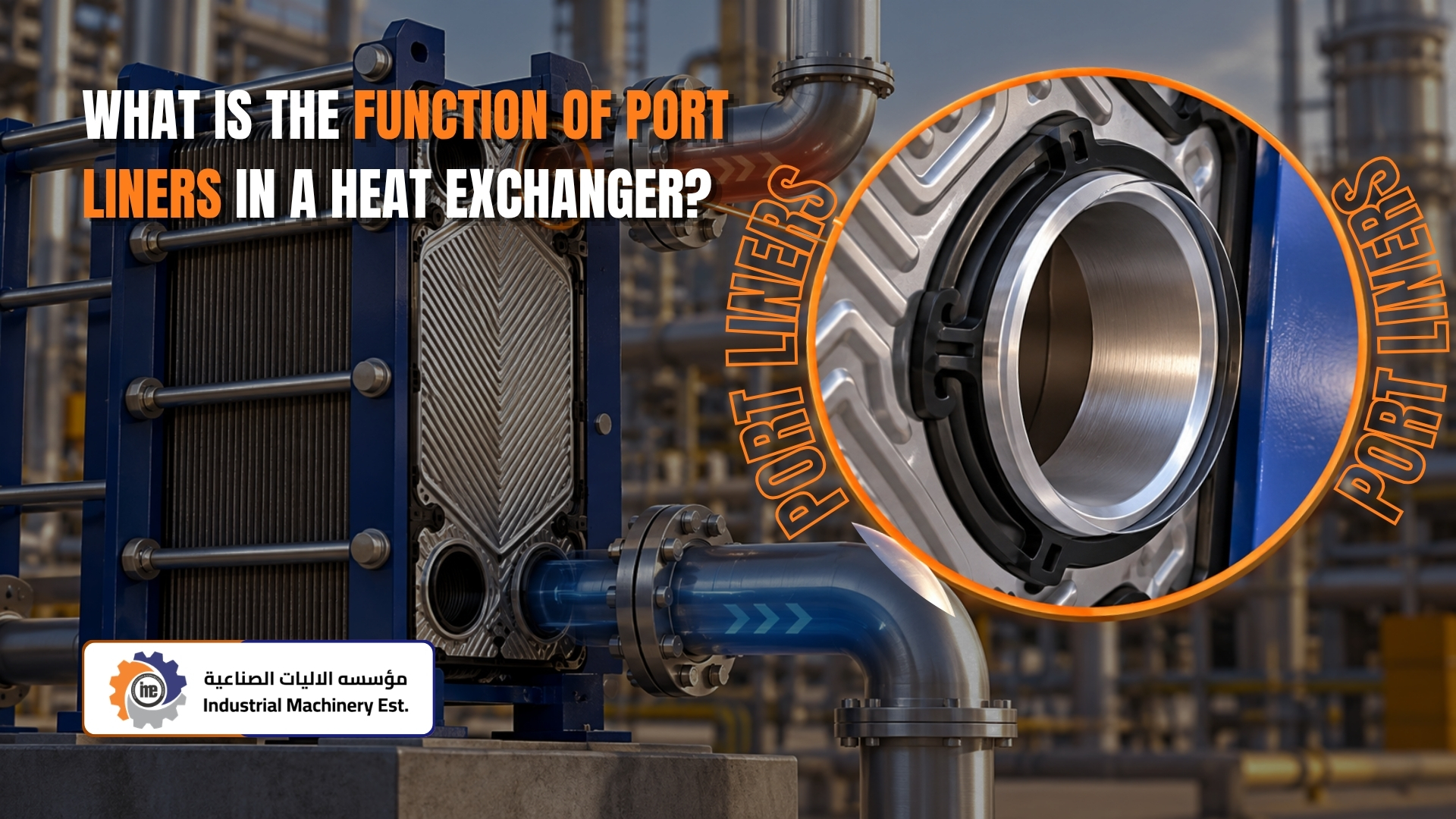
A port liner is a protective sleeve fitted inside the inlet and outlet holes (ports) of the frame plate and pressure plate of a plate heat exchanger. Its main job is to stop the process fluid from touching the frame material.
In simple terms, the port liners:
- Protects the carbon steel frame from corrosion and erosion
- Gives the first heat transfer plate a clean, smooth surface to seal against
- Keeps rust and iron out of your process fluid
- Helps keep the nozzle connection leak free
Where the Port Liner Sits in a Plate Heat Exchanger
A gasketed plate heat exchanger has a pack of thin plates squeezed between two thick end plates:
- Frame plate (fixed plate): holds the main pipe connections
- Pressure plate (movable plate): may also have connections in multi-pass designs
The heat transfer plates are made of stainless steel or titanium because they touch the fluids. The frame plates are much thicker to carry heavy loads, so making them from the same resistant materials would be very expensive. Most frames are carbon steel instead.
That creates a weak point: every port hole drilled through the frame exposes bare carbon steel to the fluid. The port liner covers exactly that spot.
How a Port Liner Works, Step by Step
A typical liner has a cylindrical body and flanges that sit on each side of the frame or pressure plate. Here is how it does its job:
- The sleeve covers the bore. The cylindrical part lines the full inside wall of the port hole, so the fluid flows through the liner, not through bare steel.
- The inner flange sits against the plate pack. This thin flange rests between the frame plate and the first heat transfer plate (often called the start plate).
- The start plate gasket seals on the liner. The gasket of the first heat exchange plate seals against the liner flange, not against the carbon steel.
- The outer flange faces the pipe. On many designs, the outer flange forms the sealing face for the piping flange gasket, so the connection side is protected too.
The result: from the pipe to the plate pack, the fluid only touches corrosion resistant material.
5 Jobs a Port Liners Do for Your Plant
1. Stops frame corrosion
This is the main function. Cooling water, seawater, acids, and caustic streams would attack a bare carbon steel bore quickly.
2. Protects against erosion
Fluid enters the exchanger at its highest speed through the ports. Fast flow, especially with solids or sand, wears down bare metal. The liner takes this wear instead.
3. Provides a reliable sealing surface
A pitted or rusted frame surface will not seal. The liner keeps a smooth face for both the start plate gasket and the nozzle gasket.
4. Keeps the process clean
Without a liner, rust and iron particles from the frame enter the fluid. This can contaminate product, foul the plates, and affect downstream equipment.
5. Lowers equipment cost
Liners allow a carbon steel frame to be used with aggressive fluids, instead of building the whole frame from expensive alloys.
Common Port Liners Materials and Where Each Fits
| Liner Material | Typical Use |
| Stainless steel (316/316L) | Clean water, mild chemicals, general service |
| Titanium | Seawater, brackish water, chloride-rich cooling water |
| Nickel alloys (such as Alloy C-276) | Strong acids, hot chlorides, harsh chemical streams |
| EPDM rubber | Water, steam, many water-based chemicals |
| NBR (nitrile) rubber | Oils and many hydrocarbon services |
| PTFE / plastic lined | Very aggressive chemicals at moderate temperatures |
Simple rule: the liner material should match or exceed the corrosion resistance of the heat transfer plates in the same service. Always confirm the final choice with the exchanger manufacturer and your materials engineer.
Why Petrochemical Plants Put Port Liners Under Extra Stress
Port liners in petrochemical service face harder conditions than in most industries:
- Seawater cooling in coastal plants brings high chlorides that attack stainless steel
- Acidic and caustic streams can eat through the wrong liner material fast
- Thermal cycling during startups and shutdowns loosens liners and cracks rubber
- Chemical cleaning can attack liners if the cleaning chemical is not compatible with the liner material
- Pipe loads and misalignment push on the nozzle and can crack or shift the liner
- High ambient heat speeds up aging of rubber liners
Early Warning Signs of a Failing Port Liner
Spotting these signs early is what keeps a small repair small:
- Rust stains or brown streaks around the nozzle or the port area
- Weeping or drips at the connection between the frame plate and the start plate
- Leaks at the pipe flange that come back after gasket changes
- Iron or rust particles showing up in strainers or downstream samples
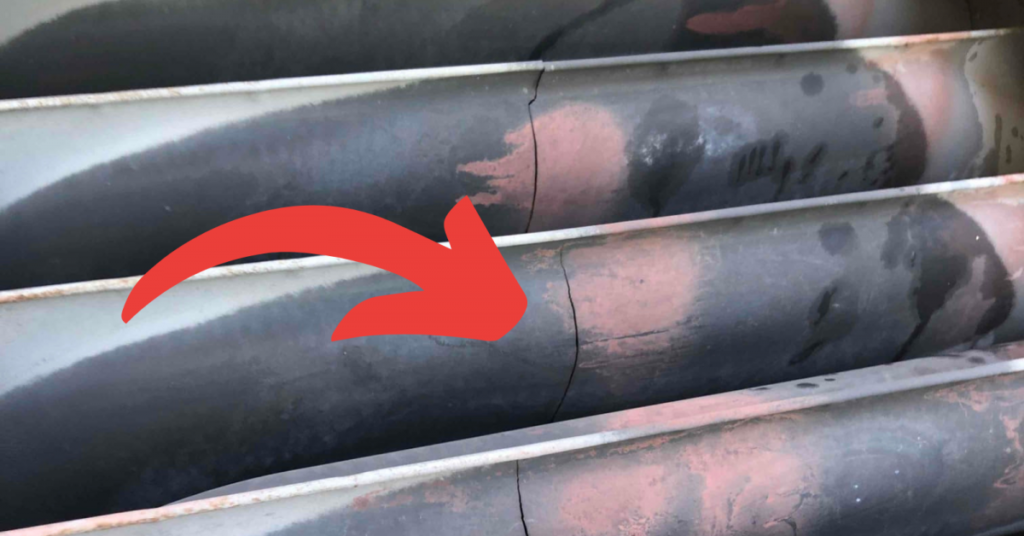
- Bulging, swelling, cracking, or hardening of rubber liners
- Pinholes, pitting, or cracks on metal liners
- A liner that has moved, lifted, or feels loose in the bore
- Start plate gasket not seating properly near the ports
What Happens When Port Liners Problem Is Missed
The real danger is that liner damage is often hidden. Fluid gets behind a cracked or loose liner and attacks the carbon steel where no one can see it. By the time a leak shows up outside, the damage is already done.
Here is how a missed problem usually grows:
- Stage 1: Small crack or pinhole in the liner. Fix: replace the liner.
- Stage 2: Fluid reaches the frame bore and starts crevice corrosion behind the liner. Fix: machine the bore and fit a new liner.
- Stage 3: Frame bore and sealing area are badly corroded. Fix: weld repair or a full frame plate replacement, with long lead times.
- Stage 4: External leak of hot, toxic, or flammable fluid. Result: safety incident risk and an unplanned shutdown.
Catching the problem at Stage 1 costs a liner and a few hours. Catching it at Stage 4 can cost weeks of lost production.
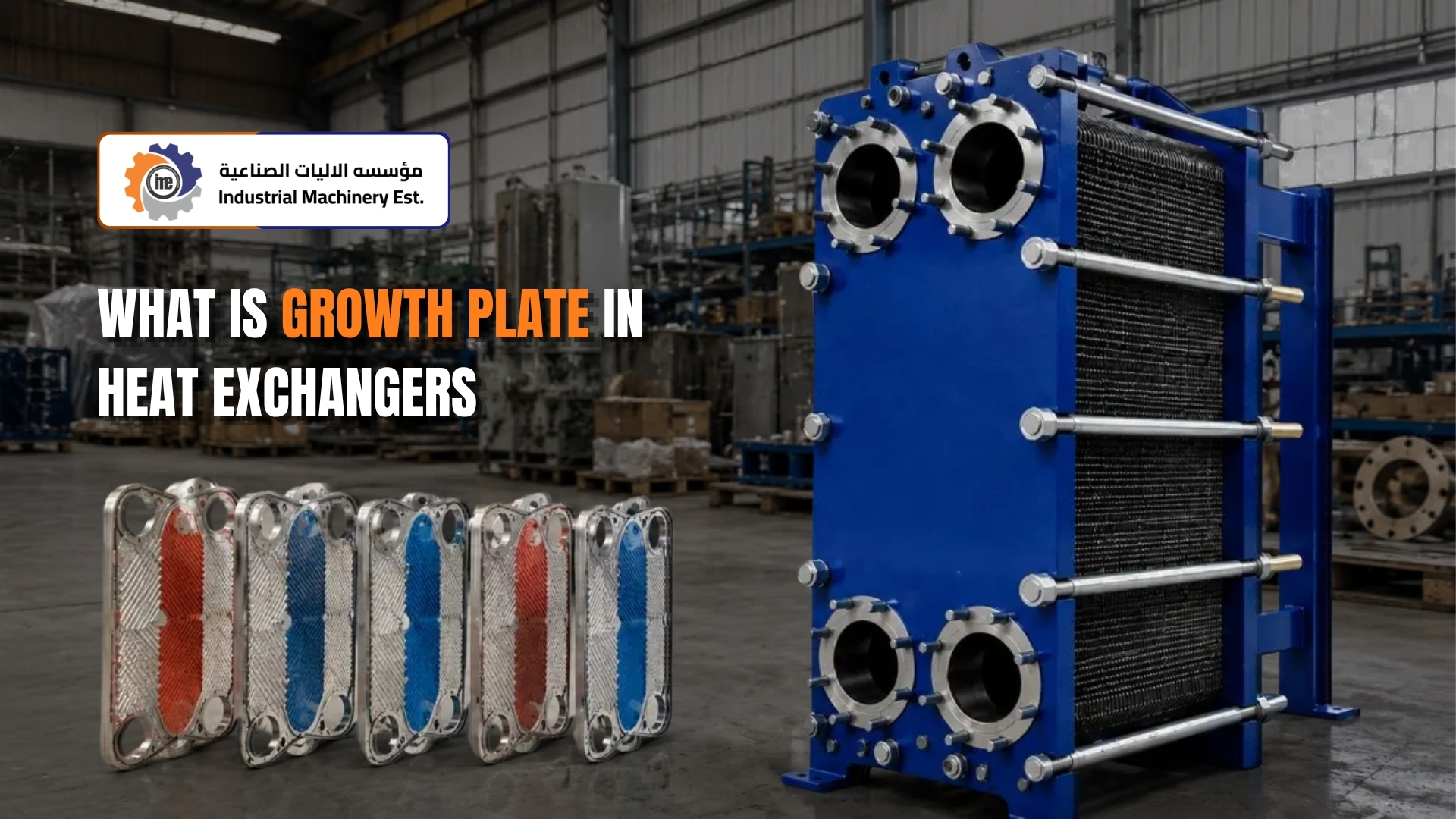
Also Read: What is Growth Plate in Heat Exchangers
Simple Port Liner Inspection Checklist for Shutdowns
Add these checks every time the plate pack is opened:
- Look at every port liner on the frame plate and pressure plate under good light
- Check the liner flange face for pits, scratches, and gasket marks
- Run a hand around the liner bore to feel for roughness or edges
- Confirm the liner is tight and has not shifted or lifted
- Check rubber liners for cracks, swelling, or hardness
- Use dye penetrant testing on metal liners if cracking is suspected
- Look for rust staining around the liner edge, a sign of hidden corrosion
- Check the start plate gasket area that seals against the liner
- Confirm the cleaning chemicals used are compatible with the liner material
- Record the findings and photos so you can track wear between shutdowns
Port Liner vs Port Gasket vs Flange Gasket
These three parts work together but do different jobs:
- Port liner: a sleeve inside the frame plate port that protects the frame from the fluid
- Port (ring) gasket: the gasket on the start plate that seals around the port hole against the liner
- Flange gasket: the gasket between the exchanger nozzle and the plant piping
A leak at the port can come from any of the three, so check all of them before deciding what to replace.
Frequently Asked Questions
What is a port liner in a plate heat exchanger?
It is a metal or rubber sleeve fitted inside the inlet and outlet holes of the frame plate and pressure plate. It stops the process fluid from touching the frame material.
Why do plate heat exchangers need port liners?
Frame plates are usually carbon steel to save cost. Without a liner, corrosive or fast-moving fluids would attack the bare steel at the ports.
What are port liners made of?
Common materials are stainless steel, titanium, nickel alloys, EPDM rubber, NBR rubber, and PTFE. The choice depends on the fluid, temperature, and pressure.
How often should port liners be inspected?
Check them every time the plate pack is opened for cleaning or gasket work, and more often in seawater or acid service.
Can a damaged port liner be replaced without replacing the frame plate?
Yes, if the damage is found early. If corrosion has already eaten into the frame bore, the frame may need machining, weld repair, or replacement.
Do shell and tube heat exchangers have port liners?
The term is mainly used for plate heat exchangers. In shell and tube units, a similar protective role is played by nozzle linings, weld overlays, and tube inlet ferrules that protect tube ends from erosion.
What is the most common cause of port liner failure?
Wrong material selection for the fluid, followed by erosion from high inlet velocity, aging of rubber, and damage during maintenance.