Your heat exchanger ran fine last quarter. Now the outlet temperature is drifting, pressure drop keeps climbing, and the pumps work harder to push the same flow. You cleaned the tubes recently, yet the problem returned faster than before.
In most cooling water and process systems, the cause is organic fouling, a soft and slimy layer of biological or hydrocarbon material that sticks to the tube walls and blocks heat transfer. The short answer is that it needs the right cleaning chemistry, better water treatment, and steady monitoring. Read on for the full picture.
What Organic Fouling Actually Means
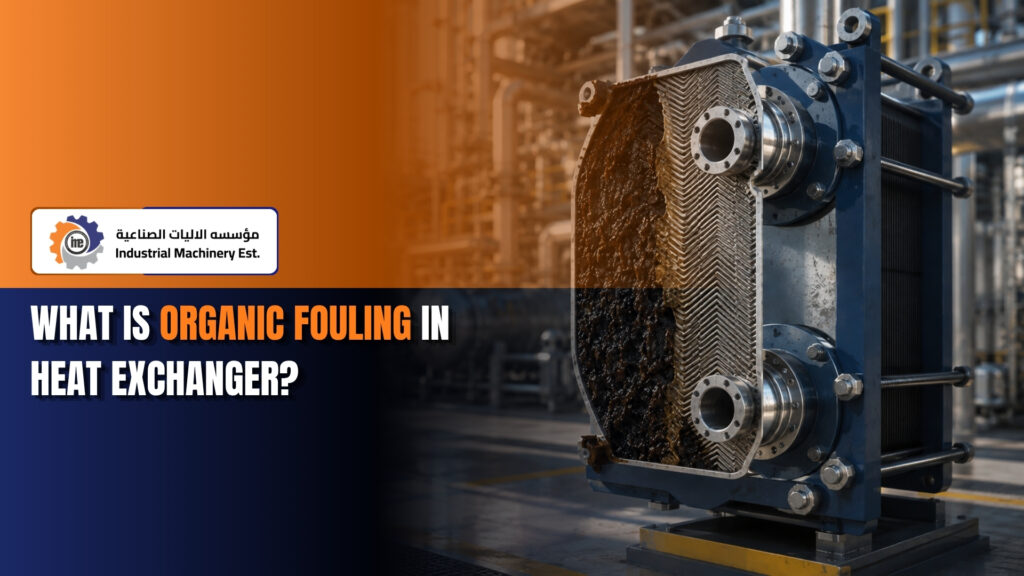
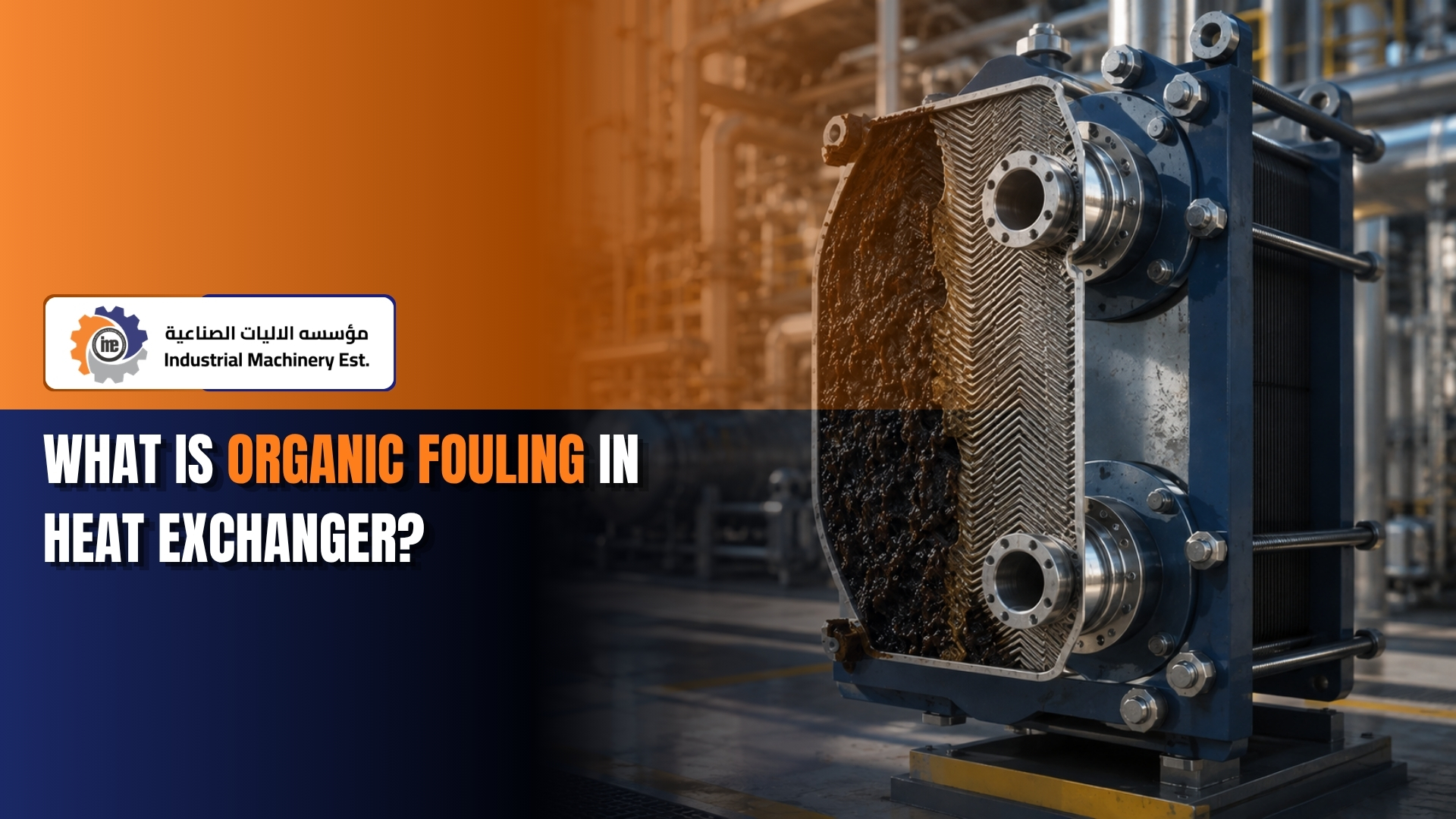
Organic fouling is the buildup of living and carbon based material on heat transfer surfaces. It covers bacteria, algae, fungi, slime layers, oils, greases, and heavy hydrocarbons such as asphaltenes. Unlike hard mineral scale, it usually starts as a thin sticky film. When the exchanger is opened, the surface feels slippery, smells sour, and wipes away under a gloved finger.
The danger is that this soft organic fouling layer is an excellent insulator. A biofilm under one millimetre thick can block heat transfer as effectively as a far thicker crust of calcium scale. Even a light deposit can push an exchanger below its design duty based on standard technical guidelines like the HTRI Fouling Guidelines for thermal design.
Where Organic Fouling Comes From
Organic fouling has two main sources. The first is the water side, especially open cooling towers requiring dedicated cooling tower water treatment, seawater intakes, and river water carrying nutrients and live organisms. The second is the process side, where hydrocarbons break down under heat and leave behind gums, tars, and coke particles that cling to tubes.
Conditions that speed up organic fouling include:
- Warm surfaces. Most bacteria and algae multiply fastest between 25 and 45 degrees Celsius.
- Low flow velocity. Slow moving fluid lets deposits settle and stay.
- Sunlight and open basins. Algae need light, so cooling towers are a common starting point.
- Nutrients in the water. Ammonia, phosphate, and process leaks feed rapid growth.
- Idle equipment. Standby exchangers foul quickly because nothing disturbs the film.
Also Read: Chemical Cleaning Safety and Compliance Standards (HSE)
Early Warning Signs in Your Process Data
Organic fouling rarely announces itself. It shows up in operating data long before anyone opens a shell. Watch for a falling heat transfer coefficient, a rising approach temperature, and a pressure drop that creeps up week after week at constant flow.
Cooling water outlet temperature rises at the same flow, pumps draw more current, and downstream units trip on high temperature. If cleaning intervals keep getting shorter, organic fouling is almost certainly part of the problem.
How It Differs From Scaling and Corrosion
Telling deposit types apart matters, because the cleaning method changes completely:
- Organic fouling: soft, slimy, and often foul smelling. Can develop within days or weeks.
- Scaling: hard white or grey crust from calcium and magnesium salts. Builds slowly.
- Corrosion fouling: rough oxide products created by the metal surface itself.
- Particulate fouling: loose silt, sand, and dust that settles in low velocity zones.
Acid dissolves mineral scale but does little to a mature biofilm. Organic fouling needs alkaline or oxidising chemistry, surfactants to break the sticky matrix, and often mechanical support to finish the job.
The Real Cost of Leaving It Alone
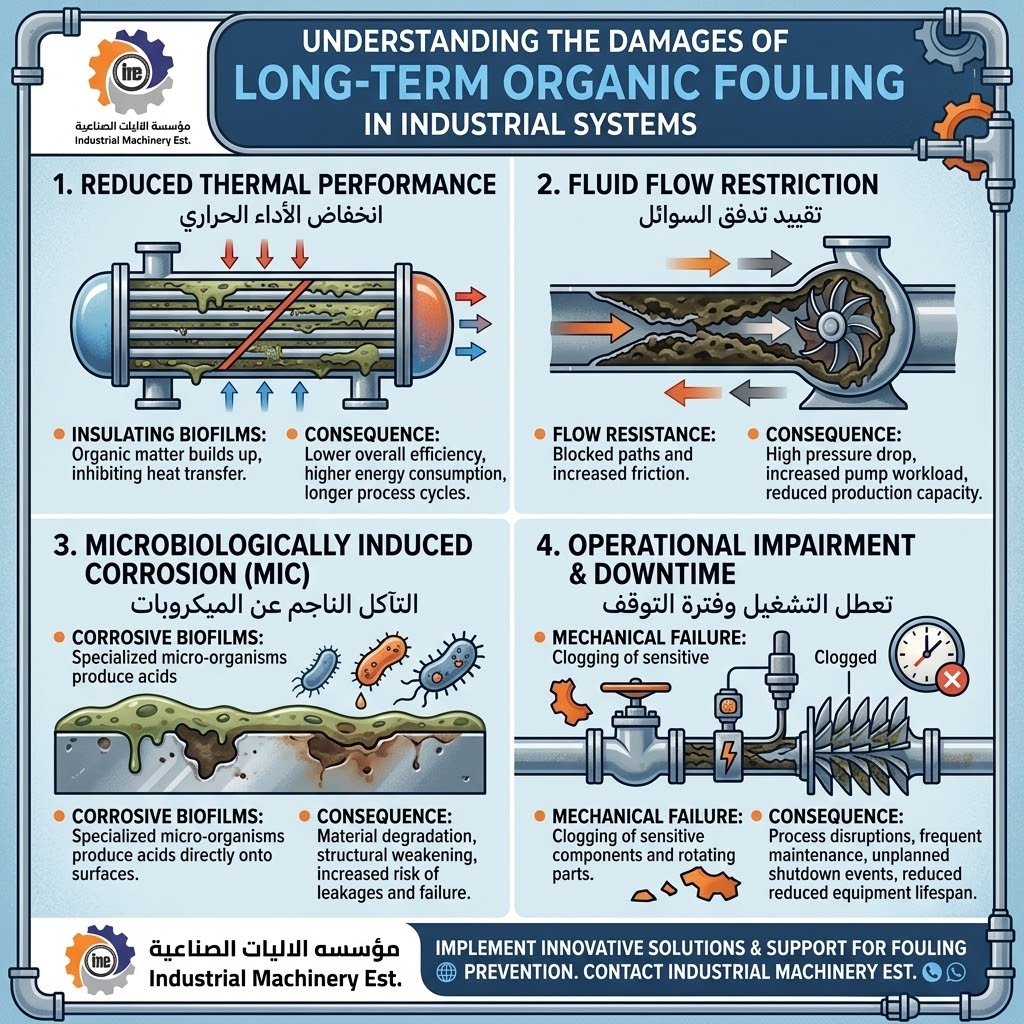
The energy penalty comes first. Organic fouling forces higher pumping power and more fuel or steam to hit the same temperature, and that cost runs every operating hour. Throughput drops next, because coolers can no longer hold the process within limits in hot weather.
The bigger risk sits under the deposit. Biofilms create oxygen concentration cells and support sulphate reducing bacteria, which drives microbiologically influenced corrosion detailed in TEMA heat exchanger standards. Left long enough, it turns a cleaning job into tube replacement or an unplanned shutdown.
Practical Ways to Prevent It Coming Back
- Run a monitored biocide program with alternating oxidising and non oxidising doses.
- Keep water side velocity above roughly one metre per second where design allows.
- Control nutrients by fixing process leaks and managing cooling tower cycles.
- Add side stream filtration to pull suspended solids out of the loop.
- Trend performance monthly instead of waiting for an alarm.
- Circulate or drain standby exchangers rather than leaving them wet and static.
Key Takeaway
Organic fouling is a biological and hydrocarbon deposit that quietly steals heat transfer, raises energy cost, and hides corrosion underneath. It builds faster than scale, so it needs monitoring rather than guesswork. Match the cleaning method to the deposit, control the water chemistry, and organic fouling stays a routine heat exchanger maintenance item instead of a shutdown.