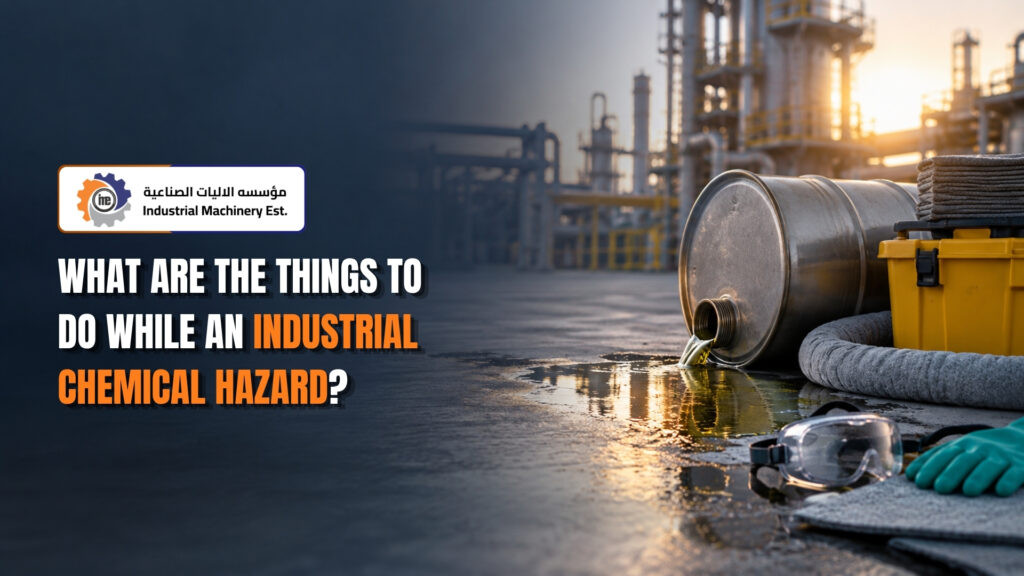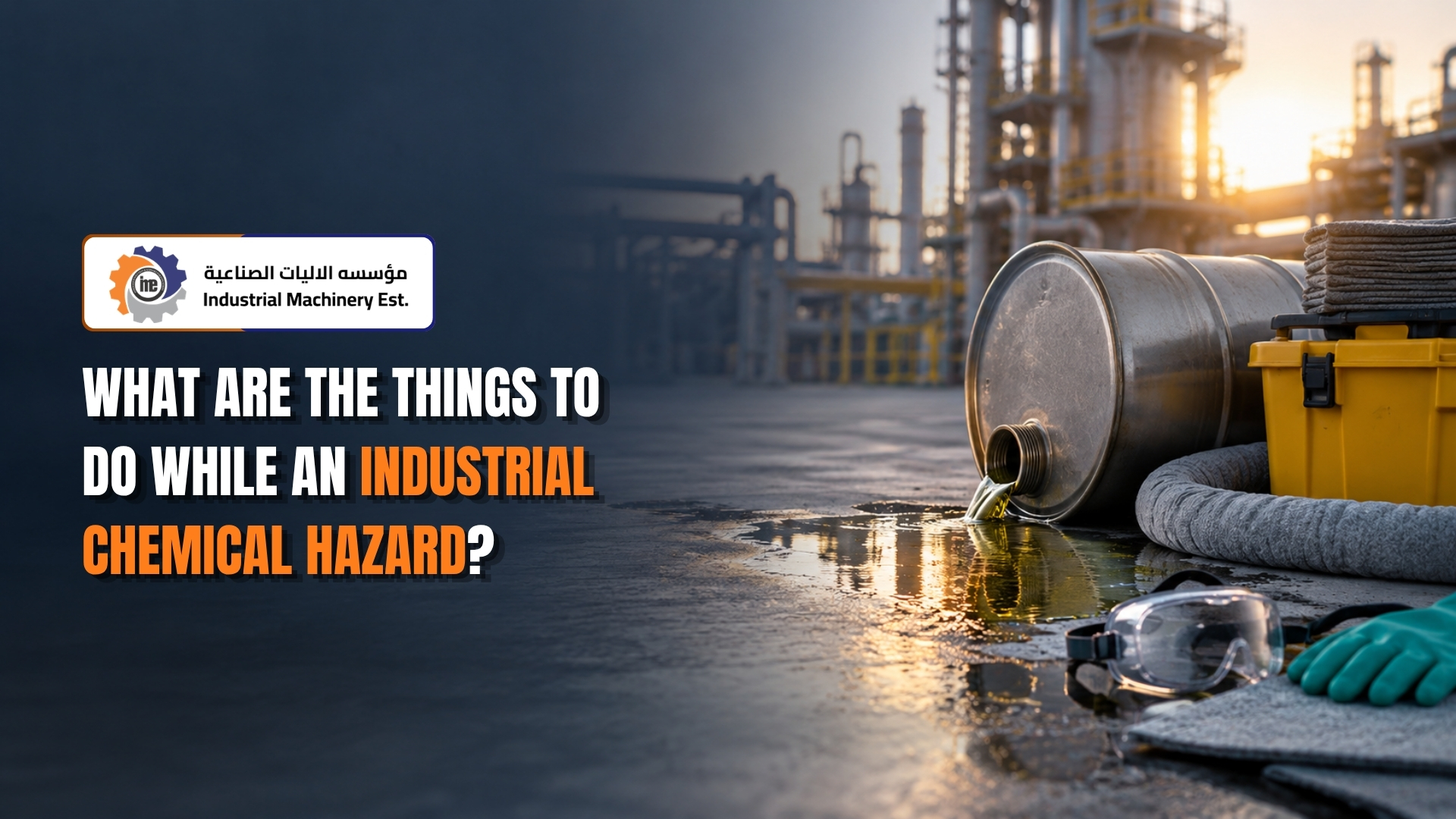
A leaking drum, a sharp smell in the air, a coworker who suddenly starts coughing. Moments like these turn a normal shift into an emergency, and the real danger is often not the chemical itself but the seconds lost deciding what to do.
During an industrial chemical hazard the answer is short: move away first, warn everyone near you, call trained responders, and reach for the spill kit only if you are trained to use it. Guesswork and panic cause most injuries. For the full step by step response, including first aid and reporting, read the complete article below.
What Counts as an Industrial Chemical Hazard
An industrial chemical hazard is any situation where a chemical escapes its safe container or safe condition and starts putting people, equipment, or the environment at risk. It can be a leaking valve, a spilled drum of acid, a vapour cloud from a tank, or two incompatible substances reacting in storage. Most cases fall into four groups: toxic, corrosive, flammable, and reactive.
Step 1: Stop Work and Move Back
The first rule during an industrial chemical hazard is simple: stop work and move away from the source. Do not walk through the liquid, do not lean in for a closer look, and never try to identify the smell. Move upwind and uphill if outdoors, because vapours travel with the breeze and heavy gases settle low.
Step 2: Warn Everyone Around You
Shout, activate the alarm, and clear the area. Many injuries happen because a worker treats a leak as a personal problem, not a shared one. Alert people in nearby rooms and downwind sections. If the release is large, involves an unknown substance, or sits near an ignition source, treat the industrial chemical hazard as a full evacuation.
Step 3: Call Trained Responders Immediately
Contact your emergency response team or control room straight away. Give clear information: your name, exact location, the chemical name if known, how much has been released, and whether anyone is injured. Keep the Safety Data Sheet ready, because it explains the reactivity and the protective gear responders need. Never wait to see whether an industrial chemical hazard settles down by itself.
Step 4: Protect Yourself Before Helping Anyone
A rescuer who becomes a second casualty helps nobody. Put on the correct gloves, goggles, respirator, and suit before going near the release. Normal work clothing offers almost no protection against an industrial chemical hazard. Without the right equipment or training, guide help to the scene and keep others out.
First Aid During an Industrial Chemical Hazard
Speed matters most once a chemical touches a person.
- Skin contact: remove contaminated clothing and rinse the area with running water for at least 15 minutes.
- Eye contact: flush at the eyewash station for 15 minutes while holding the eyelids open.
- Inhalation: move the person to fresh air and keep them resting, warm, and calm.
- Ingestion: do not force vomiting, rinse the mouth, and get medical help at once.
Send the Safety Data Sheet with the casualty to avoid delay.
Step 5: Contain the Release Only If It Is Safe
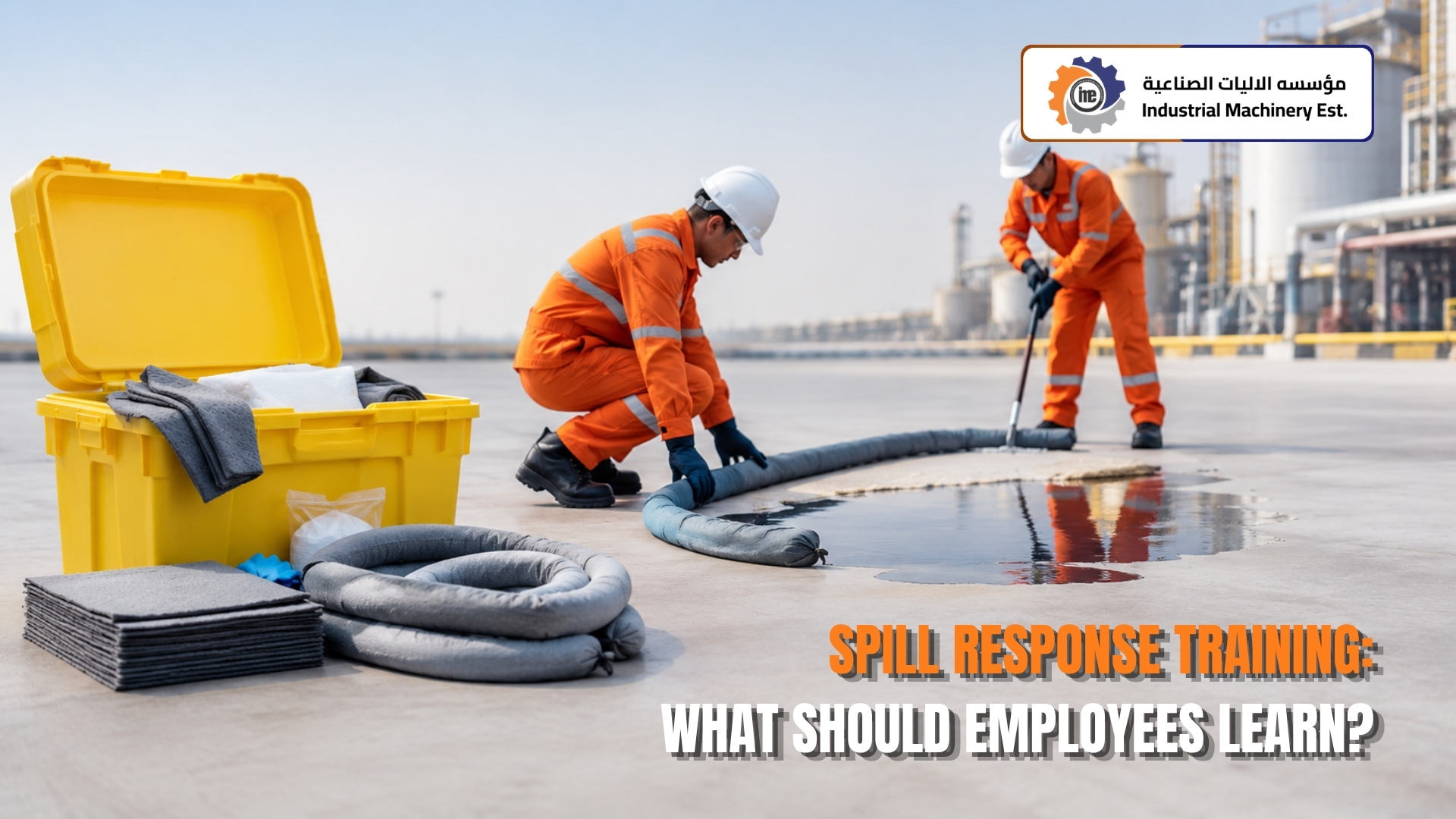
Trained personnel should stop the source when it is safe: closing a valve, uprighting a drum, or plugging a leak. Next, block the drains and limit the spread using absorbent socks, booms, or pads. Switch off ignition sources and improve ventilation where flammable vapours are involved. An industrial chemical hazard that is contained early rarely grows into a major incident.
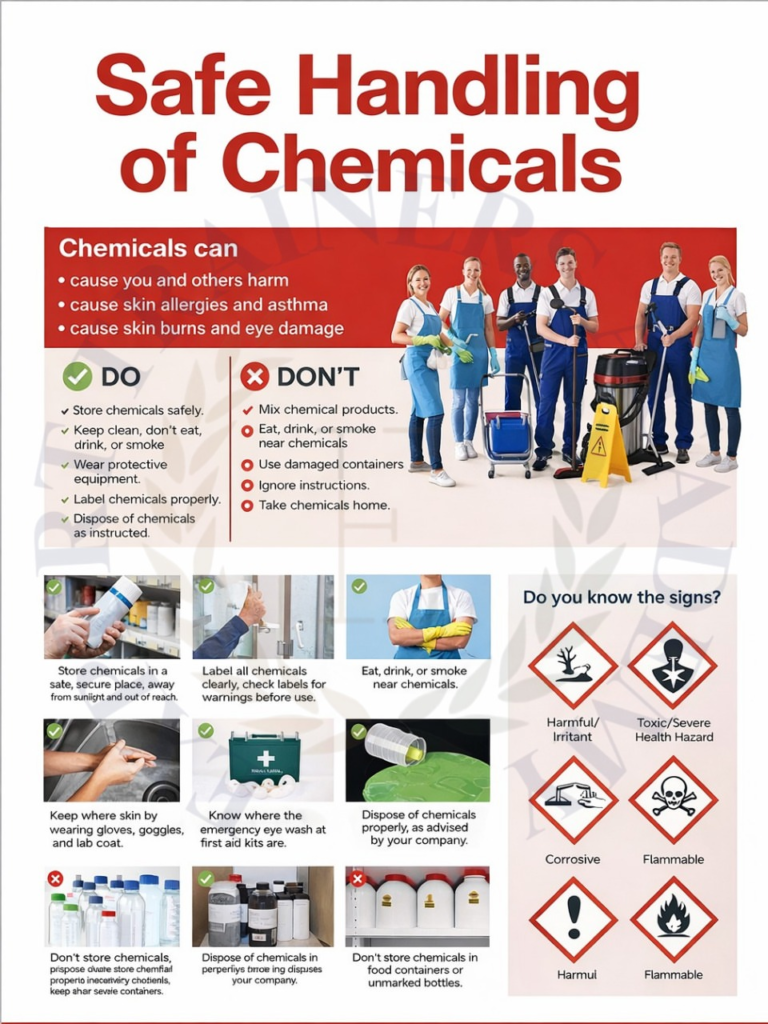
Things You Should Never Do During an Industrial Chemical Hazard
- Never clean a spill without training and proper protective equipment.
- Never mix chemicals to neutralise a leak by guesswork.
- Never wash an unknown chemical into a drain or waterway.
- Never re-enter the area before it is cleared and tested.
- Never skip reporting an industrial chemical hazard because the spill looked small.
After the Emergency Is Over
Once the site is safe, collect the waste in labelled containers and dispose of it through an approved handler. Then comes the part most plants rush: the investigation. Record what leaked, why it happened, and what the response missed. Every industrial chemical hazard leaves a lesson about storage, inspection, or training.
Being Ready Is the Real Answer
The safest response to an industrial chemical hazard begins long before the leak. Keep Safety Data Sheets accessible, label every container, store incompatible chemicals apart, inspect hoses and gaskets on schedule, and place spill kits and eyewash stations within seconds of reach. Run drills until the response to an industrial chemical hazard becomes muscle memory instead of a decision made under pressure. Then an industrial chemical hazard becomes an incident that is managed rather than a disaster that is survived.