Your heat exchanger was cleaned only three months ago, yet outlet temperatures are drifting again and pumps are working harder than they should. Chemicals barely touch the hardened layer inside the tubes, and water flushing bounces off baked-on polymer.
If this sounds familiar, the fouling in your tubes has moved past the soft stage and needs a physical attack. In this article, you will learn how mechanical tube maintenance cleaning removes stubborn and baked-on deposits, which mechanical tube cleaning tools work best for each fouling type, and how to protect your tubes during the job.
What is mechanical tube cleaning?
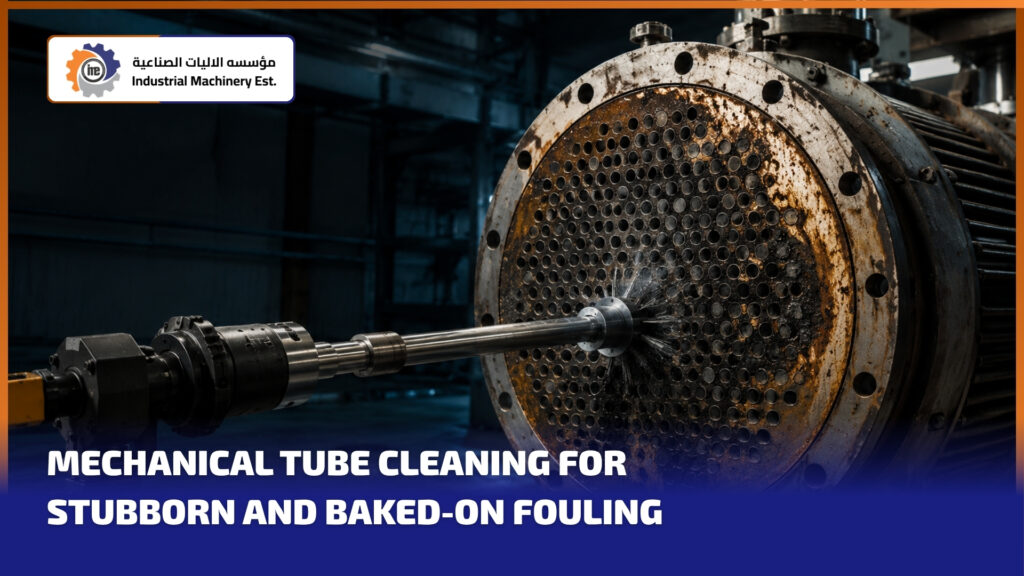
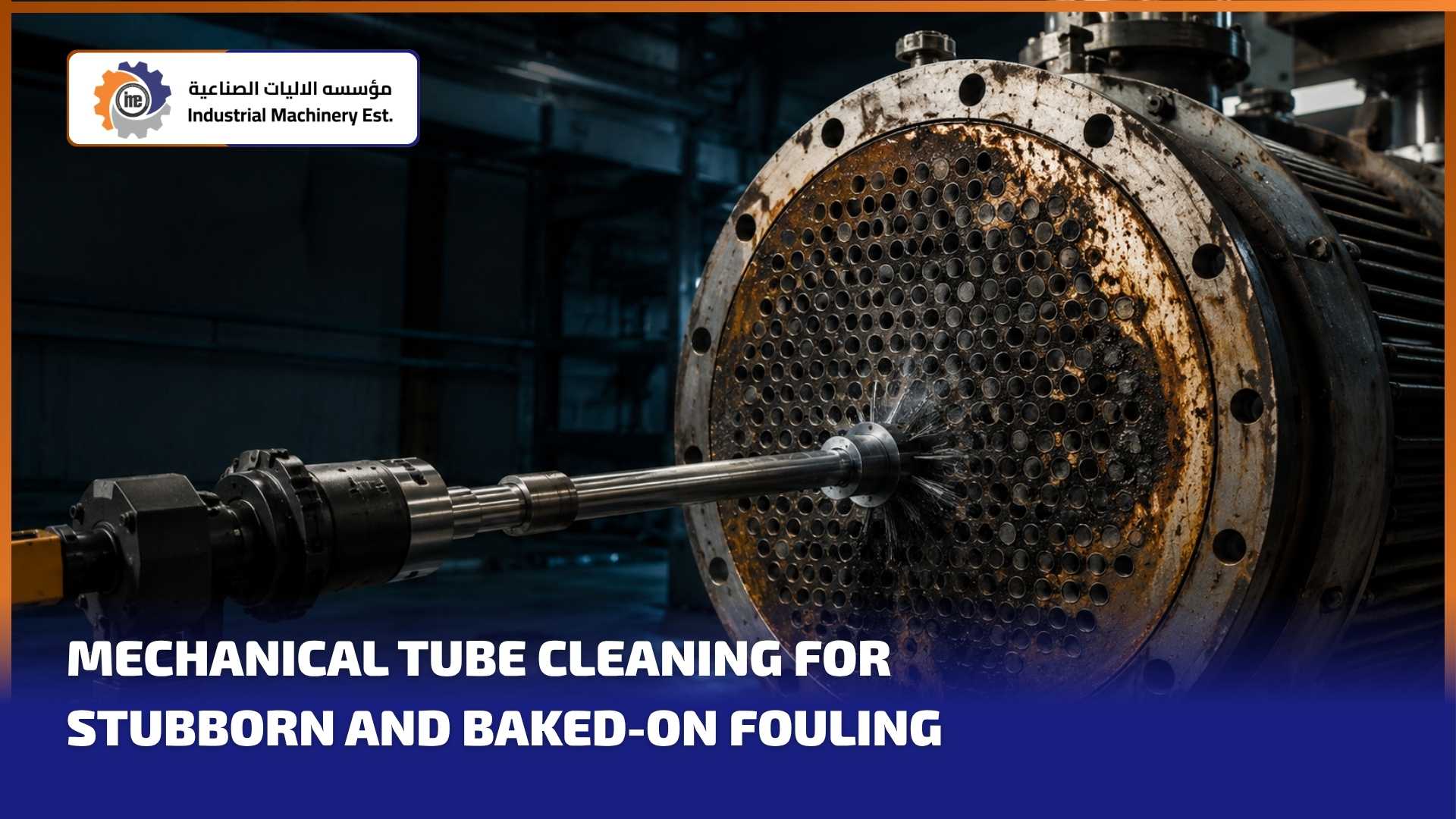
Mechanical tube cleaning is the physical removal of deposits from inside heat exchanger, condenser, and boiler tubes using tools such as brushes, scrapers, drills, and projectiles. Instead of dissolving fouling with chemicals, mechanical tube cleaning scrapes, cuts, or pushes it out of the tube. This direct contact is exactly what stubborn and baked-on fouling needs, because hardened layers often resist every other cleaning method.
Why baked-on fouling is so hard to remove
Deposits harden over time. Heat bakes polymers, coke, and mineral scale onto the tube wall, where they bond tightly to the metal. Chemical cleaning may soften the outer layer but leave the base untouched, while low-pressure flushing simply flows over it. Every failed attempt costs downtime and money. That is why plants facing hardened fouling turn to mechanical tube cleaning, which attacks the deposit right at the surface where it sticks.
Common stubborn deposits found inside tubes
Before selecting a mechanical tube cleaning method, identify what you are dealing with. The most common hard deposits include:
- Mineral scale such as calcium carbonate from cooling water
- Baked-on polymers in petrochemical exchangers
- Coke and carbon layers in furnace and reboiler tubes
- Compacted mud and silt that has dried into a crust
- Rust and metal oxides bonded to the tube wall
Each deposit responds differently, so matching the tool to the fouling is the first rule of effective mechanical tube solutions.
Do Check Out: How Plants Do Corrosion Control Through Chemical Cleaning
Mechanical tube cleaning tools for hard fouling
- Rotary brushes: Nylon or steel brushes on a flexible rotating shaft scrub the tube wall while water flushes debris out. Best for light to medium scale.
- Scrapers: Bladed tools that shave hardened layers off the metal. Ideal for tough limescale and baked deposits.
- Rotary drills and bits: Spinning bits cut through rock-hard scale, coke, and polymer plugs that block the tube completely.
- Projectiles: Shot through the tube with water or air pressure, projectiles complete a mechanical tube cleaning pass in seconds and suit large bundles.
A professional mechanical tube cleaning team often combines these tools, starting with drills for blocked tubes and finishing with brushes for a smooth, polished surface.
Mechanical tube cleaning vs chemical cleaning
Both methods have a place in industrial maintenance. Chemical cleaning works well on soluble deposits and complex geometries, but it can struggle with thick, baked-on layers and creates liquid waste that needs treatment.
Cleaning Mechanical tube removes hard fouling directly, produces less wastewater, and lets you inspect tubes immediately after the job. In severe cases, the best result comes from combining both: chemicals soften the deposit first, then mechanical tube cleaning strips it away.
How the mechanical tube cleaning process works
A typical mechanical tube cleaning job follows clear steps:
- Isolate and open the exchanger, then remove the channel covers to expose the tube sheet.
- Inspect the tubes to identify blockages and the deposit type.
- Select the tool, matching brush, scraper, or drill to the fouling hardness.
- Clean each tube while flushing with water until it runs clear.
- Verify results with a borescope or light test before closing up.
Following this sequence keeps mechanical tube cleaning safe, fast, and consistent across the whole bundle.
Key benefits of mechanical tube cleaning
Plants that schedule mechanical tube cleaning regularly gain several clear advantages:
- Restores heat transfer efficiency and lowers energy consumption
- Removes the hardest baked-on layers that chemicals leave behind
- Produces less wastewater than chemical circulation
- Allows immediate tube inspection after cleaning
- Extends equipment life by stopping under-deposit corrosion
Best practices to protect your tubes
Mechanical tube cleaning is safe when done right, but aggressive tools in unskilled hands can damage tube walls. Always size brushes and scrapers to the exact inner diameter, keep drills centered, and never force a stuck tool. Trained technicians test one tube first, check the wall condition, and then proceed. Scheduling mechanical tube cleaning during planned shutdowns, rather than waiting for a full blockage, also keeps deposits softer and jobs shorter.
Get expert mechanical tube cleaning with IME
Industrial Machinery Est. (IME) has delivered industrial cleaning services across Saudi Arabia since 1990 and is an approved vendor for Saudi Aramco, SABIC, Tasnee, and Marafiq. Our teams handle mechanical tube cleaning for heat exchangers, condensers, and boilers using rotary brushes, scrapers, drills, and projectile systems, backed by chemical cleaning when a combined approach works best. If stubborn or baked-on fouling is choking your tubes, contact IME at office@indme.com or +966 13 341 7737 and restore your equipment to full performance.
Our Service: