EPC contractors lose more money to chemical delays than to chemical prices. A drum arrives without a Certificate of Analysis, a cleaning batch turns out off-spec, or a hazardous consignment sits at customs while the commissioning window closes. Almost every one of those problems traces back to weak industrial chemical sourcing.
The fix is simple in principle: lock the specification first, qualify the vendor second, and treat lead time as a schedule item rather than a purchasing detail. Do those three things and most sourcing failures disappear before they ever reach the site. The rest of this article breaks each step down, covering supplier checks, documentation, storage planning, and cost control.
Why Industrial Chemical Sourcing Fails on Live Projects
Most EPC teams treat chemicals as a commodity line item. They are not. Industrial chemical sourcing sits at the intersection of engineering, safety, and logistics, and a mistake in any one of the three stops work. A wrong grade of inhibited acid can damage tube bundles. A missing hazard classification can hold a truck at the gate. Good industrial chemical sourcing starts by treating chemicals as engineered materials, with the same rigour you apply to valves or piping.
Lock the Specification Before You Ask for a Price
Effective industrial chemical sourcing begins with a written specification, not a request for quotation. Record the CAS number, purity grade, concentration, inhibitor package, and packaging format. State the intended service, whether that is pre-commissioning flushing, chemical cleaning, water treatment, or passivation. Vendors quote against what you send them, so a vague enquiry always produces a vague offer. A tight specification makes every later stage of industrial chemical sourcing faster and cheaper.
Qualify the Vendor, Not Just the Quote
Price is the fourth criterion in industrial chemical sourcing, behind capability, documentation, and responsiveness. Before you release a purchase order, confirm:
- Certifications such as ISO 9001 and ISO 14001, plus any client-specific vendor approval
- Hazard handling capability for your class, your quantity, and your delivery point
- Lot-level documentation including a current Safety Data Sheet and a batch Certificate of Analysis
- A reachable technical contact who answers when a consignment arrives off-spec
A vendor who clears all four is rarely the reason an industrial chemical sourcing plan slips.
Treat Lead Time as a Schedule Activity
The most common chemical sourcing failure is timing. Imported products need customs clearance, hazardous goods need approved carriers, and some materials are produced seasonally. Map required delivery dates backwards from the commissioning sequence, then add a buffer for inspection and possible rejection. Load those dates into the project schedule so industrial chemical sourcing stays visible to planners instead of sitting buried in a procurement spreadsheet.
Documentation That Survives an Audit
Every chemical sourcing package should carry four documents: the Safety Data Sheet, the Certificate of Analysis for the delivered lot, the manufacturer technical data sheet, and the transport paperwork. Site HSE teams will ask for all of them, and a client auditor may ask again months later. Keep one folder per material and per batch. Weak paperwork is the quietest way for industrial chemical sourcing to create rework.
Plan Storage and Handling Before Delivery
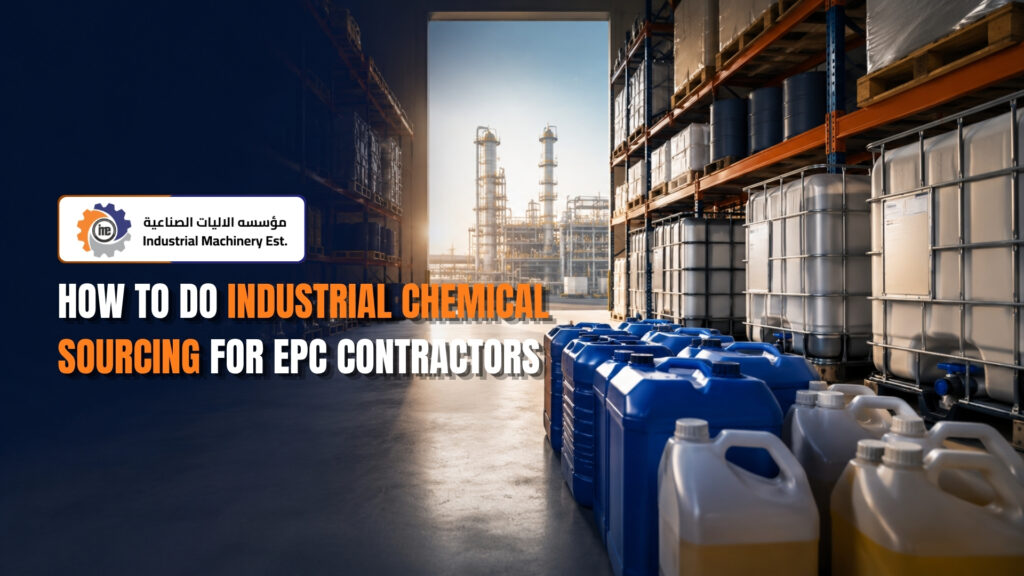
Industrial chemical sourcing does not end at the gate. Confirm bunded storage, temperature limits, segregation from incompatible materials, spill kits, and trained handlers before the truck arrives. Match packaging size to actual consumption, because leftover drums of acid become a disposal cost and a safety liability. Sound industrial chemical sourcing always considers what happens after unloading.
Calculate Total Cost, Not Unit Price
Industrial chemical sourcing decisions turn on landed cost: unit price, freight, hazmat surcharges, storage, handling, and disposal of unused stock. A cheaper drum that arrives late or off-spec costs more than it saves. Mature industrial chemical sourcing teams score vendors on delivered performance across a full project, not on a single quotation.
Keep a Second Source Ready
Single-source industrial chemical sourcing is a risk you carry alone. Qualify a backup supplier for every critical material, even if you never place an order with them. On long projects, split volumes between two approved vendors so pricing stays competitive and supply stays stable.
Final Thoughts
Strong chemical sourcing is a process, not luck. Define the specification, qualify the vendor, schedule the lead time, collect the documents, and plan the storage. Contractors who follow that sequence spend less time chasing drums and more time delivering the project. Industrial Machinery Est. supports EPC contractors across Jubail and the Eastern Province with chemical supply and on-site application expertise built around these same industrial chemical sourcing principles.