Blocked tubes, rising energy bills, and equipment that never reaches design capacity usually share one hidden cause: scale and fouling. These stubborn deposits build up quietly inside boilers, heat exchangers, cooling towers, and pipelines until flow drops, fuel consumption climbs, and unplanned shutdowns start eating into production. Left untreated, scale and fouling can cut heat transfer efficiency by half and shorten the life of expensive equipment.
The short answer is that professionals remove scale and fouling using a planned combination of chemical cleaning and mechanical cleaning, selected after analyzing the deposit type, and finished with flushing, passivation, and inspection. If you want to understand how each step works, which method suits which deposit, and how to stop the buildup from returning, read the complete article below.
What Are Scale and Fouling?
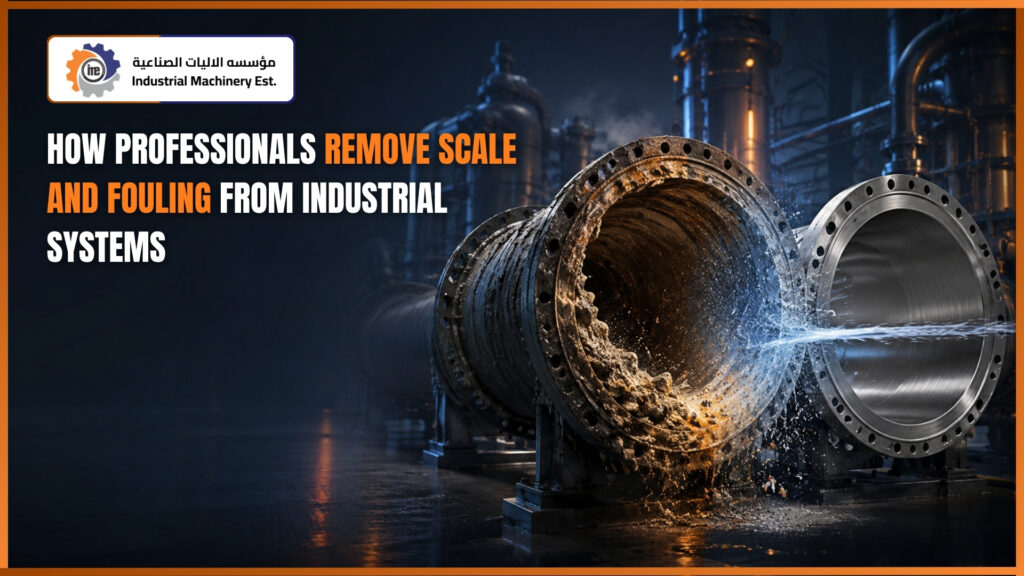
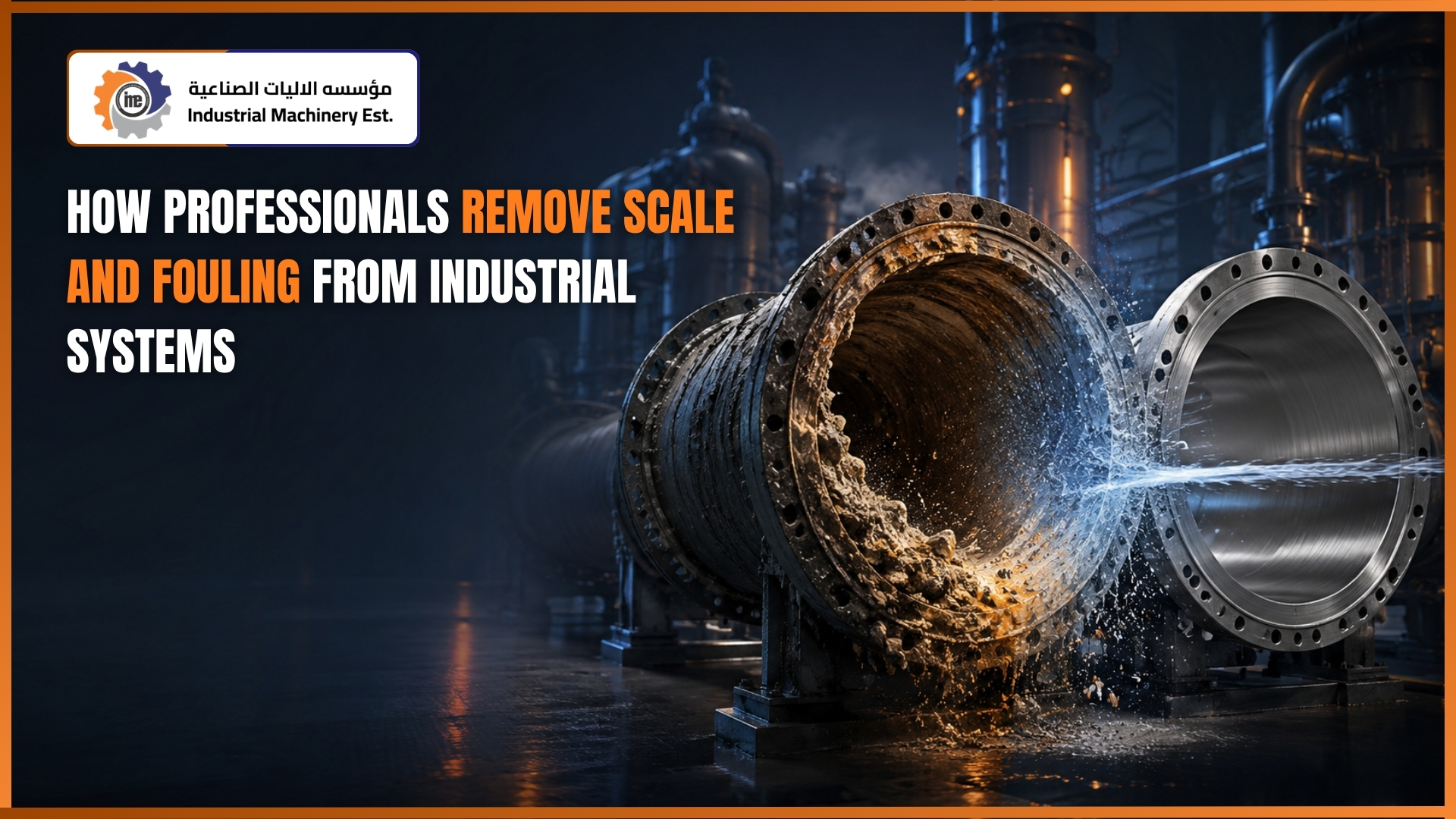
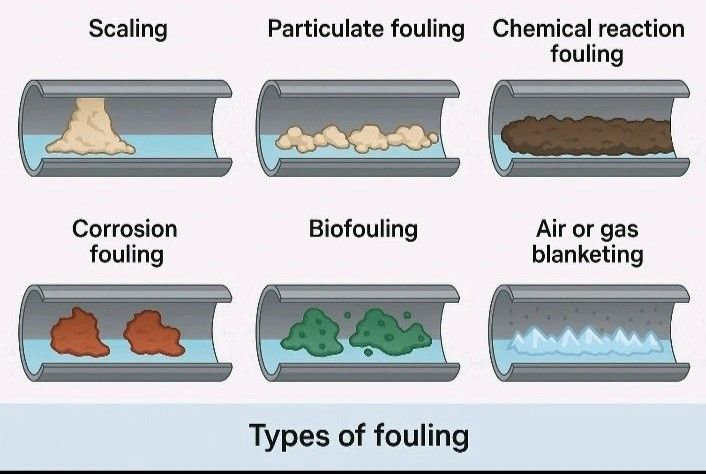
Scale is a hard mineral layer that forms when dissolved salts such as calcium carbonate, calcium sulfate, and silica come out of solution and stick to hot metal surfaces. Fouling is a broader term that covers any unwanted deposit, including rust, sludge, oil, biological growth, and process residues.
Both problems appear in boilers, heat exchangers, condensers, cooling towers, and piping networks. Because scale and fouling insulate metal surfaces, equipment must work harder to transfer the same amount of heat, which is why the damage often shows up first on your energy bill.
Why Scale and Fouling Are So Costly
Even a thin layer of scale and fouling creates serious operational problems:
- Higher energy consumption, since a few millimeters of scale can raise fuel use noticeably.
- Reduced flow and pressure drops in tubes and pipelines.
- Overheating and tube failure caused by hot spots under the deposit.
- Corrosion under deposits that attacks metal surfaces silently.
- Unplanned downtime when blockages force emergency shutdowns.
This is why leading plants treat the removal of scale and fouling as planned maintenance rather than an emergency response.
Inspection and Deposit Analysis
Professionals never start cleaning blindly. The first step is inspecting the system and analyzing a deposit sample to identify what the scale and fouling are made of. Mineral scale, iron oxide, hydrocarbon sludge, and biological fouling all respond to different treatments.
This analysis decides the cleaning chemistry, the temperature, the circulation time, and the safety controls. It also protects the base metal, because using the wrong acid on the wrong alloy can cause more damage than the deposit itself.
Chemical Cleaning: Dissolving Scale and Fouling
Chemical cleaning circulates a heated cleaning solution through the system to dissolve scale or fouling without dismantling the equipment. Depending on the deposit, professionals may use:
- Inhibited acids such as hydrochloric, citric, or sulfamic acid for mineral scale.
- Chelating agents like EDTA for iron oxide and hardness deposits.
- Alkaline degreasers for oil, grease, and process residues.
- Biocides and dispersants for biological fouling.
Corrosion inhibitors are always added so the solution attacks the scale and fouling, not the metal. The solution is circulated, monitored, and tested until the deposit is fully dissolved, then drained safely.
Mechanical Cleaning: Physical Removal Methods
When deposits are thick, hard, or located in accessible tubes, mechanical methods remove scale and fouling by force:
- High pressure water jetting (hydrojetting) blasts deposits out of tubes and vessels.
- Tube cleaning with brushes and scrapers for heat exchanger and condenser tubes.
- Pigging for long pipeline sections.
Professionals often combine both approaches, using mechanical cleaning to break the bulk deposit and chemical cleaning to dissolve the scale and fouling that remains in tight spaces.
Flushing, Passivation, and Final Inspection
Once the scale and fouling are removed, the system is flushed with clean water until it is neutral and free of residues. Freshly cleaned metal is highly reactive, so a passivation step forms a thin protective layer that prevents flash rusting.
Finally, the team inspects the system, often with borescope cameras, and documents the results. Flow rates, pressure drops, and heat transfer readings are compared with pre-cleaning values to confirm the scale and fouling are completely gone.
How to Prevent Scale and Fouling from Returning
Removal solves the immediate problem, but prevention protects the investment:
- Maintain proper water treatment and blowdown practices.
- Use scale inhibitors and antifoulants in cooling and boiler water.
- Monitor pressure drop and outlet temperatures as early warning signs.
- Schedule regular cleaning before scale and fouling harden into thick layers.
A simple monitoring routine helps you plan cleaning during scheduled shutdowns instead of reacting to sudden failures.
Remove Scale and Fouling with Industrial Machinery Est.
Industrial Machinery Est. has been helping plants remove scale and fouling since 1990. With 30+ years of experience and 100+ major projects completed, We delivers chemical cleaning, mechanical tube cleaning, and hydrojetting services for boilers, heat exchangers, cooling towers, and pipelines across the petrochemical, oil and gas, refining, and power sectors. Industrial Machinery is an approved vendor with Saudi Aramco, SABIC, Tasnee, and Marafiq, and operates from Jubail Industrial City to serve facilities across the region. If scale and fouling are slowing your plant down, contact Industrial Machinery today.