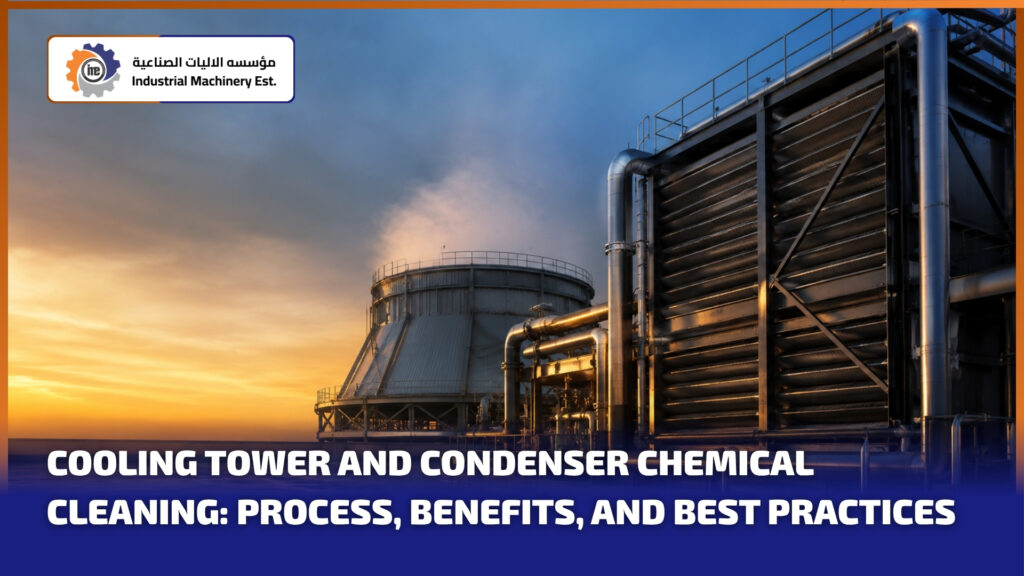
In January, your condenser held 4.5 bar of head pressure at full load. By July it needs 6. Nothing has failed and no alarm has tripped, and that is exactly why scale is expensive: it raises your power bill slowly enough that nobody calls maintenance until capacity drops during the hottest week of the year.
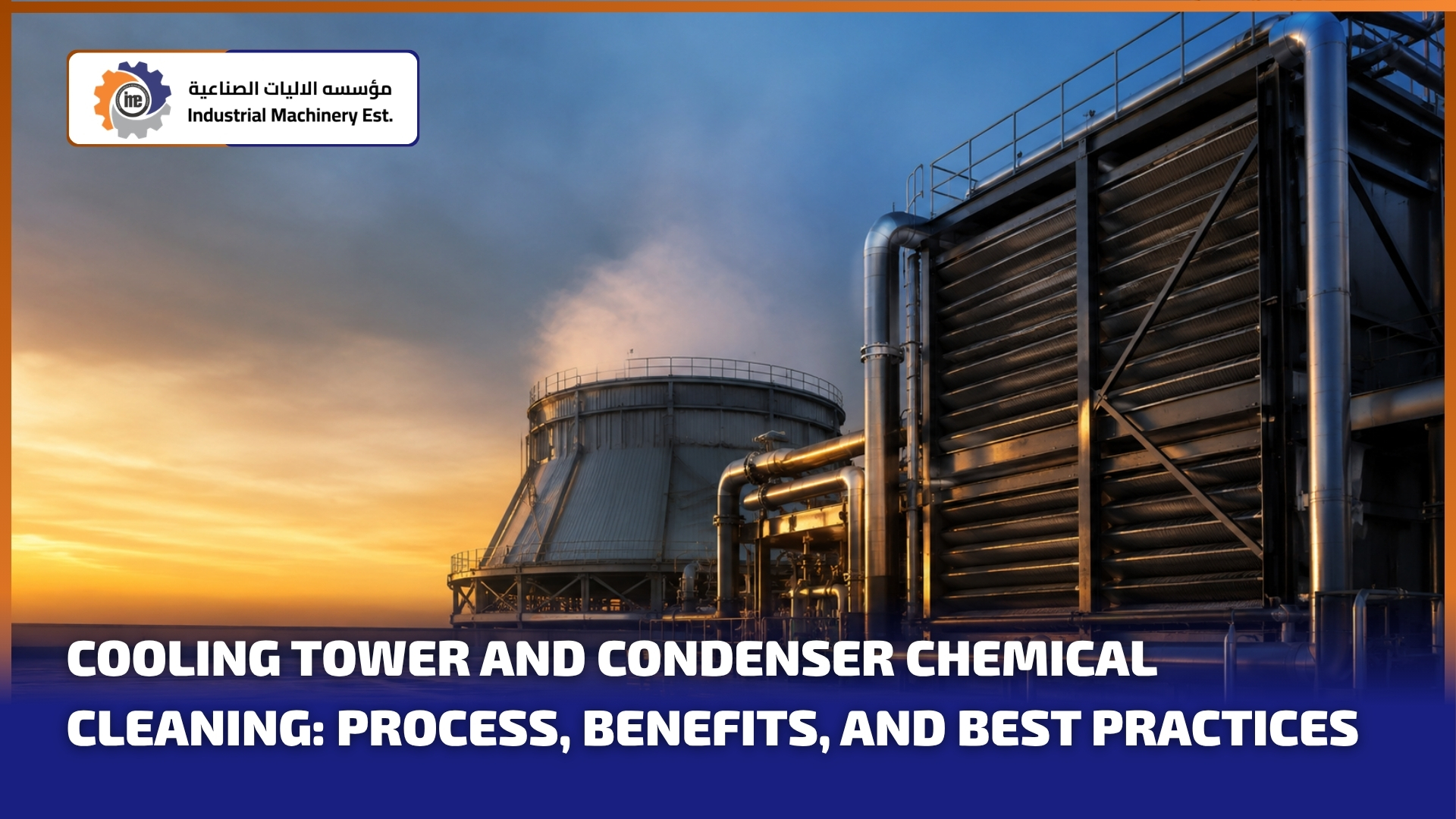
The short version: circulating an inhibited descaling chemical and a biocide through the system dissolves the mineral scale and biofilm that brushes and pressure washers cannot fully reach, and it typically restores design heat transfer within one to three shifts. The rest of this article covers the part that actually matters. How to confirm scale is really your problem, when chemical cleaning beats mechanical cleaning, what a properly run job looks like, and the mistakes that turn a routine cleaning into a retubing project.
First, confirm the problem is actually scale
Before spending money on any cleaning, pull three numbers from your logs and compare them to your clean baseline:
- Head pressure or condensing temperature at full load. If pressure sits 0.7 to 1 bar above your post-commissioning baseline, fouling is costing you energy every running hour.
- Approach temperature. A condenser approach that has crept 2 to 3 degrees C above design is the classic scale signature.
- kW per ton of cooling. A 10 to 15 percent rise with no mechanical fault almost always traces back to heat transfer surfaces.
Then look at the water. Murky basin water, odor, and slimy walls point to biological fouling. White or grey crust on the fill and tube sheets points to carbonate scale. Most real systems have both, which matters for chemical selection.
Why systems in the Gulf foul faster
Makeup water in the Eastern Province tends to run hard, and summer wet bulb conditions drive aggressive evaporation, so dissolved minerals concentrate in fewer cycles than the textbook assumes. Airborne dust and sand enter the tower constantly and act as nuclei for deposit formation. Seawater-cooled condensers add marine biofouling and metallurgy such as copper-nickel or titanium that strictly limits which chemicals are safe to use. A cleaning program designed for European water chemistry will underperform here.
Read Also: How to Perform Hydrotesting And Leak Testing Of Heat Exchangers
Chemical or mechanical? Usually the answer is a sequence
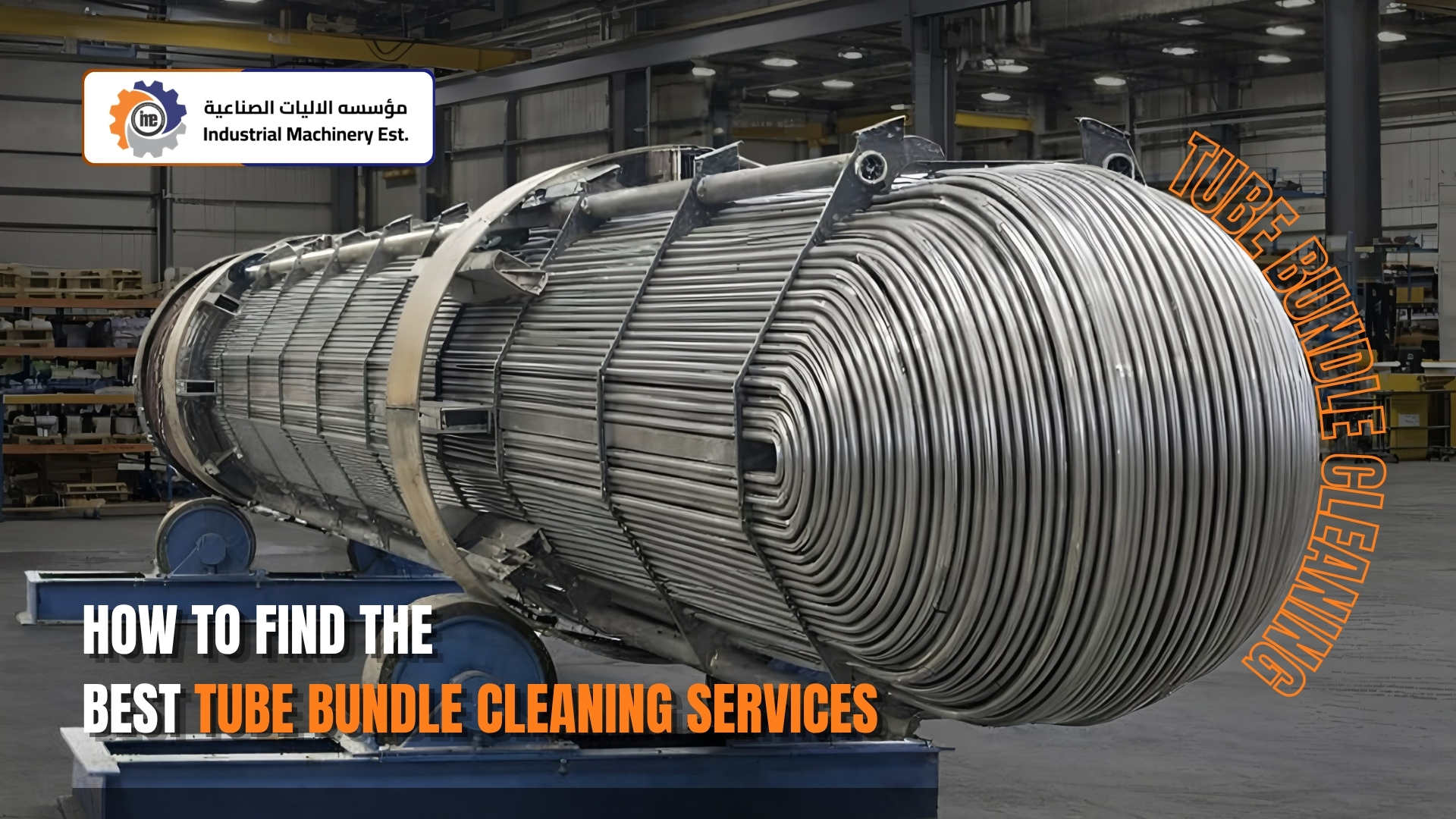
Mechanical cleaning, meaning tube brushing and hydrojetting, is excellent at bulk removal of mud, silt, and soft biofilm, and it produces no chemical waste. But it cannot remove hard carbonate scale bonded to tube walls, it cannot reach the tower fill without dismantling, and it only cleans the straight tube runs.
Chemical cleaning reaches every wetted surface and dissolves bonded scale, but it cannot work if tubes are so plugged the solution will not circulate. So the professional answer for a heavily fouled system is a sequence: mechanical cleaning first to restore flow, chemical circulation to strip the bonded scale, then passivation to protect the fresh metal. For light biological fouling alone, a disinfection and dispersant program may be all you need. Anyone who quotes you one method for every situation is selling a service, not solving a problem.
What a properly run job looks like
A deposit sample gets analyzed first, because acid matched to the wrong deposit wastes an entire shutdown. The metallurgy is confirmed, since hydrochloric acid that is fine on carbon steel will destroy a galvanized tower and put stainless steel at risk of chloride cracking. The system is isolated, a temporary circulation loop is set up, and the solution runs while technicians monitor pH and dissolved iron.
That monitoring is the difference between a professional job and a drum of acid. Foaming and falling pH mean the chemical is still working on scale. When pH stabilizes, the reaction is finished, and pushing more chemical in past that point attacks the base metal itself. The system is then neutralized, flushed, passivated with a corrosion inhibitor, and documented with before and after performance data so you can prove the result, not just assume it.
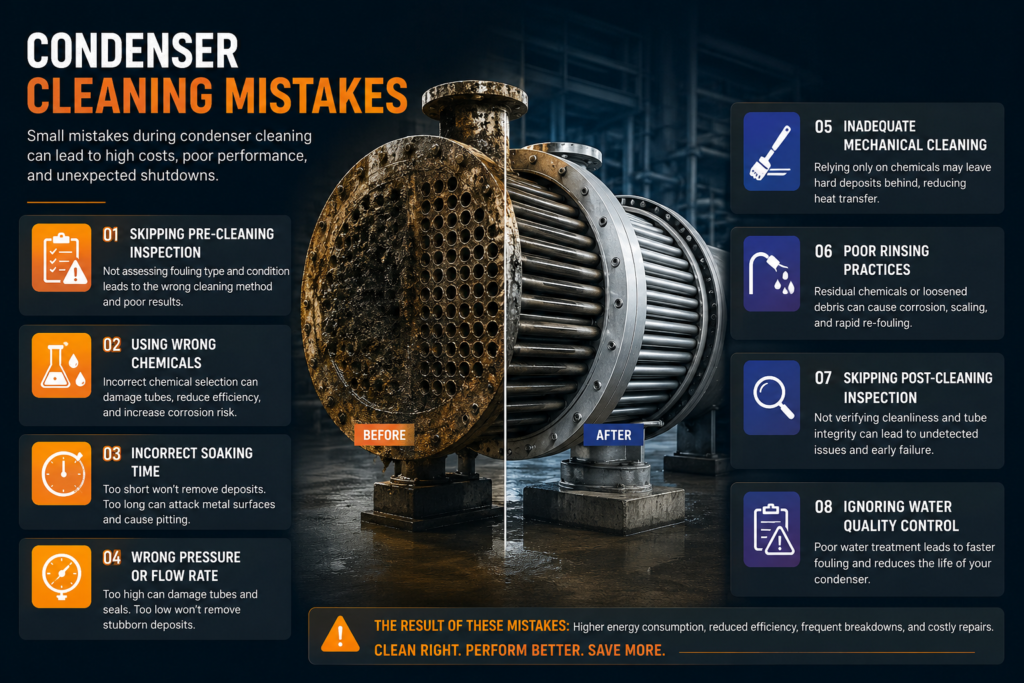
The mistakes that cost more than the cleaning
The failures we see repeatedly: strong acid used on incompatible metallurgy, passivation skipped so flash rust appears within days and gives new scale a rough surface to grip, spent solution dumped without neutralization, and jobs done with no baseline data so nobody can demonstrate anything improved. Every one of these is avoidable with planning.
How often should you clean?
Run on triggers, not just the calendar. Head pressure 0.7 to 1 bar over baseline, a rising approach temperature, or visible biological growth all justify action. In this region, one pre-summer chemical cleaning is the common rhythm, because you want full design capacity in place before June, not discovered missing in August.
Talk to us before you decide
Industrial Machinery Est. (IME) has performed chemical cleaning across petrochemical, refining, and power plants in Saudi Arabia since 1990, and we are approved vendors with Saudi Aramco, SABIC, Tasnee, and Marafiq. If you are not sure whether your system needs cleaning yet, send us your head pressure and approach temperature trends and we will give you an honest read, even if the answer is “not yet.”