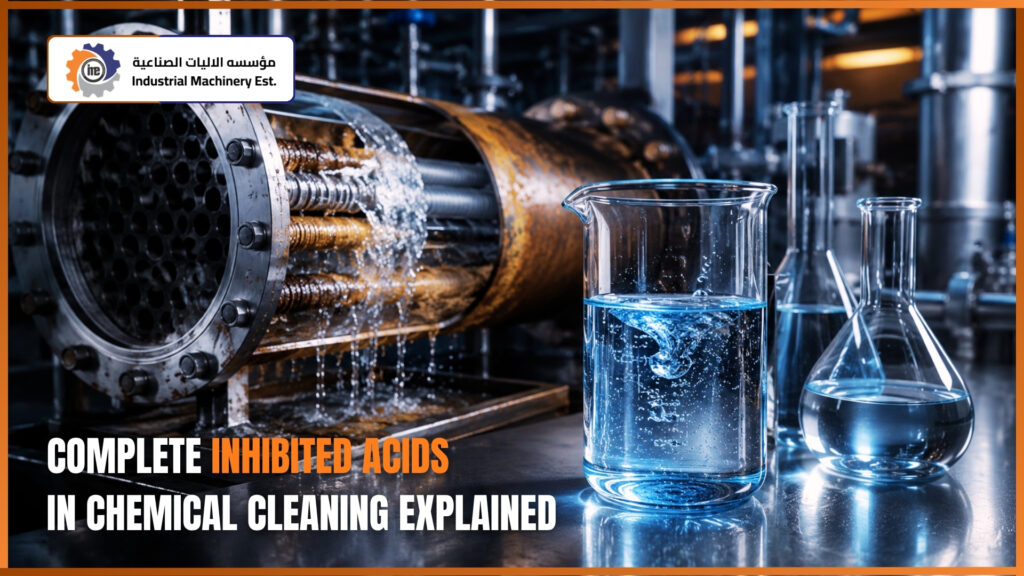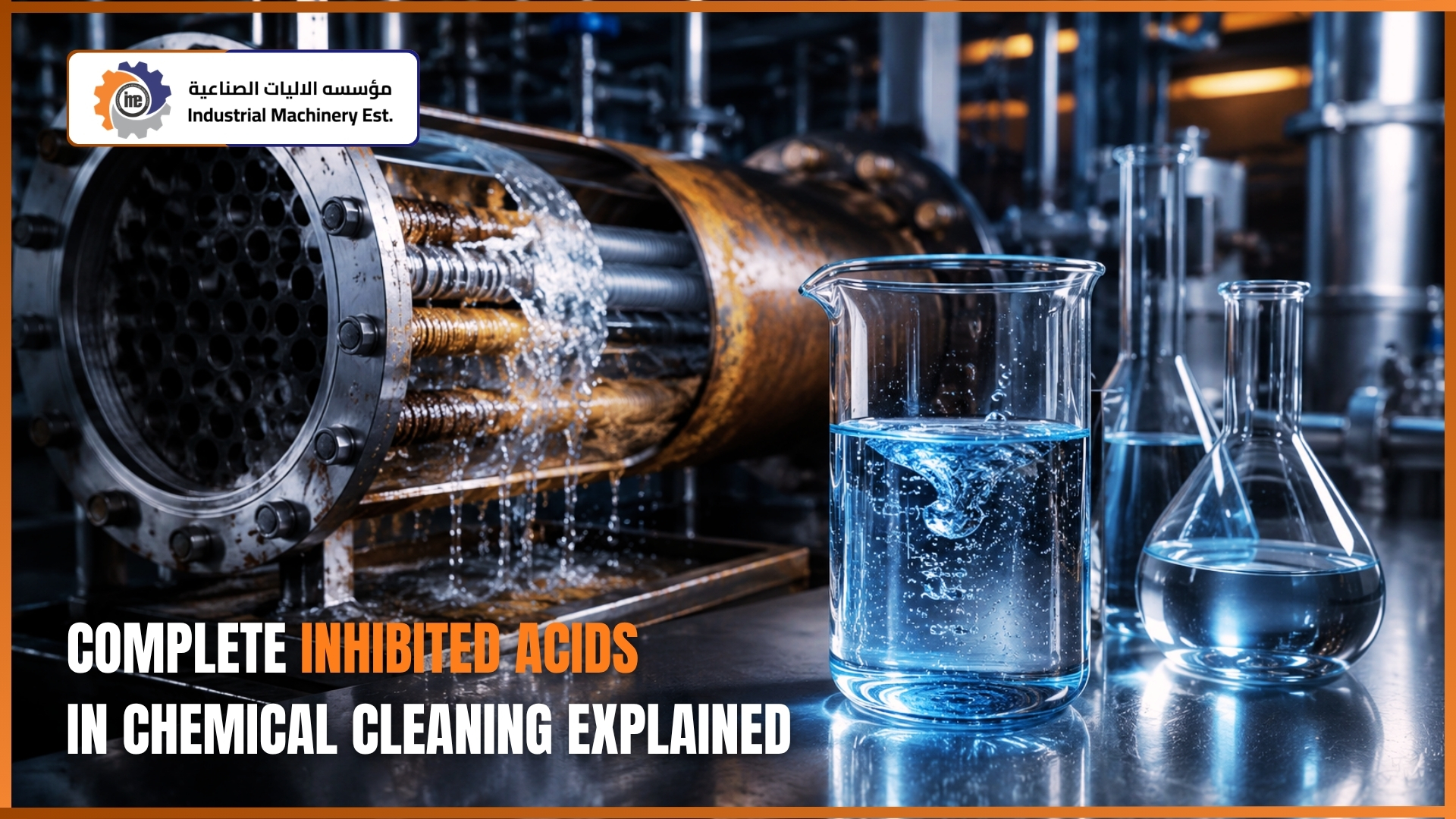
You have scale blocking your heat exchanger, fouling your boiler tubes, and killing your thermal efficiency. Acid will dissolve it fast. But plain acid does not stop at the scale. It keeps eating into the base metal, thins your tubes, and turns a cleaning job into a replacement job.
The fix is simple: inhibited acids. These are acid solutions blended with a corrosion inhibitor that protects the metal while the acid removes the deposit. Want to know how they work, which acids need them, and how to avoid the mistakes that ruin cleaning jobs? Read the full article below.
What Are Inhibited Acids?
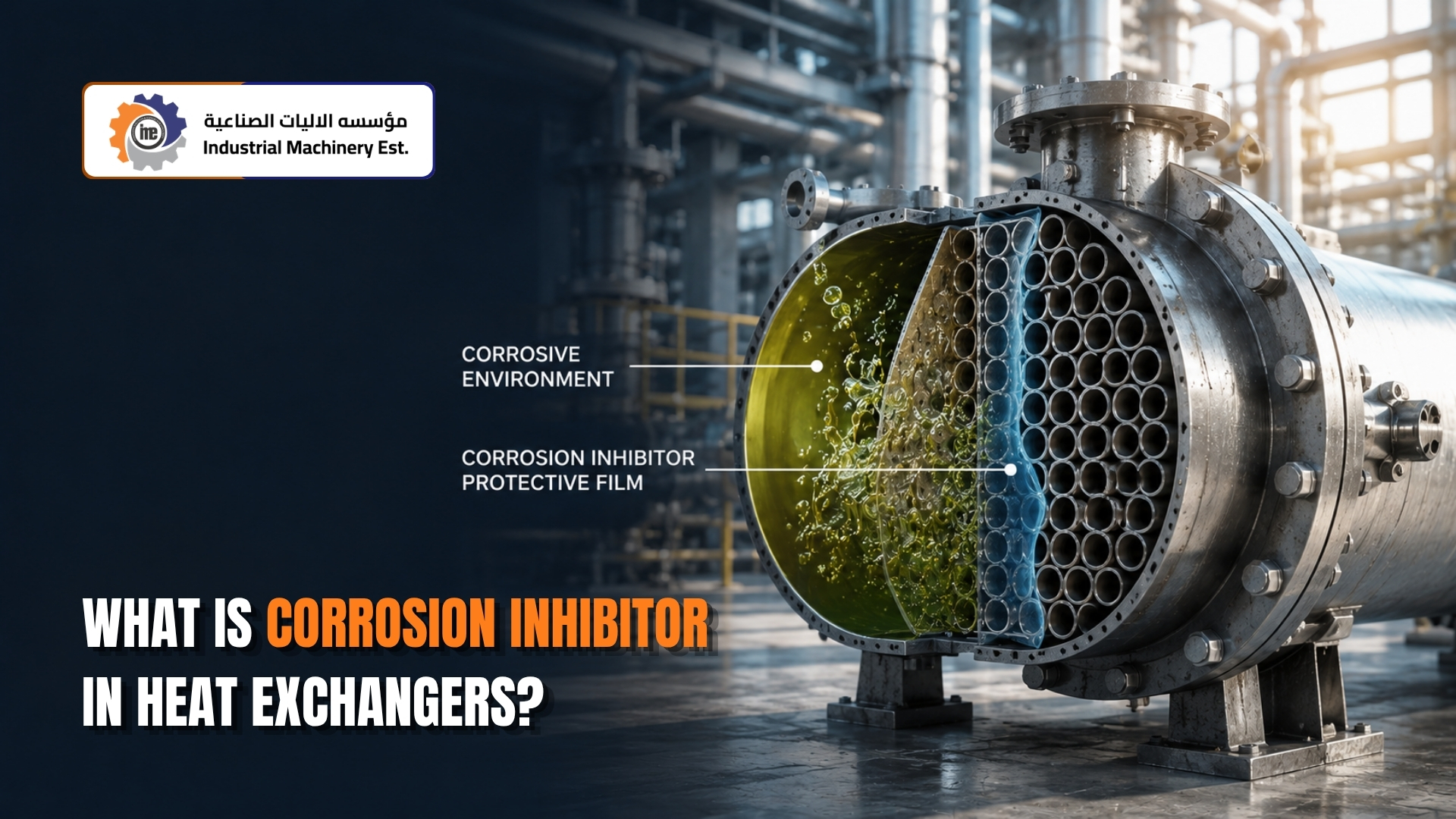
Inhibited acids are standard cleaning acids that have a corrosion inhibitor added in small doses. The inhibitor sticks to the metal surface and forms a thin protective film. This film blocks the acid from attacking the parent metal, but still lets the acid reach and dissolve the scale.
Think of it as a shield that covers clean steel but not the deposit. Without this shield, hydrochloric acid at 15% will strip metal at an alarming rate. Field comparisons on mild steel coupons have shown metal loss dropping by roughly 90% or more when inhibited acid is used instead of uninhibited acid.
Why Uninhibited Acid Is a Costly Mistake
Acid cleaning has been used on utility boilers since the 1940s, and the core problem has never changed. Acids attack scale and steel at the same time.
The damage shows up in several ways:
- General thinning across tube walls and vessel surfaces
- Pitting and localized attack at welds, tube ends, and high-stress points
- Hydrogen embrittlement in high-pressure systems
- Copper redeposition, where dissolved copper plates onto steel and causes galvanic attack
Every one of these shortens equipment life. Using inhibited acids in chemical cleaning is not an optional extra. It is the difference between a controlled descaling job and permanent metal loss.
Common Acids That Require Inhibition
Not every acid behaves the same way. Here are the ones used most often in industrial work:
Hydrochloric acid (HCl): The workhorse for calcium carbonate and iron oxide scale. Aggressive, fast, and absolutely requires a strong inhibitor.
Sulfamic acid: Milder and easier to handle, often used on plate heat exchangers. Its gentle reputation is misleading. It still corrodes cast iron pump bodies and carbon steel pipework if left uninhibited.
Citric acid and formic acid: Organic acids used where chloride contamination is a concern, especially on stainless steel. Slower acting but still need protection at elevated temperature.
Sulfuric and phosphoric acid: Applied in specific scale chemistries and passivation work.
EDTA: A chelating agent rather than a true acid, used on high-pressure boilers where a controlled, low-corrosion clean is required.
How Corrosion Inhibitors Actually Work
Most acid cleaning inhibitors are organic compounds containing electronegative elements such as nitrogen, oxygen, or sulfur. Common families include amines, thiourea derivatives, Mannich bases, imidazolines, and benzotriazole for copper alloys.
These molecules carry electron-rich sites that bond to the metal surface. Once bonded, they form a barrier layer that slows the electrochemical reaction driving corrosion. A well-selected inhibitor at the right dose can deliver inhibition efficiency above 90%.
The key word is selected. An inhibitor that performs well on carbon steel may do nothing for admiralty brass or 316L stainless. Mixed-metallurgy systems need a formulation that covers every alloy present.
Where Inhibited Acids Get Used
Inhibited acid cleaning is standard practice across:
- Fired boilers and waste heat recovery units
- Shell and tube heat exchangers and condensers
- Cooling water systems and cooling tower fill
- Process piping and storage vessels
- Desalination and utility plant equipment
Common Field Mistakes to Avoid
Even the best product fails when the procedure is wrong. Watch for these:
Overheating the solution. Overheating the cleaning solution can cause breakdown of the inhibitor used. Once the film is gone, the acid attacks freely. Most jobs stay controlled between 50°C and 70°C.
Ignoring pump and pipework metallurgy. A cleaning circuit is more than the vessel. Cast iron impellers and carbon steel spools sit in the same loop and often corrode first.
Skipping inhibitor monitoring. Inhibitor concentration drops as the job runs. Test through the circulation period, not just at mixing.
Not neutralizing before start-up. Failure to neutralize acid solvents completely before start-up has caused problems. Residual acid left in the system causes damage long after the crew leaves.
Running acid too strong. Higher concentration does not mean faster cleaning. It usually means faster corrosion and uncontrolled gas generation.
Also Read: How Professionals Remove Scale and Fouling from Industrial Systems
Getting the Procedure Right
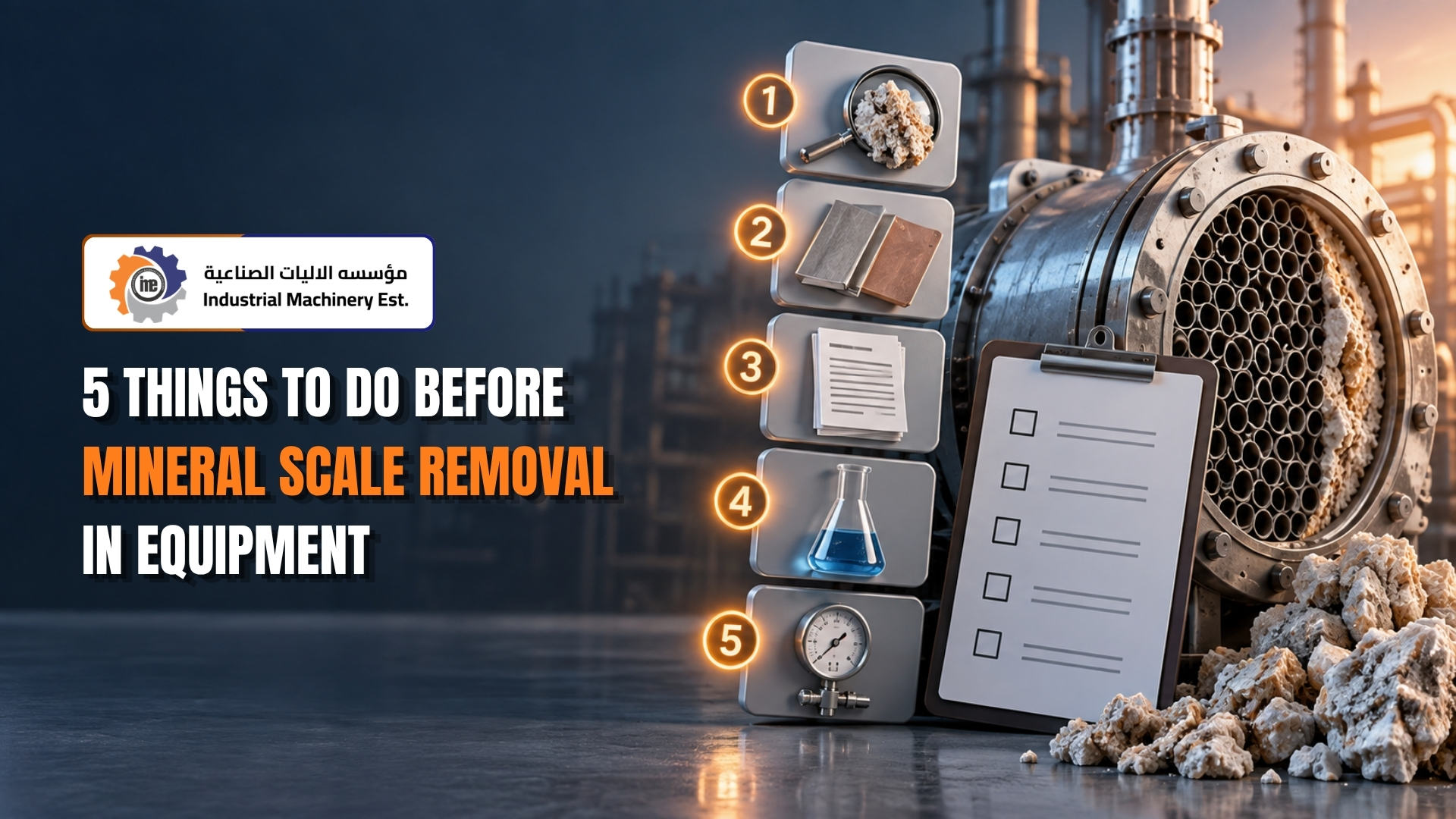
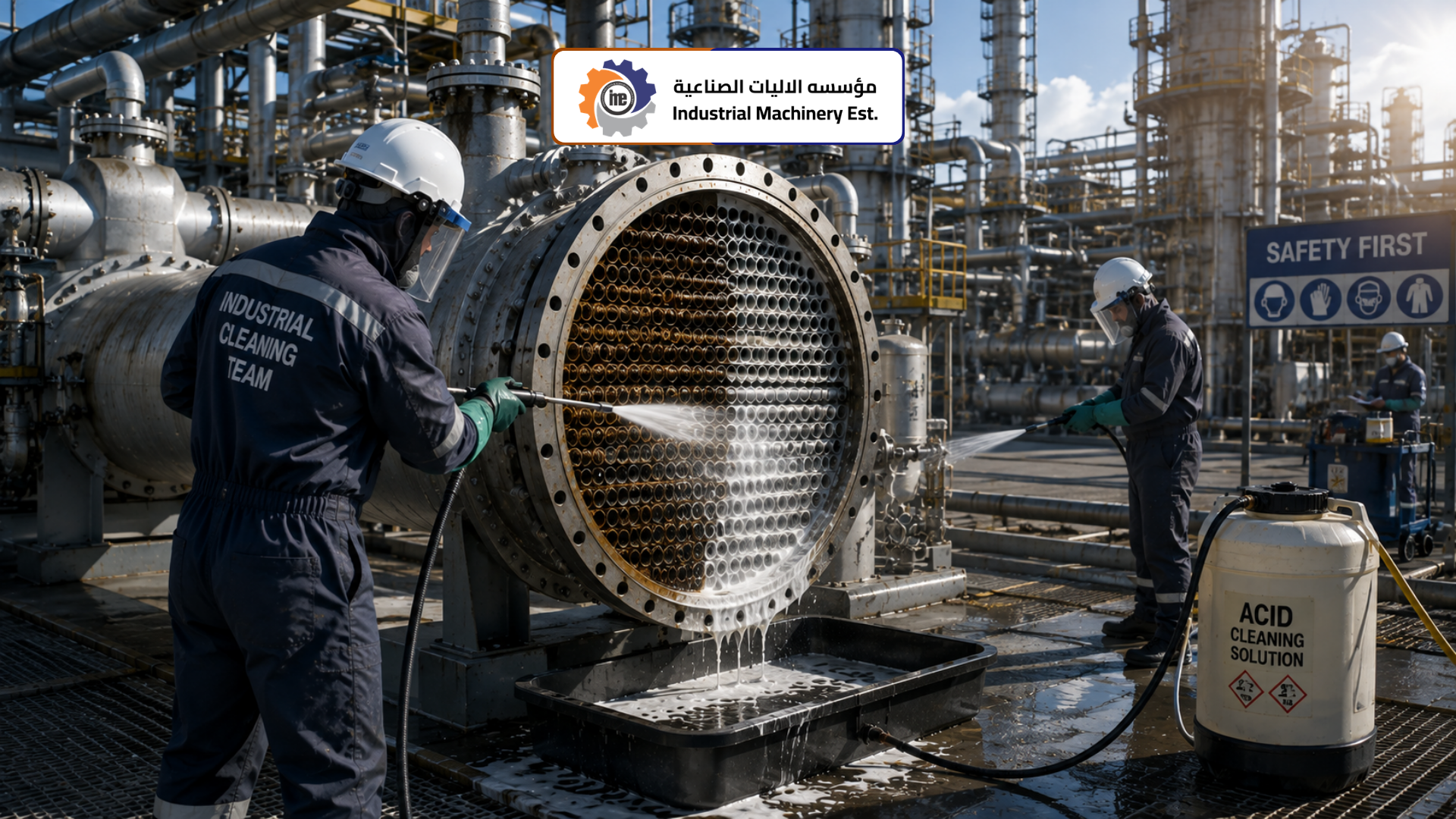
A proper job starts with deposit analysis. Identify the scale, confirm the metallurgy, then select the acid and inhibitor package to match. The acid used, acid concentration, flowing conditions, and selection of corrosion inhibitor all need proper control.
Monitor acid strength, iron content, and inhibitor level throughout. Finish with neutralization, flushing, and passivation to leave a protected surface.
Corrosion coupons placed in the circuit give hard evidence of metal loss. Without them, you are guessing.
Final Word on Inhibited Acids
Inhibited acids in chemical cleaning let you remove scale aggressively without paying for it in wall thickness.
The chemistry is proven, but the results depend entirely on matching the inhibitor to your metallurgy, holding temperature within range, and monitoring the circuit from start to finish. Get those three right and inhibited acids will do exactly what they are designed to do: clean the deposit and leave the metal alone.
Check Industrial Machinery Est. Services: