You bought a spill kit labeled “50 gallons,” a drum leaked, and the pads were soaked long before the floor was dry. Sound familiar? Many teams trust the spill kit absorbency label without knowing what it really measures.
If you want to know quickly it’s that spill kit absorbency is the total liquid all the pads, socks and pillows can hold together, tested in ideal lab conditions. So size your kit to your largest container and match the absorbent type to the liquid. Want the full breakdown? Keep reading.
Best Oil and Chemical Spill Kit Supplier in Saudi Arabia
What Does Spill Kit Absorbency Mean?
Spill kit absorbency is the maximum volume of liquid a complete kit can soak up before every item is fully saturated. Manufacturers add up the capacity of each pad, sock and pillow inside, then print that total on the label in gallons or liters.
For example, one heavy-weight pad may hold about 0.25 gallons, while one 4-foot sock may hold 1 to 2.5 gallons. Multiply each item by its quantity, add them together, and you get the kit’s rating.
How Absorbency Ratings Are Tested
Most suppliers base their numbers on lab methods such as ASTM F716 and ASTM F726. A sorbent sample sits in the liquid for a set time, often 15 minutes, drains briefly, and is then weighed to see how much it picked up.
These results come from clean, calm conditions. On a real plant floor, dirt, heat, thick fluids and rushed handling can lower the actual spill kit absorbency you get.
Why Spill Kit Absorbency Labels Can Mislead You
A spill kit absorbency rating is a best-case figure. Several factors reduce actual performance:
- Liquid viscosity: thick oils absorb slower than water or diesel.
- Wrong sorbent type: universal pads fill up with water when you only need to remove oil.
- Early disposal: pads thrown away before saturation waste capacity.
- Temperature: heat changes fluid thickness and evaporation, which affects pickup.
Matching Absorbent Type to the Spill
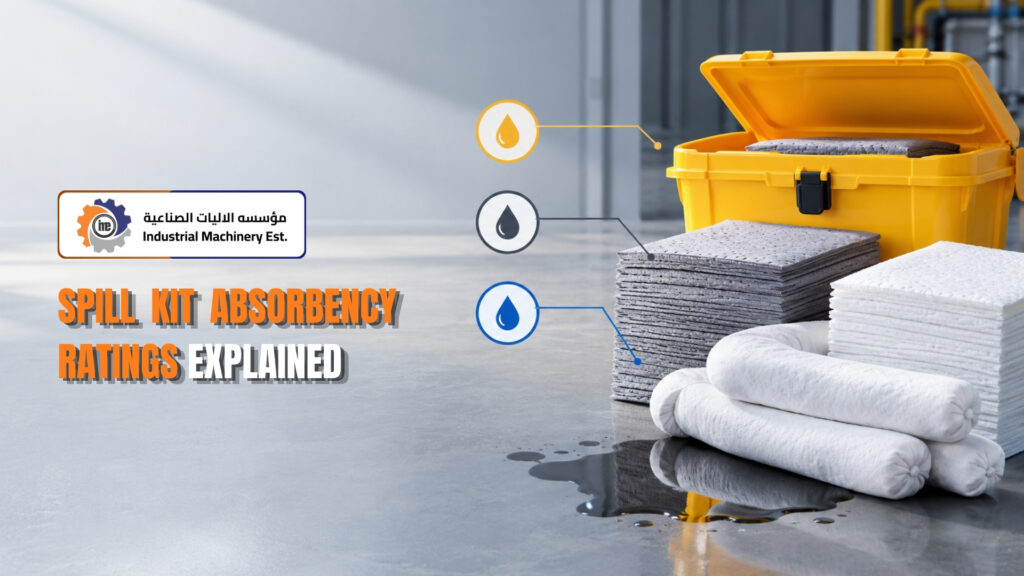
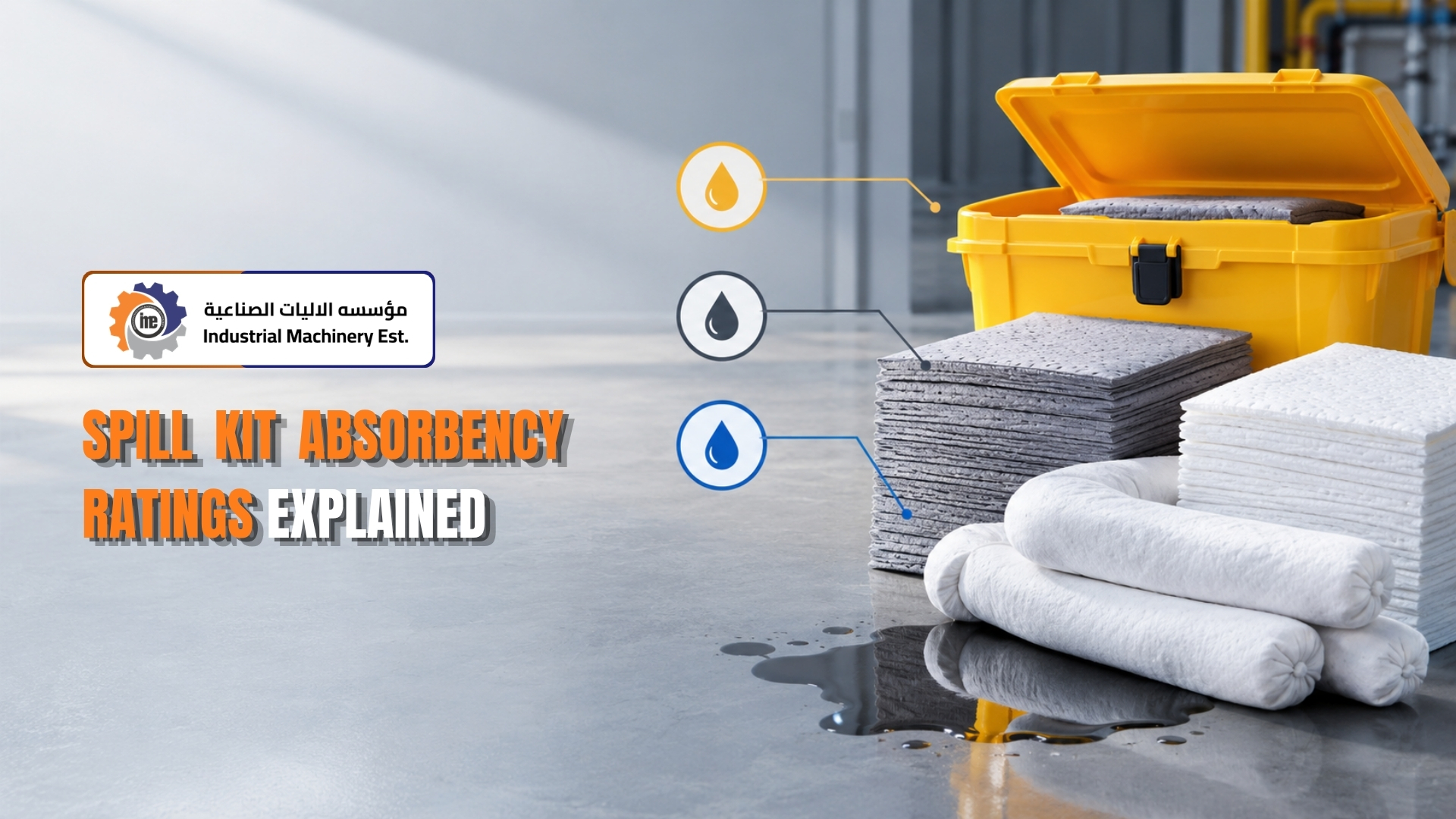
Spill kit absorbency only matters if the sorbent can actually take in your liquid. Most kits are color coded:
- White (Oil-Only): absorbs oils and fuels, repels water. Best for outdoor or wet areas.
- Gray (Universal): absorbs oil, water, coolants and mild chemicals.
- Yellow (Hazmat): handles acids, caustics and aggressive chemicals.
Always check the Safety Data Sheet (SDS) of the liquid before choosing a kit.
Also Read: Spill Response Training: What Should Employees Learn?
How to Size Your Spill Kit
A common rule is simple: your spill kit absorbency should cover 100% of the largest single container in that area. If you store 55-gallon drums, you need a kit rated for at least 55 gallons.
Some safety teams also apply a risk factor. Containers handled daily get a higher factor, while rarely moved ones get a lower one. Adding a margin of 20 to 25% helps cover real-world losses.
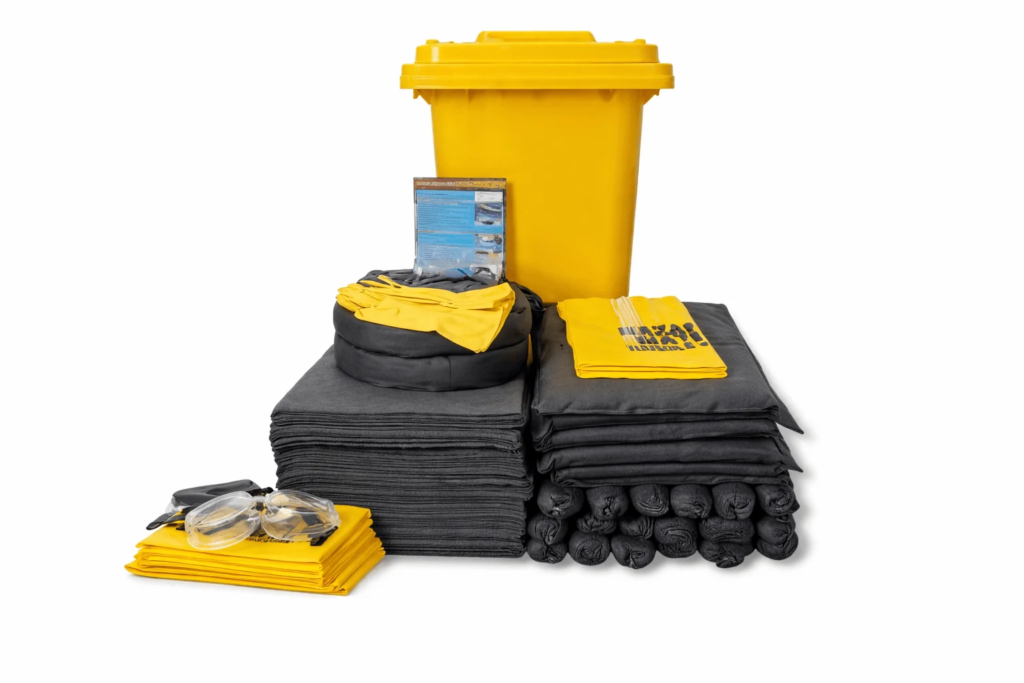
Pads, Socks and Pillows: Who Does What
Each item adds to total spill kit absorbency in a different way:
- Socks go down first to circle the spill and stop it spreading.
- Pillows sit under active leaks or in drip pans to soak up large volumes.
- Pads clean up remaining liquid and wipe surfaces.
Using them in this order gets the most out of every gallon of rated capacity.
Final Thoughts
Spill kit absorbency ratings are useful, but only when you read them correctly. Treat the number as a lab maximum, match the sorbent color to your liquid, and size the kit to your biggest container with a safety margin. Get these three things right, and your team will never run out of pads halfway through a cleanup.