A hydraulic hose bursts near a running pump and within seconds oil is creeping toward a floor drain. Do you grab a sock or a boom? Most teams buy both, store them in the same cabinet, and then reach for the wrong one when it matters.
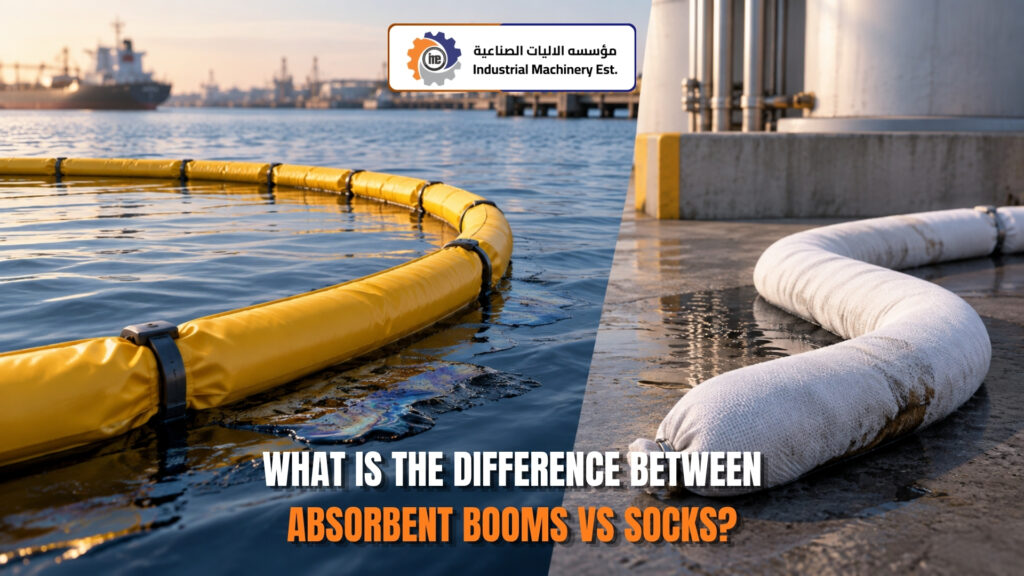
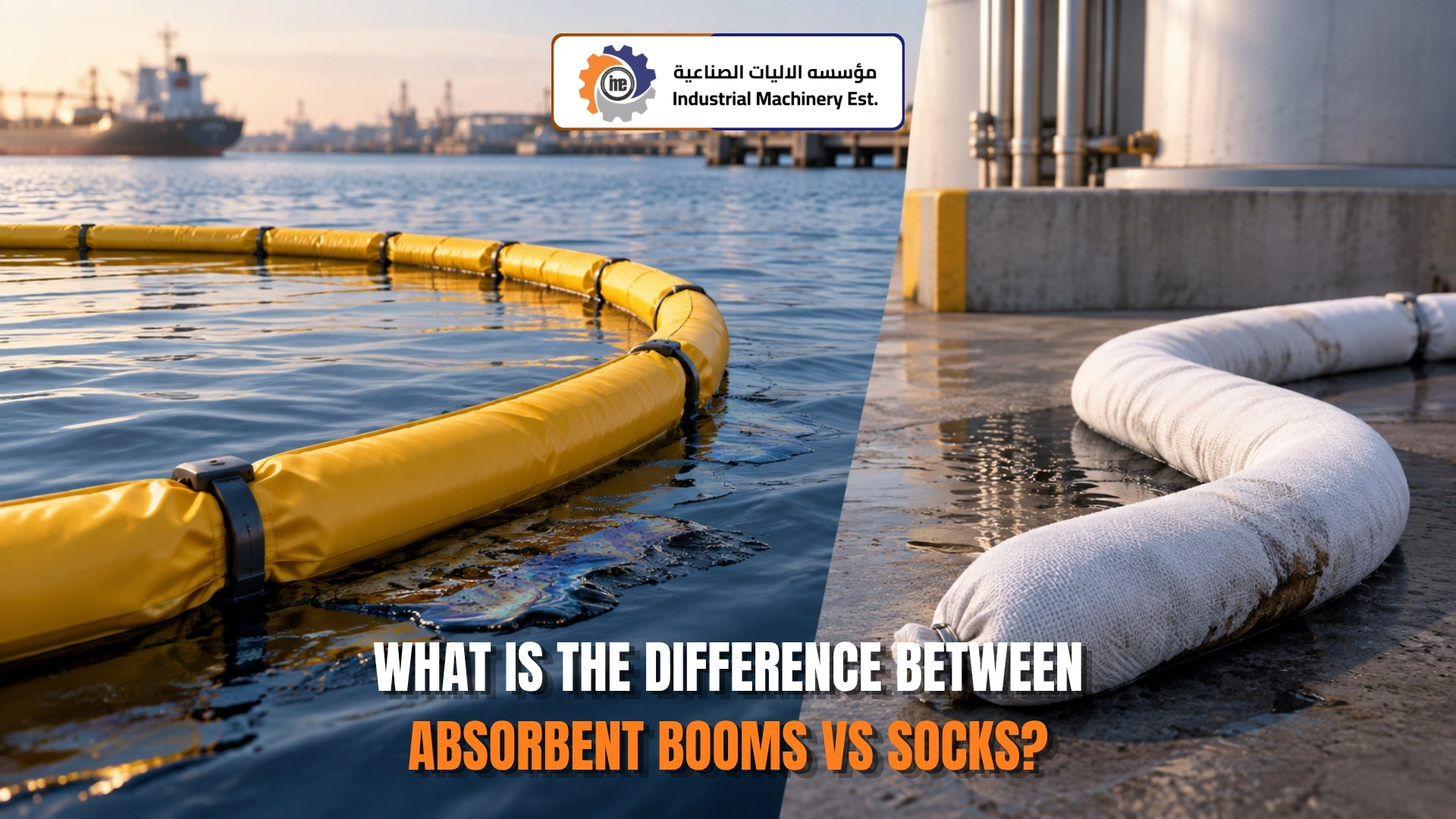
Absorbent socks are flexible land barriers for leaks, drips and small floor spills around equipment, while absorbent booms are larger, rope-reinforced barriers built to float and contain bigger spills, especially on water.
Size, buoyancy and capacity are what separate them. If you want the full picture, including how to use both together, keep reading.
Absorbent Booms vs Socks: The Simple Difference
Both products do the same basic job. They form a barrier around a liquid and soak it up before it travels. The real difference is scale and environment. Absorbent socks are small, bendable tubes used on hard surfaces indoors. Absorbent booms are longer, thicker and designed to stay afloat, so they can hold back spills on open water or across large outdoor areas. Once you see them as two sizes of the same idea, choosing becomes much easier.
What Absorbent Socks Are Built For
Absorbent socks are usually 1.5 to 8 inches in diameter and 3 to 8 feet long. That size lets them bend around machine bases, circle a leaking pump, block a doorway or line a drip path. Most plants treat them as everyday housekeeping tools rather than emergency gear. They catch slow leaks from hydraulic fittings, gearboxes and valve glands before a slip hazard forms. Because they are light, one worker can place a full ring of absorbent socks in under a minute.
What Absorbent Booms Are Built For
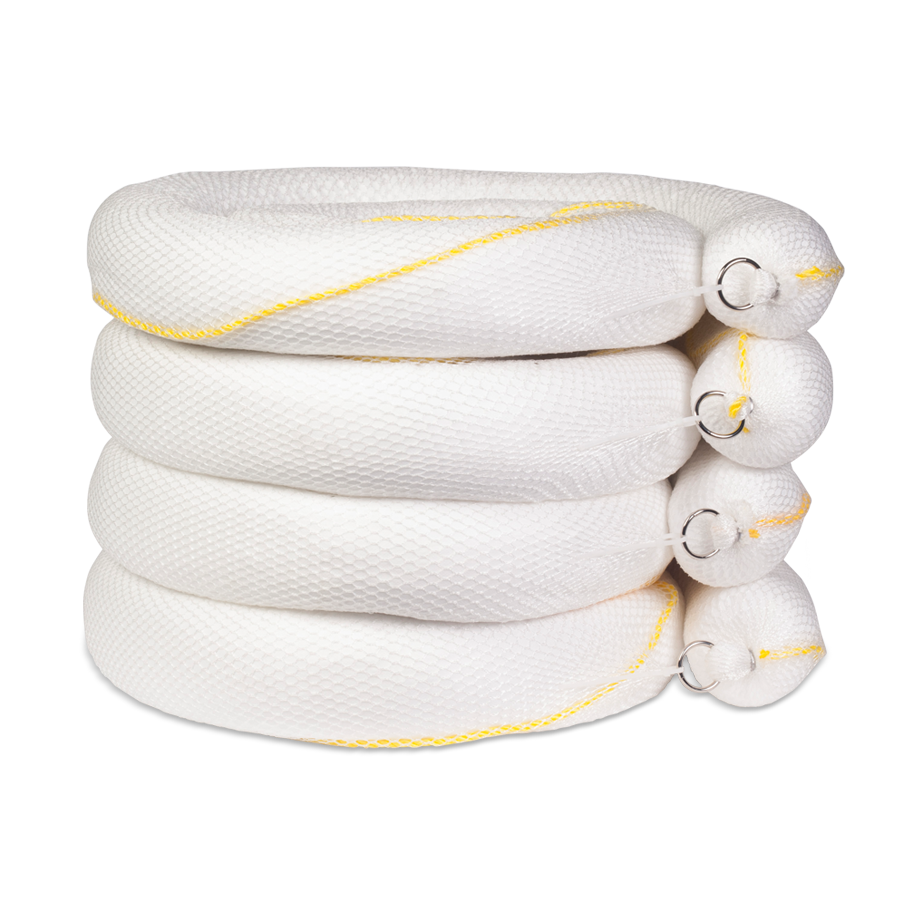
Absorbent booms are the heavy-duty option. They are longer and wider, and most come with end rings, snap connectors and an internal rope running the full length. That rope lets a crew link several units into a continuous barrier and then tow, anchor or retrieve them once saturated. Their main job is water: jetties, harbours, cooling water channels, storm drains and settling ponds. On land, absorbent booms also suit tank farms, transformer bases and open bunded areas during rain.
What Is Inside Them
Construction is similar for both. The outer skin is normally polypropylene or another chemically resistant fabric, and the filler is polypropylene fibre, cellulose or a mineral absorbent. Both come in three common grades:
- Oil-only: hydrophobic, so it repels water and picks up only hydrocarbons. This grade is the one used on water.
- Universal or maintenance: absorbs oil, coolant, water-based fluids and general shop spills.
- Chemical or hazmat: usually yellow, rated for acids, caustics and unknown liquids.
Picking the wrong grade is a bigger mistake than picking the wrong shape. A universal sock dropped in a water channel will sink and do nothing useful.
Quick Comparison
- Size: socks are narrow and short; booms are long and thick.
- Surface: socks stay on land; booms float on water and also work outdoors on land.
- Capacity: absorbent socks handle litres; absorbent booms handle far larger volumes.
- Hardware: booms have ropes, rings and snaps; socks have none.
- Use case: socks are preventive and routine; booms are emergency response.
- Placement: socks go inside bunds, around machines and at doorways; booms go outside the bund, at the shoreline or across the water surface.
Also Read: 5 Things to Do Before Mineral Scale Removal in Equipment
Can You Use Absorbent Booms and Socks Together?
Yes, and the best spill plans do. A common layout is simple. Absorbent socks sit inside secondary containment and around known leak points as the first line of defence. Absorbent booms stay in the response trailer or at the waterfront, ready to deploy if the volume escapes containment. Pads then handle the final surface clean-up once the barrier is holding. Layering the three formats means a small leak never turns into a reportable incident.
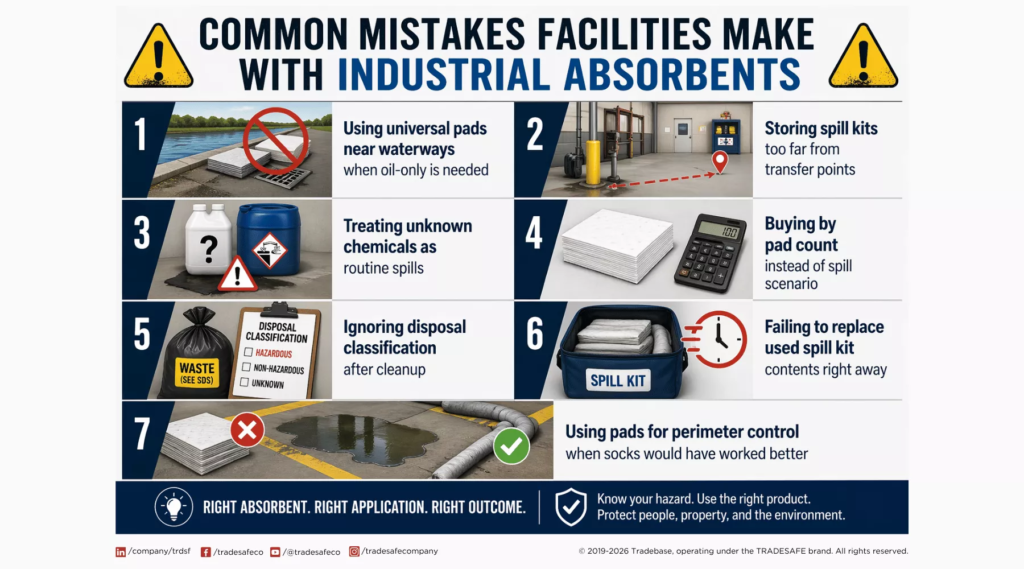
Mistakes That Waste Absorbents
The most common error is deploying a barrier too far from the source, which lets the liquid cover more ground than needed. Place the ring tight around the leak and work outward only if it grows. Another frequent mistake is leaving saturated units in place. Once a product stops wicking, it is simply a wet obstacle, so swap it out. Also check storage. Absorbents kept in sunlight, damp corners or torn packaging degrade long before they are ever used.
Which One Should You Buy?
If your risk is indoor leaks, drips and small floor spills, buy absorbent socks and stock plenty of them. If you handle fuel transfers, marine loading, open drains or outdoor bulk storage, you need absorbent booms as well. Most industrial sites need both, in the right grade, stored where the spill is likely to happen rather than in a locked store far from the plant floor.