Sludge at the bottom of a tank quietly eats your storage capacity. Hard scale hides corrosion from your inspectors. A product changeover gets delayed because the last cargo will not come off the walls. Every extra day of downtime costs money nobody planned for.
The practical fix is storage tank chemical cleaning, a controlled method where selected chemicals dissolve deposits instead of men scraping them by hand. It is faster, safer, and leaves a surface clean enough for inspection or a new product. Below we break the full process into simple steps, from isolation and degassing to rinsing, waste handling, and final handover.
What Storage Tank Chemical Cleaning Really Means
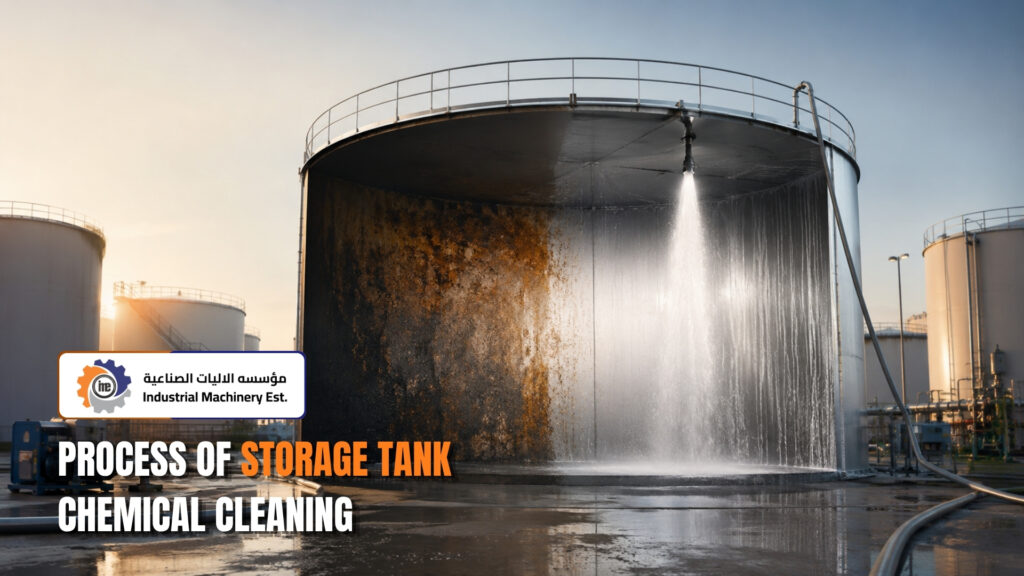
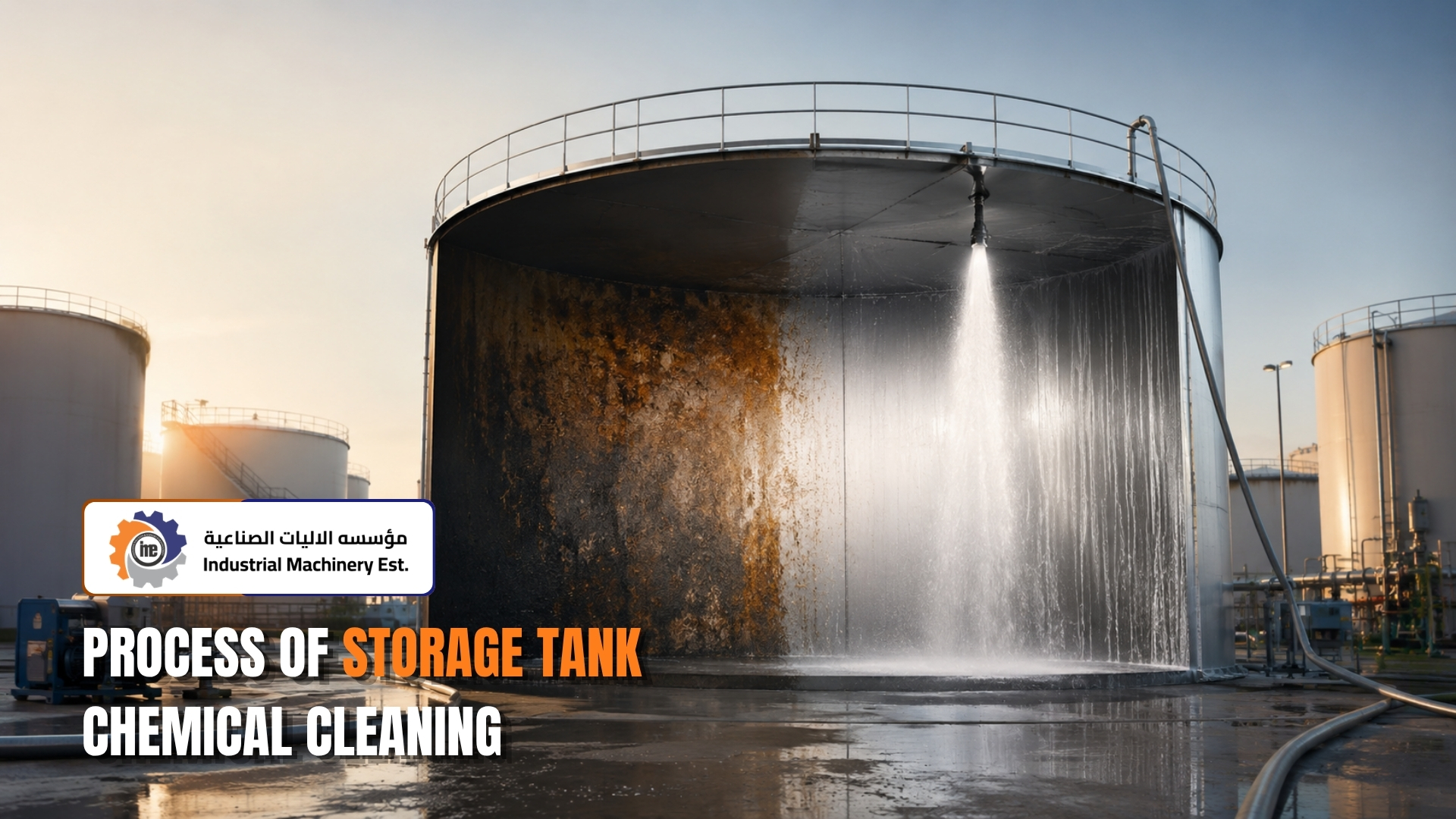
Storage tank chemical cleaning is the use of acids, alkalis, solvents, or surfactants to break down whatever has built up inside a tank. The chemical does the hard work at a molecular level, loosening sludge, scale, wax, and biological growth so it can be pumped out. Nothing is chipped, hammered, or blasted off the metal. That is why storage tank chemical cleaning suits tanks with linings, thin shells, or tight shutdown windows.
Why Tanks Reach The Point Of Needing Storage Tank Chemical Cleaning
Tanks do not get dirty overnight. Heavy hydrocarbons settle, water separates and feeds bacteria, and minerals drop out as temperatures swing. Over years this becomes a solid layer no drain nozzle will clear. Most plants call for storage tank chemical cleaning for four reasons:
- Lost capacity because sludge is occupying paid volume
- Product changeover from crude to refined, or between grades
- Inspection access ahead of an API 653 internal inspection
- Repair work on floor plates, coils, or roof drains
Step By Step Process Of Storage Tank Chemical Cleaning
Every job is different, but professional storage tank chemical cleaning follows the same backbone.
1. Survey and planning. Storage tank chemical cleaning starts with sampling the residue and checking tank drawings, shell material, and lining type. Deposit type decides chemical type. This stage also fixes the method statement, permits, manpower, and waste route.
2. Isolation and draining. Product is pumped down to the lowest possible level. All fill lines, manifolds, and steam connections are blinded and locked out. Nothing moves in or out of the tank while work is live.
3. Degassing and vapour control. Vapour suppressing chemistry or steam is introduced to drop the LEL and clear toxic gases. Readings for oxygen, combustible gas, and H2S are logged until the tank is certified safe. This is often the longest step in storage tank chemical cleaning, and rushing it is never acceptable.
4. Chemical selection and mixing. Acids handle mineral scale, alkalis and surfactants handle oil and grease, and inhibited blends protect the base metal. Concentration, temperature, and dosing rate come from the sample results, not from habit.
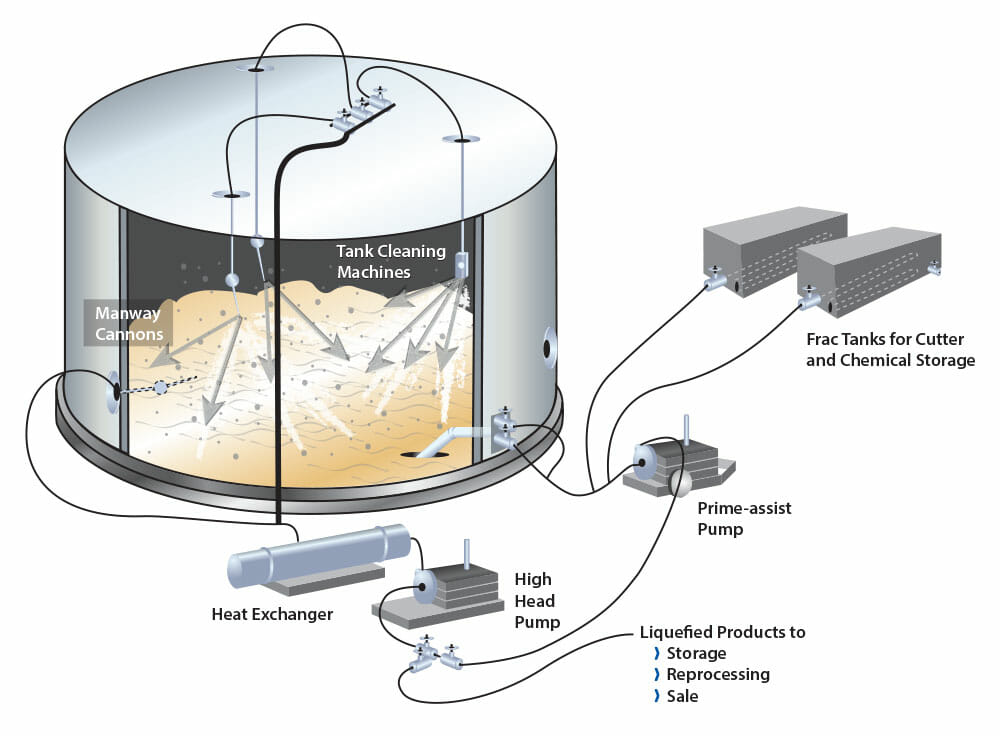
5. Application. In storage tank chemical cleaning the solution is delivered by closed loop circulation, spray balls and rotating nozzles, or soaking. Circulation is the most common route because it keeps fresh chemical moving across every surface.
6. Contact time. The chemical needs time to react. Crews monitor pH, temperature, and iron content in the returning solution to judge progress. Guessing the soak time is a common mistake in storage tank chemical cleaning.
7. Rinsing and neutralising. Spent solution is drained, then the tank is flushed with clean water until pH returns to neutral. Any acid or caustic left behind will start attacking the shell within days.
8. Waste handling. Sludge, spent chemical, and wash water are separated, and recoverable hydrocarbon goes back for reprocessing. The rest is sent to an approved treatment facility with full documentation.
9. Inspection and handover. The tank is dried, gas tested again, and checked visually. If cleanliness falls short, a second storage tank chemical cleaning cycle is run before the tank is released.
Storage Tank Chemical Cleaning Compared With Manual Cleaning
Manual entry looks cheap on paper but it is slow, and it keeps workers in confined space and vapour risk for long hours. It also struggles with hardened bottom sludge. Storage tank chemical cleaning cuts entry time sharply, protects coatings, and gives a repeatable result. Many turnarounds use both, with chemistry doing bulk removal and a short manual pass finishing the corners.
Safety Points No Storage Tank Chemical Cleaning Job Can Skip
Confined space permits, continuous gas monitoring, bonding and grounding against static, correct PPE, and a standby rescue team are all non negotiable. Chemical compatibility matters too, because mixing the wrong products inside a closed vessel can generate heat or gas. Good storage tank chemical cleaning is a safety exercise first.
Planning Your Next Storage Tank Chemical Cleaning Job
Do not wait for capacity loss or a failed inspection to force your hand. Sample the residue early, choose the chemistry on facts, and build the shutdown window around realistic degassing and rinsing times. Handled properly, storage tank chemical cleaning returns the tank to service quicker, keeps your inspection record clean, and extends asset life.
Industrial Machinery Est. provides storage tank chemical cleaning across Jubail and the Eastern Province, with approved vendor status for major petrochemical and refining clients. Contact our team to discuss your tank, your deposits, and your storage tank chemical cleaning schedule.
More Services: