A new plant may look ready on paper, yet its piping hides welding slag, mill scale, rust, sand, and even leftover construction debris. Start up without removing them, and you risk damaged pumps, blocked valves, fouled heat exchangers, and a failed startup that costs millions.
Many project teams learn this the hard way. The solution is pre-commissioning cleaning, a controlled process that cleans every line and vessel before the first startup so equipment runs safely from day one. In this article, you will learn what pre-commissioning cleaning is, why new plants need it, the main methods used, and how the process works step by step.
What is Pre-Commissioning Cleaning?
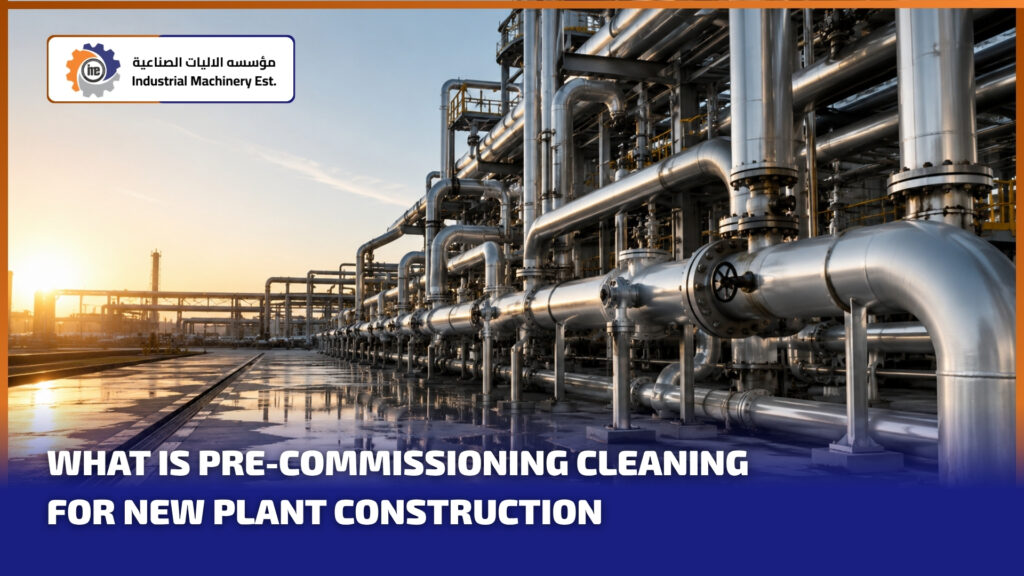
Pre-commissioning cleaning is the process of cleaning piping systems, vessels, and equipment in a newly built plant before it goes into operation. During construction, pipelines collect rust, sand, weld spatter, grease, and even loose items such as welding rods and rags. If this debris stays inside, it travels straight into pumps, compressors, and instruments at startup.
Pre-commissioning cleaning removes these contaminants using water flushing, air blowing, chemical cleaning, and other proven methods. The goal is simple: hand over a clean, dry, and corrosion-free system that is ready for a safe first startup. It is a standard requirement in oil and gas, petrochemical, refining, and power projects.
Why New Plants Need Pre-Commissioning Cleaning
A new facility may look spotless from the outside, but the inside of the piping tells a different story. Months of fabrication, welding, and open-air storage leave behind contamination that no operator wants in the system.
Common contaminants found in new plant piping include:
- Mill scale and rust formed on carbon steel during storage
- Welding slag and spatter left after fabrication
- Sand, dust, and dirt that entered open pipe ends
- Grease, oil, and preservatives applied during manufacturing
- Loose objects such as rags, ropes, and welding rods
Without pre-commissioning cleaning, these materials block strainers, damage pump seals, score valve seats, and foul heat exchangers. In severe cases, a single piece of debris can destroy turbine blades or force a shutdown within days of startup.
Common Pre-Commissioning Cleaning Methods
No single technique suits every system. A well-planned pre-commissioning cleaning program matches the right method to each line based on pipe size, material, and service.
- Water flushing: High-velocity water is pumped through the piping to carry loose debris out. It is usually the first step for most lines.
- Air blowing: Compressed air is blown through lines at high velocity to remove dust and light debris, ideal for gas service piping.
- Chemical cleaning: Degreasing, acid pickling, and passivation dissolve oil, rust, and mill scale, then leave a protective layer on the metal surface.
- Steam blowing: High-pressure steam cleans steam and turbine lines where strict cleanliness targets apply.
- Pigging: Cleaning pigs travel through pipelines to scrape and push out debris, often used for long-distance lines.
- Lube oil flushing: Oil is circulated at high velocity to clean lubrication systems to a defined cleanliness standard.
The Pre-Commissioning Cleaning Process Step by Step
Every project is different, but most pre-commissioning cleaning programs follow a similar sequence:
- System review and planning: Engineers study drawings, define cleaning circuits, and select the right method for each loop.
- Preparation: Sensitive items such as pumps, control valves, and instruments are isolated or removed, and temporary spools are installed.
- Cleaning execution: Flushing, blowing, or chemical cleaning is carried out until the target cleanliness is reached.
- Inspection and verification: Results are confirmed through visual checks, target plates, or water and particle sampling.
- Drying and preservation: Systems are dried with air or nitrogen and preserved to prevent corrosion before startup.
Clear documentation at each step gives the commissioning team full confidence that every circuit is ready for operation.
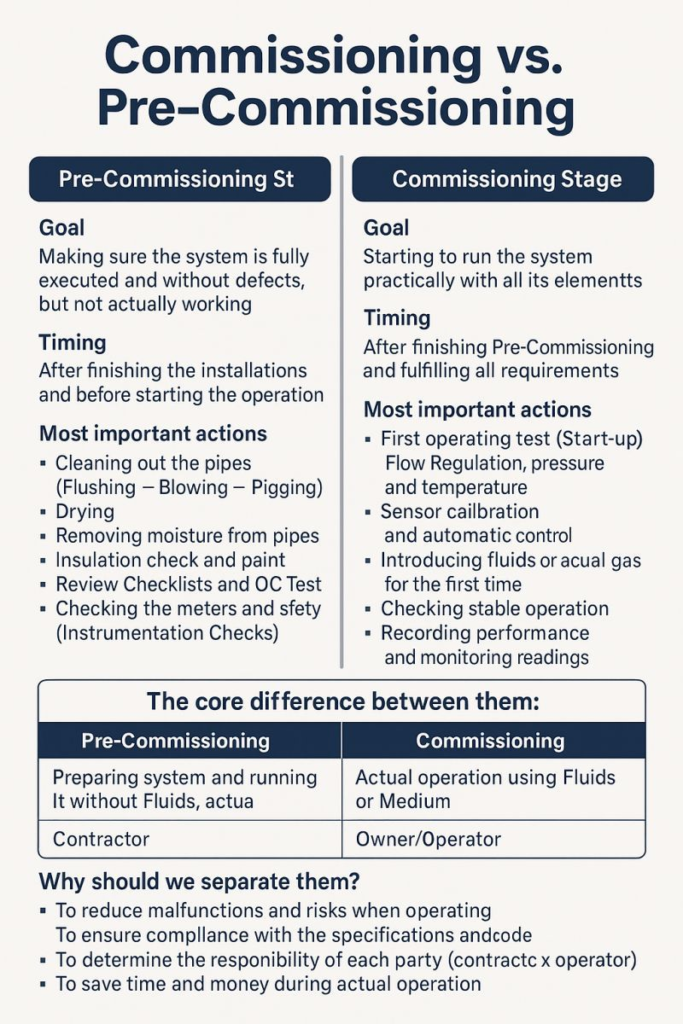
Key Benefits of Pre-Commissioning Cleaning
Investing in pre-commissioning cleaning protects the far larger investment made in the plant itself. The main benefits include:
- Smooth and safe startup without unexpected trips or blockages
- Protection of rotating equipment such as pumps, compressors, and turbines
- Longer equipment life through corrosion prevention and passivation
- Compliance with project specifications and client requirements
- Lower maintenance costs during the first years of operation
Simply put, a clean system starts faster, runs safer, and lasts longer.
Pre-Commissioning Cleaning Services by IME
Industrial Machinery Est. (IME) has delivered chemical cleaning and industrial cleaning services across Saudi Arabia since 1990. Our teams support new plant construction projects in the petrochemical, oil and gas, refining, and power sectors with water flushing, chemical cleaning (CIP), pickling, and passivation.
As an approved vendor for Saudi Aramco, SABIC, Tasnee, and Marafiq, IME follows strict quality and safety standards on every job. If your project is approaching mechanical completion, contact IME early to plan your pre-commissioning cleaning scope and avoid costly startup delays.
Final Thoughts
Pre-commissioning cleaning is not an optional extra. It is the critical step between construction completion and a successful startup. By removing construction debris, protecting equipment, and verifying cleanliness, it saves new plants from expensive early failures. Plan it early, choose an experienced partner, and your plant will reward you with a trouble-free first run.