Fuel bills climb every month, stack temperature creeps higher, and the unit still cannot hit design throughput. In most plants the cause sits quietly inside the heat exchanger furnace, where a thin layer of soot, ash or scale has choked heat transfer.
A deposit only one millimetre thick is enough to push firing rates up and efficiency down. Left alone it becomes tube damage, refractory failure and an unplanned shutdown that costs far more than a planned clean.
The fix is rarely complicated. Routine inspection, scheduled cleaning of the radiant and convection sections, and correct material selection recover most of the lost duty. Do it on a calendar instead of after a failure and the unit holds its rated performance for years.
If you want the full picture, keep reading. The sections below cover how it works, what goes wrong, and how to fix it.
What Is a Heat Exchanger Furnace?
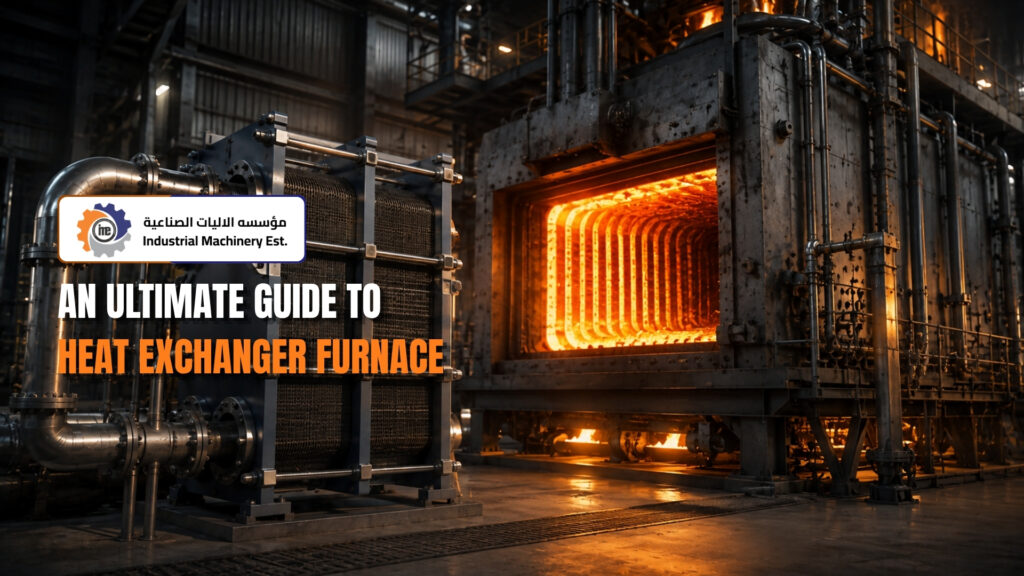
A heat exchanger furnace burns fuel in a combustion chamber and passes that energy into a process fluid or air stream through metal tubes, which keep flue gas and the process stream completely separate. That separation is critical, because leaking combustion products create both a safety hazard and a quality problem.
In refineries and petrochemical plants the same asset is called a fired heater or process furnace, and in power plants it sits inside boilers. The scale changes, but the working principle of a heat exchanger furnace never does.
How a Heat Exchanger Furnace Works
The cycle breaks into simple stages:
- Combustion: burners fire natural gas, fuel oil or refinery gas in the firebox.
- Radiant transfer: flame radiation heats the tubes lining the walls and roof.
- Convective transfer: hot flue gas rises through the convection bank, releasing more energy.
- Process pickup: fluid inside the tubes absorbs that heat and leaves at target temperature.
- Exhaust: cooled gas leaves through the stack, as cool as the design allows.
Stack temperature is the quickest health check available. When it rises with no change in duty, the heat exchanger furnace is losing usable surface to deposits.
Common Heat Exchanger Furnace Types
Not every heat exchanger furnace looks the same:
- Vertical cylindrical: compact footprint, common for smaller duties.
- Cabin or box type: horizontal tube runs, typical in crude and vacuum service.
- Shell and tube units: paired with fired equipment for feed preheat.
- Air preheaters: recover stack energy and return it to the burner air.
Selection depends on duty, plot space, fuel type and expected fouling.
Why Heat Exchanger Furnace Performance Drops
Fouling leads the list. Dust, refractory particles, soot and decoke residue settle between tube rows and act like insulation. Even a light coating measurably cuts convection bank output.
Internal fouling matters just as much. Coke, salts and hardness scale build inside the tubes, raising metal temperature and pressure drop. Corrosion follows where sulphur and moisture meet below the acid dew point, and a neglected heat exchanger furnace eventually shows bulging, warping or cracks.
We have Complete Guide on Pressure Drop in Heat Exchangers Explained
Warning Signs Your Heat Exchanger Furnace Needs Attention
Operators notice these long before anything fails:
- Rising fuel consumption at constant throughput
- Higher stack temperature and falling thermal efficiency
- Visible hot spots, bulging or sagging tubes
- Increased pressure drop across the process side
- Refractory cracking, spalling or loose anchors
- Higher CO or NOx readings in the flue gas
Any two together justify a full heat exchanger furnace inspection at the next opportunity.
Heat Exchanger Furnace Cleaning Methods
Fireside cleaning removes external deposits. High pressure water jetting, abrasive lancing and robotic rover systems reach between tube rows without confined space entry.
Chemical cleaning handles the inside. An inhibited acid or alkaline solution dissolves scale and corrosion products, then passivation protects the clean metal. A well executed clean brings a tired heat exchanger furnace back near its original heat transfer coefficient.
Mechanical cleaning, pigging and hydrojetting suit heavy deposits chemicals cannot shift.
Inspection and Integrity Checks
Cleaning without inspection is a missed opportunity. While a heat exchanger furnace is offline, standard checks include ultrasonic thickness readings, borescope surveys, tube metal temperature mapping, refractory assessment and hydrotesting.
Records from each turnaround build a trend line, showing whether your heat exchanger furnace needs cleaning every cycle or every second.
Materials and Design Details That Matter
Material choice decides service life. Carbon steel suits mild duty, chrome moly alloys handle higher temperatures, and stainless or nickel alloys resist aggressive corrosion. Finned tubes lift convection performance but foul faster, so weigh the gain against cleaning frequency.
Burner tuning, excess air control and correct draft settings protect a heat exchanger furnace as much as metallurgy does.
Building a Heat Exchanger Furnace Maintenance Plan
Start with baseline data. Track stack temperature, fuel flow and outlet temperature weekly, then set trigger points that call for action before a shutdown. Pair that monitoring with planned offline cleaning during turnarounds.
A documented plan turns the heat exchanger furnace from a reliability risk into a predictable asset, and it usually pays for itself inside one operating cycle.
Final Thoughts
Efficiency losses in a heat exchanger furnace build up quietly, and the cost lands on the fuel bill long before an inspection report. Clean your heat exchanger furnace on schedule, inspect it properly, keep the records, and it will deliver the duty it was designed for.