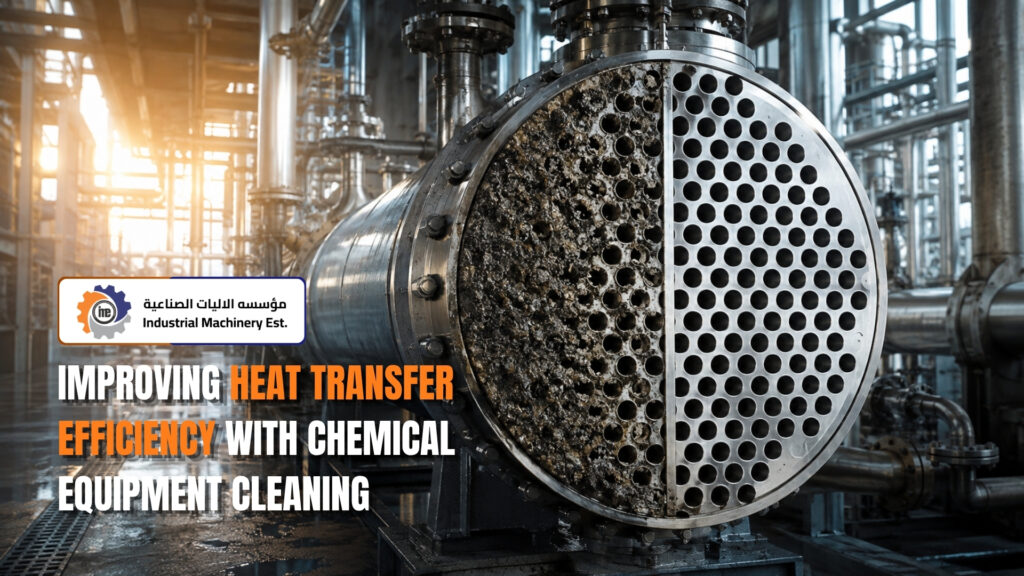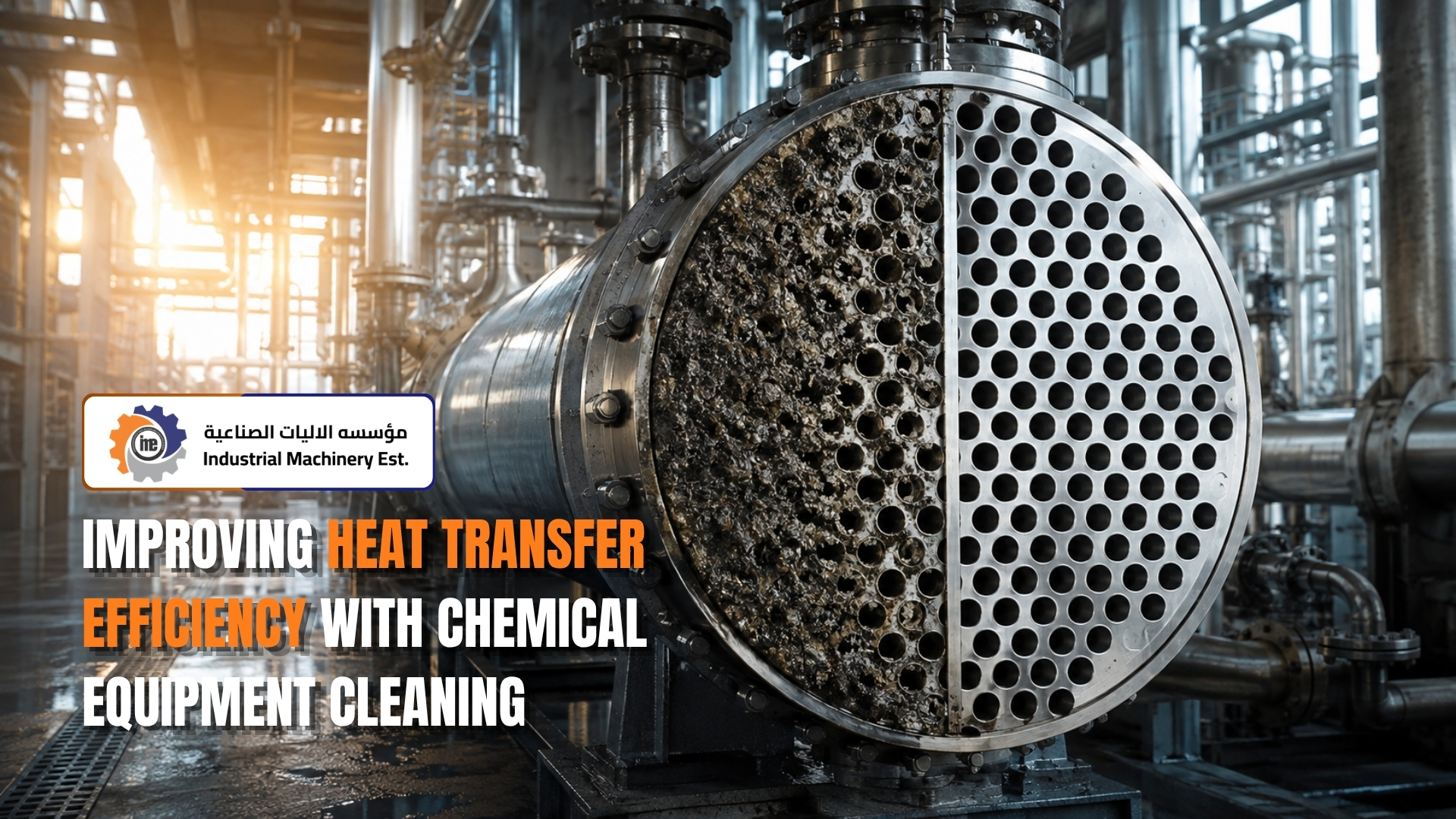
Your exchanger is running, but outlet temperatures keep drifting. Pumps work harder, pressure drop climbs, fuel costs rise, and the unit still cannot reach design duty. Most teams blame ageing equipment. The real culprit is usually a thin layer of scale, coke, biofilm or corrosion product sitting on the metal.
Even one millimetre of deposit can cut heat transfer efficiency by double digits. The fix is rarely replacement. A properly engineered chemical clean dissolves the deposit and returns the surface to bare metal, restoring heat transfer efficiency in hours instead of weeks. Read on for how deposits form, how to catch the loss early, and how to clean safely.
Why Deposits Quietly Destroy Heat Transfer Efficiency
Fouling is the unwanted build up of solids on a clean metal surface. Scale, silt, corrosion products, biofilm and process coke all behave like insulation. They add thermal resistance between the two fluids, so heat transfer efficiency falls even though the equipment itself is mechanically sound.
The numbers get bad fast. A deposit under one millimetre thick can reduce heat transfer’s efficiency by 10 to 20 percent. That loss appears as extra fuel at the furnace, higher cooling water demand, and reduced throughput across the whole process train. Left alone, the same deposits trap chlorides, start under deposit corrosion and push heat transfer efficiency down further every week.
Early Signs Your Heat Transfer Efficiency Is Slipping
Most units warn you long before they trip. Watch for:
- Rising outlet temperature on the hot side
- Growing pressure drop across shell or tube side
- Higher pump and compressor load for the same flow
- A falling overall heat transfer coefficient in daily logs
- Temperature swings that operators keep correcting by hand
Trend these readings weekly rather than monthly, because heat transfer efficiency rarely collapses overnight. When the calculated coefficient sits around 15 percent below design, cleaning almost always pays for itself in recovered heat transfer efficiency and lower energy use.
How Chemical Cleaning Restores Heat Transfer Efficiency
Chemical cleaning circulates a selected solvent through the equipment at controlled temperature, flow rate and contact time. The chemistry dissolves deposits instead of scraping them, so it reaches baffles, narrow channels and blind pockets that brushes and lances simply cannot touch.
A typical circulation job follows a clear sequence:
- Deposit sampling and analysis to identify what is actually on the metal
- Isolation and temporary spool connections to build the cleaning loop
- Alkaline wash or degreasing to strip oil and organic matter
- Inhibited acid or solvent circulation to dissolve scale and oxides
- Neutralisation and rinsing to bring pH back to safe levels
- Passivation to leave a protective film on the fresh surface
Passivation is not optional. Freshly cleaned steel corrodes quickly, and new corrosion product will erode your recovered heat transfer efficiency within weeks.
Also Read: How to Perform Heat Exchanger Leak Detection
Matching the Chemistry to the Deposit
There is no universal cleaner, and guessing wastes an entire shutdown window. Match the solvent to the deposit analysis if you want real heat transfer efficiency gains:
- Carbonate scale: inhibited hydrochloric or citric acid
- Sulphate and silica scale: chelants such as EDTA
- Iron oxides: citric or hydroxyacetic acid formulations
- Oil, grease and coke: alkaline degreasers and specialist solvents
- Biofilm: oxidising biocide followed by dispersant
Always confirm compatibility with the metallurgy. Stainless steel, copper alloys and duplex grades each carry limits on chloride content, acid strength and temperature. The right inhibitor protects the base metal while the acid removes the deposit, which is how heat transfer efficiency is recovered without thinning tube walls.
Where Heat Transfer Efficiency Gains Show Up First
Once surfaces are back to bare metal, results appear within one operating cycle:
- Restored duty, stable outlet temperatures and measurable heat transfer efficiency
- Lower fuel, steam and cooling water consumption
- Reduced pressure drop and lighter pump load
- Longer runs between planned shutdowns
- Fewer tube failures from under deposit corrosion
Chemical Versus Mechanical Cleaning for Heat Transfer Efficiency
Hydrojetting is excellent for hard, bulk deposits inside straight tubes. Chemical cleaning wins where the geometry is complex, where dismantling is costly, or where the equipment cannot be opened at all. Many plants combine both methods, using circulation for fine scale and jetting for heavy plugging, then measuring heat transfer efficiency before and after to prove the result.
Building a Heat Transfer Efficiency Schedule That Holds
Reactive cleaning always costs more than planned cleaning. Log the overall coefficient and pressure drop, set a trigger point, and book the work before performance collapses. Treat heat transfer efficiency as a monitored KPI, not a maintenance afterthought.
For petrochemical, refinery and power plants across the Eastern Province, Industrial Machinery Est. provides engineered chemical cleaning, deposit analysis and safe waste handling to restore heat transfer efficiency and keep your critical equipment running at design capacity.
Industrial Machinery Heat Exchanger Sercvices