Fouling never warns you before it strikes. One day your heat exchanger runs fine, and the next your flow rates drop, pressure spikes, and energy bills climb without explanation. Scale, sludge, oil, and corrosion products quietly build up inside pipes, vessels, and tubes, choking efficiency and putting your equipment at risk of failure.
The real headache is choosing the right cleaning method, because picking wrong can waste water, damage metal, or leave deposits behind. Should you go with circulation cleaning, foam cleaning, or a static soak? Each one works differently, and the best choice depends on your system, your contaminants, and your budget.
In this detailed guide, you will learn exactly how each method works, where it shines, where it struggles, and how to pick the one that protects your assets and restores performance.
What Chemical Cleaning Actually Does
Chemical cleaning removes contaminants like rust, scale, oil, wax, sludge, and debris from industrial equipment. It is widely used during pre-commissioning, shutdowns, and turnarounds across oil, gas, refining, and power plants. The goal is simple: restore heat transfer, improve flow, and keep systems safe. Compared to mechanical cleaning, chemical cleaning can cut decontamination time by half or more while generating far less waste. The trick is matching the right method and chemistry to your specific fouling problem.
Circulation Cleaning Explained
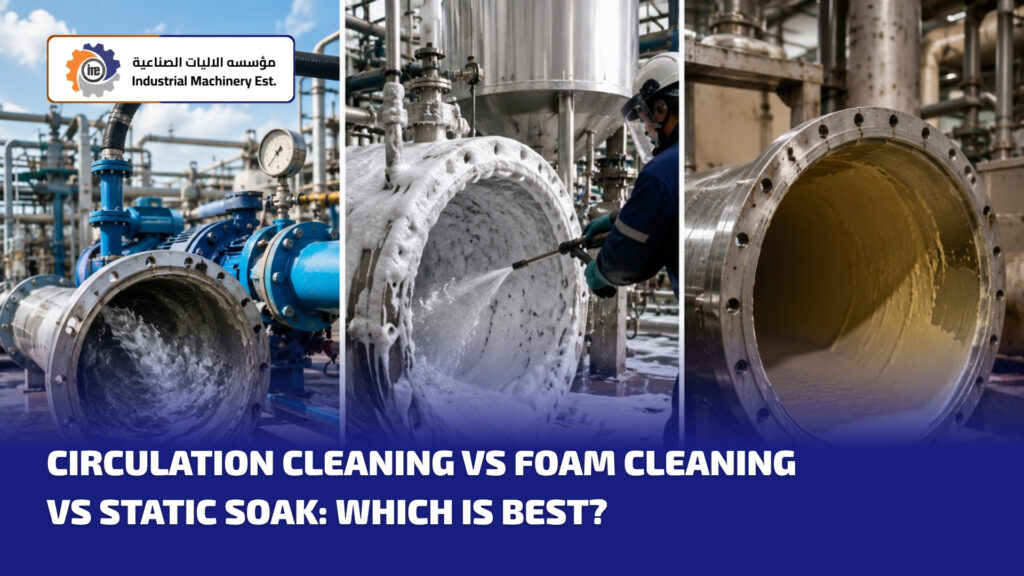
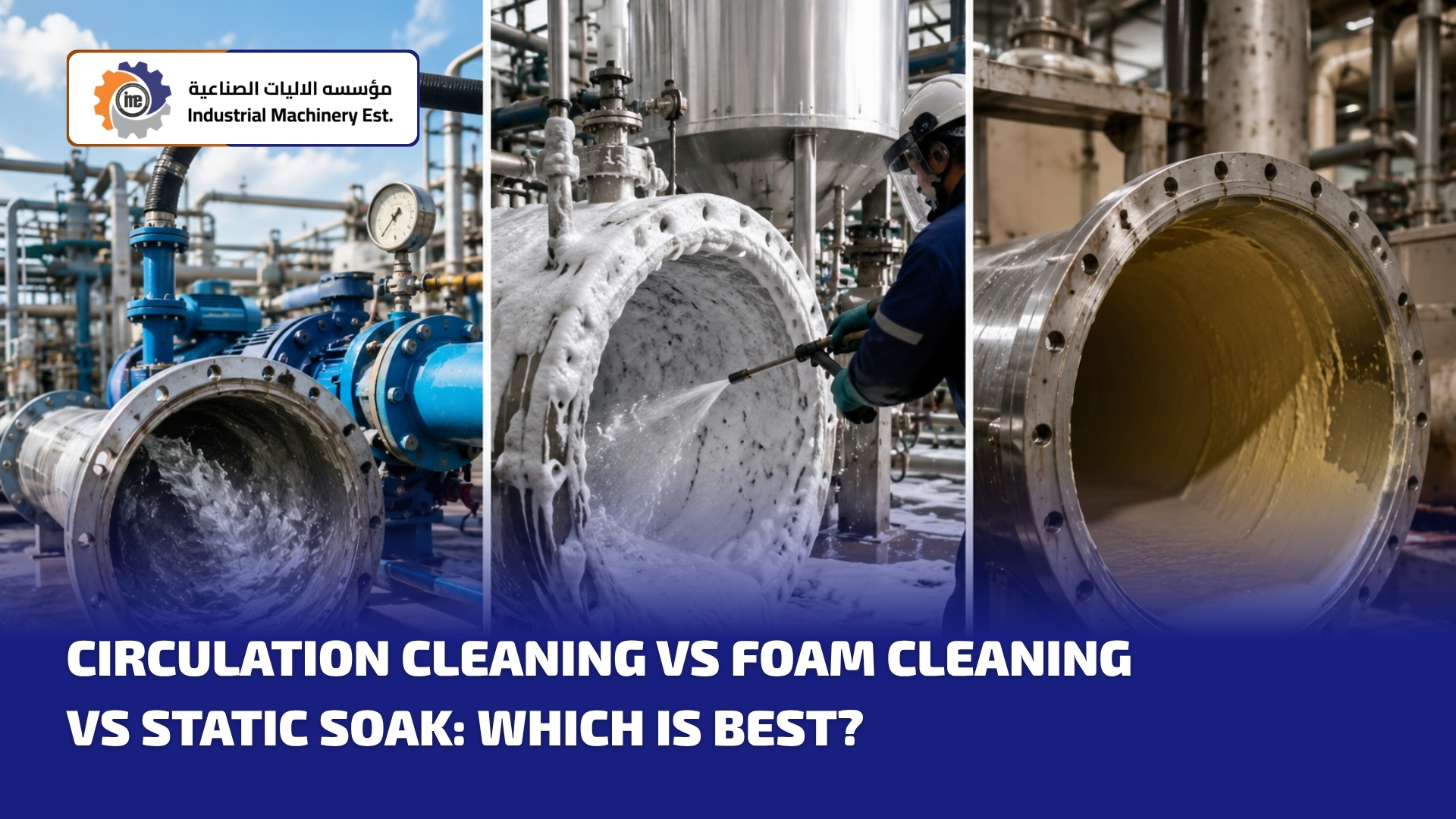
Circulation cleaning, often called fill-and-circulate, fills the entire system with a cleaning solution and pumps it continuously through the equipment. The constant movement creates friction and turbulence that physically loosens deposits while the chemistry dissolves them. This chemical cleaning method is highly effective because flow does half the work, much like stirring sugar into tea makes it dissolve faster.
Key advantages of circulation cleaning:
- Higher flow rates create shear that scrubs fouling off internal surfaces.
- Fresh chemistry is constantly delivered, so reactions stay strong.
- Loosened debris is flushed away instead of settling back down.
- Less aggressive chemicals, like citric acid, can replace harsh acids such as hydrochloric acid.
The downside is that circulation cleaning needs the full system filled, which means high water usage and more waste. It also requires temporary pumps, hoses, and tanks to build a circulation loop. Because of this, it works best on piping systems and heat exchangers that can be easily looped.
Foam Cleaning Explained
Foam cleaning takes a completely different approach. Instead of flooding the system with liquid, a foaming agent is added to the solvent, usually at around 1 to 1.5 percent by volume. A foam generator then converts the solution into thick foam with a foam-to-solvent ratio near 20 to 1, meaning only about five percent of the foam is actual liquid chemical.
This thin-film foam coats every interior surface with a huge active cleaning area. Foam expands to reach spaces that liquid struggles to fill, and it is not slowed by temperature or condensation the way steam methods are. Foam is also a gentler alternative when harsh chemistry might corrode delicate pipeline materials.
Foam cleaning is ideal when:
- Liquid fill or circulation is impractical or too expensive.
- You need to clean tall vessels, columns, or voids.
- Reducing chemical volume and waste is a priority.
- Heavy organic deposits need extra surface contact to break down.
Because foam uses so little liquid, a continuous foam flow must be maintained to keep washing contaminants away.
Static Soak Explained
Static soak, also known as fill-and-soak, fills the equipment with cleaning solution and lets it sit undisturbed for a set period. The chemistry does the work on its own, slowly reacting with deposits. After soaking, the system is drained, and the process can be repeated until clean.
The biggest benefit is simplicity. A static soak needs far less temporary equipment than circulation cleaning, since no pumping loop is required. It works well when circulation is not feasible and when using mineral acids that react with metal scale without much agitation. The trade-off is that soaking alone is less effective on stubborn fouling, and loosened deposits may resettle without flow to carry them away.
Circulation vs Foam vs Static Soak: A Quick Comparison
| Method | Best For | Main Strength | Main Limitation |
| Circulation Cleaning | Loopable piping, exchangers | Flow plus chemistry, strong results | High water and equipment needs |
| Foam Cleaning | Vessels, columns, voids | Wide coverage, low chemical use | Needs continuous foam flow |
| Static Soak | Simple systems, mild fouling | Minimal equipment, low cost | Weaker on tough deposits |
So, Which Method is Best?
There is no single winner. The right choice depends on your contaminants, your metallurgy, and your system layout. In fact, the most effective programs often combine methods. A well-designed cleaning sequence may alternate a soak step with circulation, letting the soak loosen fouling and circulation flush it out. Chemical cleaning success always starts with analyzing a sample of the deposit so the right chemistry and method are matched to the job. Get that wrong, and you risk asset damage, failed cleaning, or costly schedule overruns.
Why Choose Industrial Machinery Est.
When the stakes are high, experience matters. Industrial Machinery Est. is recognized as one of the best industrial chemical cleaning providers in Saudi Arabia, delivering complete industrial support solutions backed by over 30 years of proven field expertise. From circulation cleaning of complex piping loops to foam cleaning of towers and precise static soak programs, our specialists select the right method and chemistry for your exact fouling challenge.
We proudly serve some of the top Saudi companies nationwide across the petrochemical, oil and gas, refining, and power sectors, holding approved-vendor status with industry leaders. That trust is earned through safe procedures, skilled personnel, and results that restore performance while protecting your assets.
If fouling is dragging down your efficiency, do not gamble on the wrong method. Partner with Industrial Machinery Est. for reliable, end-to-end chemical cleaning that keeps your operations running at full strength.