A drum tips over, a hose bursts, or a valve starts leaking, and everyone freezes. Some workers rush in without protection, others walk straight through the puddle, and nobody is sure who to call. Those first few minutes decide whether a spill stays small or turns into injuries, fines, and costly downtime.
The fix is straightforward: spill response training that teaches every employee to stop, assess, report, and act within their own role. Read on for exactly what workers should learn and how to make that knowledge stick.
Why Spill Response Training Matters
Spills rarely come with a warning. They happen during routine tasks like transferring chemicals, draining equipment, or moving containers. Without clear guidance, employees fall back on instinct, and instinct usually leads to the wrong move.
Good training replaces guesswork with a clear set of actions. It protects people first, then the environment, then property. It also helps companies meet safety rules, which lowers the risk of penalties and reputation damage.
Also Read: What Are the Things to Do While an Industrial Chemical Hazard?
Not Every Employee Needs the Same Level
One common mistake is giving everyone the same course. In reality, spill response training should match each person’s role in the emergency plan. Most workplaces use three broad levels:
- Awareness level: For anyone who might discover a spill. They learn to recognise it, keep people away, and alert the right person.
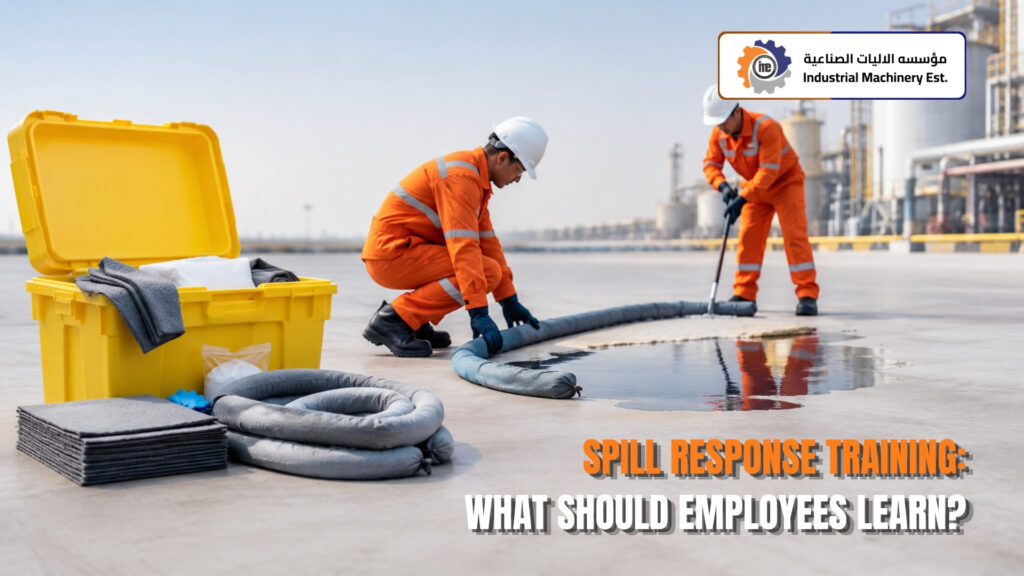
- Operations level: For workers who contain a spill from a safe distance using barriers and absorbents.
- Technician level: For trained responders who approach the source, stop the leak, and handle hazardous cleanup.
Standards such as OSHA’s HAZWOPER follow a similar structure, so defining roles early makes planning much easier.
Core Topics Every Programme Should Cover
1. Hazard recognition. Employees must know what materials are stored in their area and the risks each one carries. Training should explain how to read labels and Safety Data Sheets. Workers also need to learn that a clear liquid is not always harmless, since many solvents and cleaners look like water.
2. Personal safety first. The most important rule is simple: never put yourself at risk. Staff should never touch, smell, or walk through an unknown spill. They also need to know which personal protective equipment is required and how to wear it correctly.
3. Reporting and communication. Workers need to know exactly who to call and what to say. A useful report includes the location, the material if known, the approximate size, and whether anyone is hurt. Training should also explain when to sound an alarm and when to evacuate.
4. The four C’s. Many programmes teach a simple framework that is easy to remember under pressure:
- Control: Stop the source if it is safe to do so.
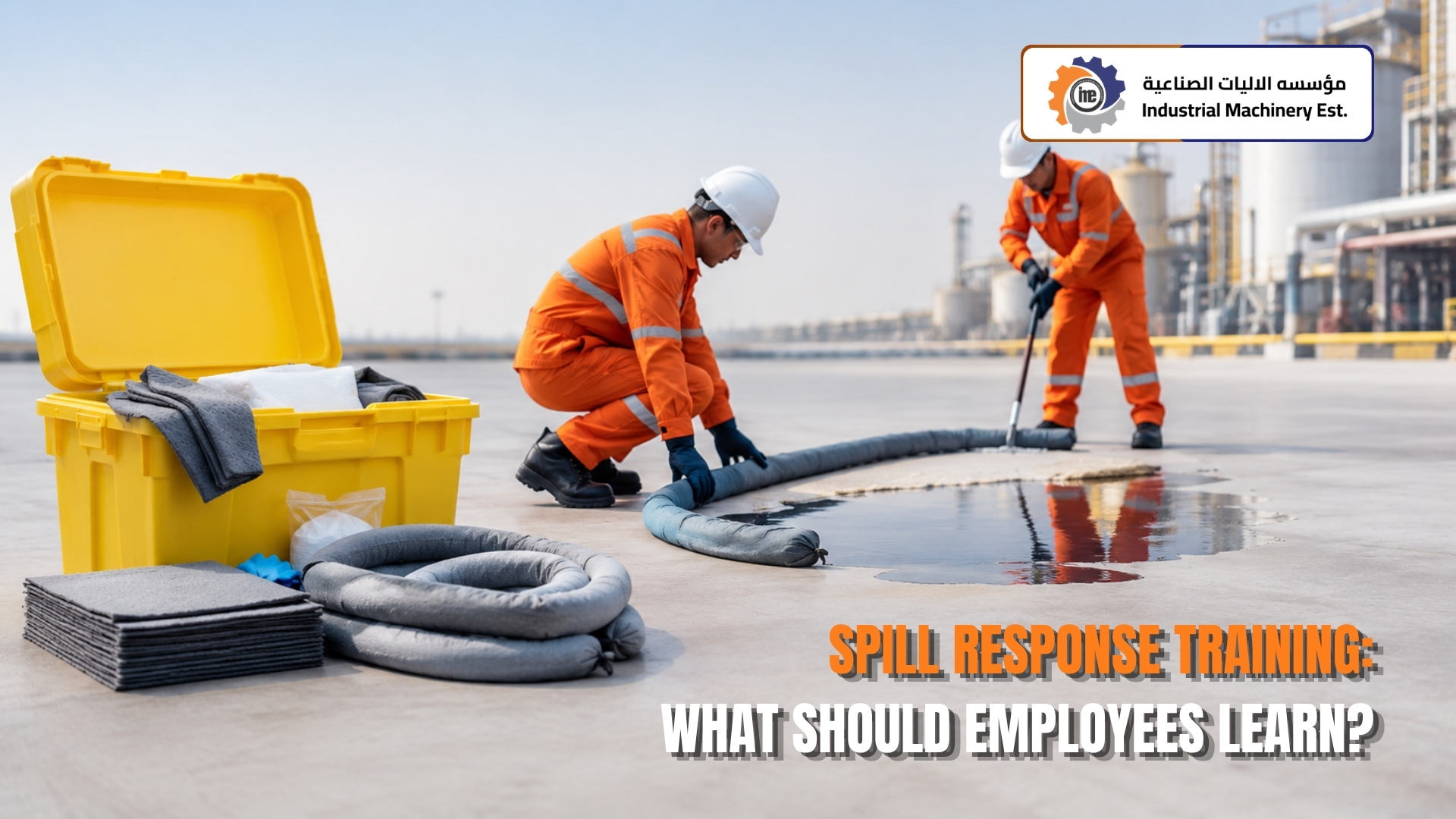
- Contain: Prevent spreading with booms, socks, or dikes.
- Clean: Use the right absorbents and methods.
- Check: Confirm that no hazard remains.
5. Spill kit use. Knowing where the kit hangs means little if nobody knows how to open it. Hands-on practice should show the difference between oil-only, chemical, and universal absorbents, and how to protect drains fast.
6. Disposal and decontamination. Used absorbents can be as hazardous as the spilled material. Workers should learn how to bag, label, and store waste correctly, and how to clean tools and protective gear afterwards.
7. Documentation. Every incident should be recorded. A short incident report helps identify root causes and prevents repeat spills.
Prevention Is Part of the Lesson
The best spill is the one that never happens. A good programme also builds prevention habits, such as:
- Storing containers with secondary containment
- Inspecting hoses, valves, and fittings on a schedule
- Keeping walkways clear during transfers
- Reporting small leaks before they grow
How Often Should Training Happen?
One session during onboarding is not enough. Skills fade quickly when they are never used. Most safety professionals recommend annual refresher spill response training, supported by short drills through the year.
Even a five minute drill covering kit location, reporting steps, and area isolation builds real confidence. Repetition is what turns “I think I know” into “I can do this.”
Making the Training Stick
Classroom lessons are a good start, but practice works better. A few ways to strengthen any programme:
- Use real scenarios from your own site
- Let workers handle actual spill kit items
- Run unannounced drills to test readiness
- Review each drill and close the gaps you find
Final Thoughts
Spills are a routine risk in industrial workplaces, but serious outcomes are not. With the right spill response training, employees know how to protect themselves, alert others, and control a spill before it spreads. Start by defining roles, cover the core topics above, and practise often. A trained team turns a potential emergency into a manageable event.