Outlet temperatures drift. Pressure drop climbs. A reactor loop that ran clean last year now needs extra steam and cooling water to hold spec, and the only fix on offer is a shutdown you cannot afford. Deposits are the usual cause, and pulling every unit apart is rarely the answer.
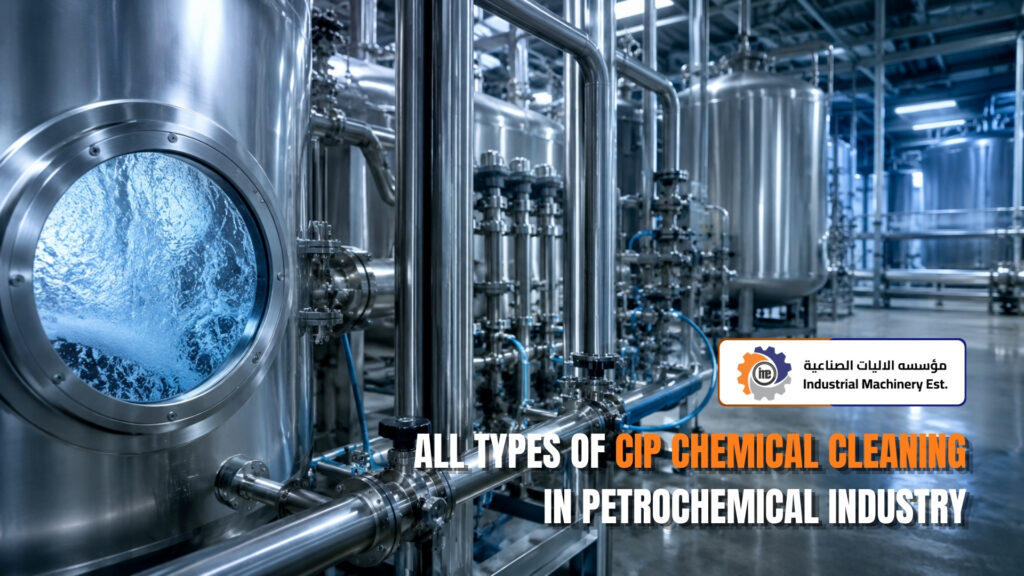
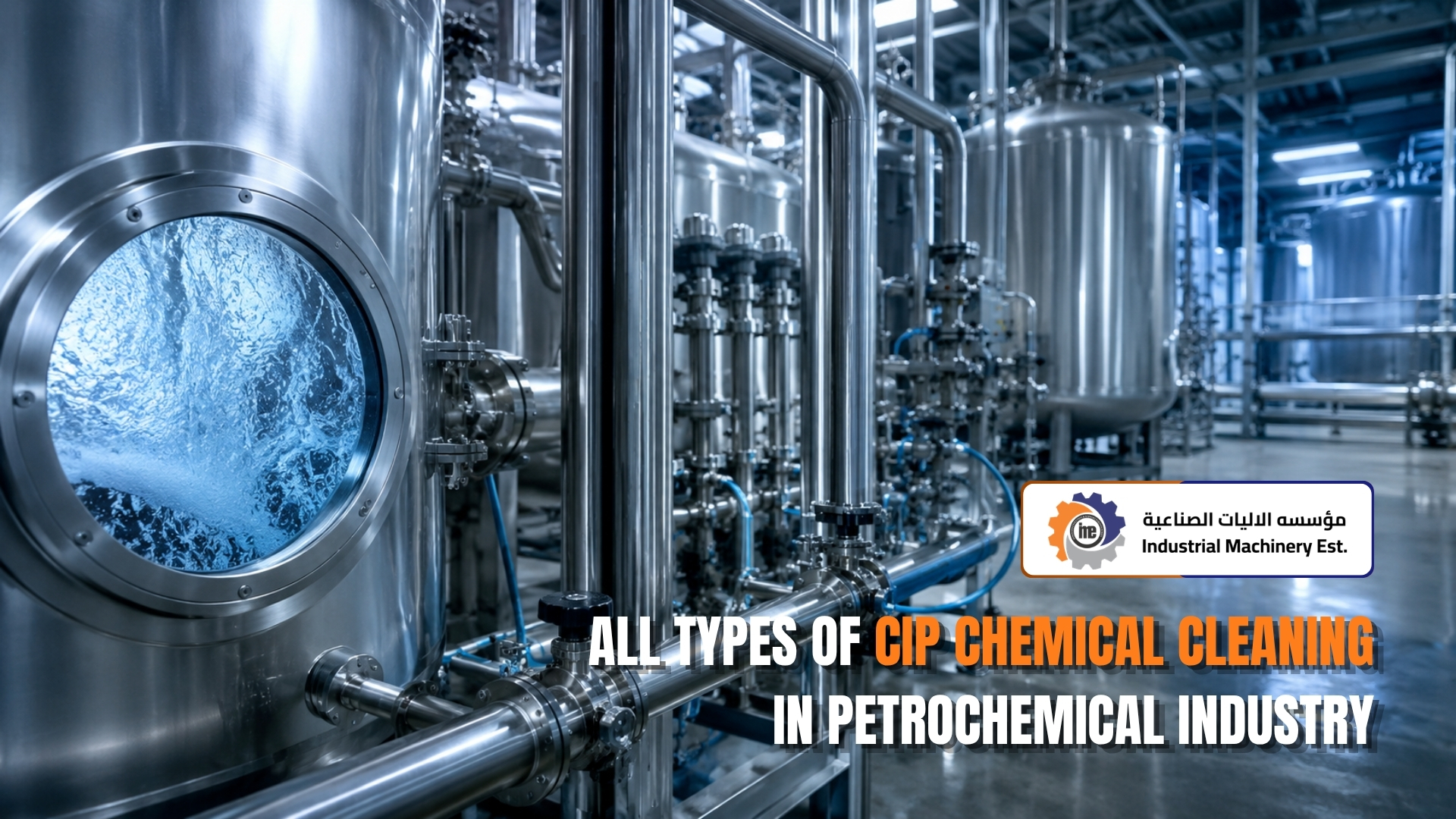
CIP chemical cleaning in Petrochemical removes scale, rust, oil films and process residue by circulating chemistry through the system in place, without dismantling it. The catch is that there is no single method. Each deposit type needs its own chemistry and its own stage. The full list of methods, and how to match them to your equipment, is below.
What CIP Chemical Cleaning Actually Means
CIP stands for clean-in-place. In a petrochemical plant, CIP chemical cleaning in Petrochemical means pumping a cleaning solution through pipework, exchangers, boilers, columns and vessels while they stay connected to the process. Temporary pumps, tanks, hoses and heaters form a closed loop around the asset. Flow, temperature, concentration and contact time are monitored throughout, because those four variables decide whether the deposit dissolves or the base metal is attacked.
Why Deposits Build Up So Quickly
Petrochemical service is hard on internal surfaces. Cooling water leaves hardness scale. Steam systems leave iron oxides and mill scale. Hydrocarbon streams leave coke, polymer, asphaltenes and heavy oil films.
Sour service adds sulphide deposits that can generate polythionic acid once air enters the system. Each needs a different solvent, which is why CIP chemical cleaning is split into several distinct types rather than one universal wash.
The Main Types of CIP Chemical Cleaning in Petrochemical
1. Alkaline degreasing. Usually the first stage. A hot caustic or alkaline detergent solution is circulated to emulsify oils, greases and hydrocarbon films so later chemistry can reach bare metal. Skipping it is why many acid stages underperform.
2. Acid cleaning and pickling. Inhibited mineral acids such as hydrochloric, sulphamic or phosphoric acid dissolve hardness scale, rust and iron oxides. Corrosion inhibitors protect the parent metal while the deposit dissolves. This stage is the workhorse of CIP chemical cleaning in Petrochemical for boilers, cooling water exchangers and carbon steel piping.
3. Chelant cleaning. Citric acid and EDTA lift metal ions into solution instead of aggressively etching the surface. Chelant CIP chemical cleaning in Petrochemical is slower and costs more, but it is far gentler on stainless steel, duplex and other alloys where mineral acid is too risky.
4. Passivation. Once scale is removed, freshly exposed metal flash rusts within hours. A circulated alkaline solution, often soda ash or a nitrite-based product, rebuilds the protective oxide layer. No CIP chemical cleaning job is finished until this stage is complete and confirmed.
5. Decontamination and degassing. Before a vessel is opened for entry or hot work, chemistry is circulated or applied in vapour phase to strip hydrocarbons and drive H2S, benzene and LEL readings toward zero. This form of CIP chemical cleaning is a safety operation as much as a performance one.
6. Foam cleaning. Chemistry is carried on a foam blanket instead of a full liquid fill. This CIP chemical cleaning variant keeps coverage high while chemical and effluent volumes drop sharply, which suits large columns and awkward geometries.
7. Solvent cleaning. Organic solvents dissolve coke precursors, polymer and asphaltene deposits that acids and caustics cannot touch. Solvent-based CIP chemical cleaning is common in cracker and reformer service.
Circulation, Fill and Soak, or Vapour Phase
Method matters as much as chemistry. Circulation is standard, keeping velocity in a controlled band so the deposit is carried away without eroding the wall. Fill and soak suits large vessels and exchangers where circulation is impractical, and can be repeated until clean. Vapour phase reaches complex internals that liquid never fully wets. Most CIP chemical cleaning in Petrochemical scopes combine two of these.
Choosing the Right Chemistry for Your Metallurgy
The wrong product damages the asset faster than the deposit ever would. Before any CIP chemical cleaning scope begins, sample and analyse the deposit, confirm the metallurgy, and run a laboratory coupon test on the chemistry. Chloride limits matter for stainless steel. Contact time matters for thin-walled tubes. A written procedure with hold points and clear end-point criteria keeps the job predictable.
Safety, Effluent and Documentation
Every CIP chemical cleaning in Petrochemical job produces spent solution that must be neutralised and disposed of under environmental rules. Vent points, relief paths and isolation boundaries need checking before chemicals move. Good contractors log pH, iron content and temperature through the cycle, then hand over a report proving the end point was reached.
When Cleaning Alone Is Not Enough
Some deposits are only partly soluble. Hard coke, heavy polymer and baked-on scale can resist even the correct chemistry, and raising concentration only risks the metal. In those cases CIP chemical cleaning in Petrochemical is paired with mechanical methods such as hydrojetting or tube lancing.
The chemical stage loosens the bulk, the mechanical stage clears the remainder, and downtime stays shorter than a full strip-down.
Match the type to the deposit, respect the metallurgy, and CIP chemical cleaning in Petrochemical will restore performance without opening a single flange more than necessary.