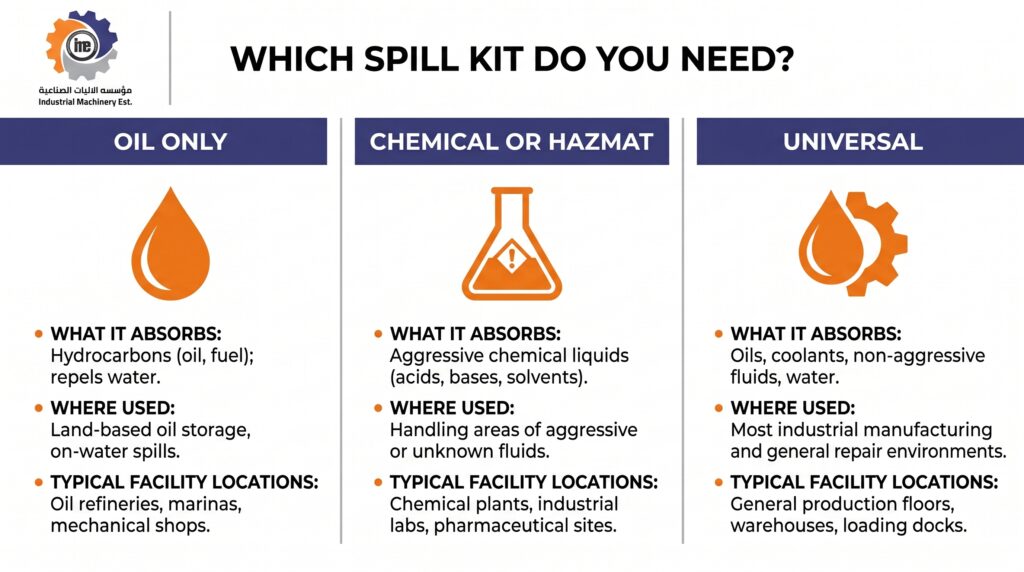
Spill Kits and Oil Spill Absorbents
Industrial Machinery Est. is the authorized Hi-Point distributor in Saudi Arabia. From our base in Jubail Industrial City, we supply the complete Hi-Point range of spill kits, oil spill absorbents, containment products and pollution control equipment to industrial clients across the Eastern Province and nationwide.
Our Spill Kit Range:
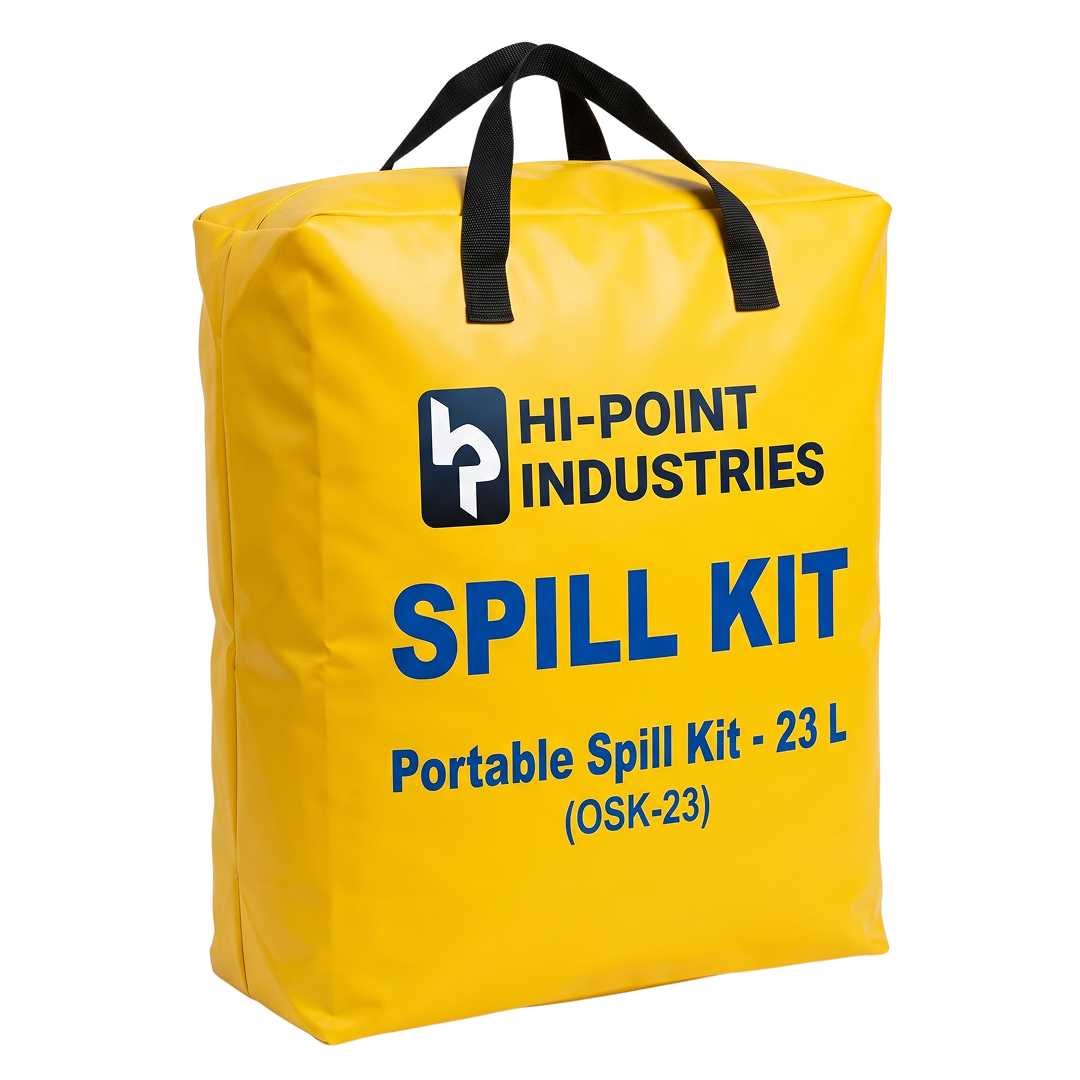
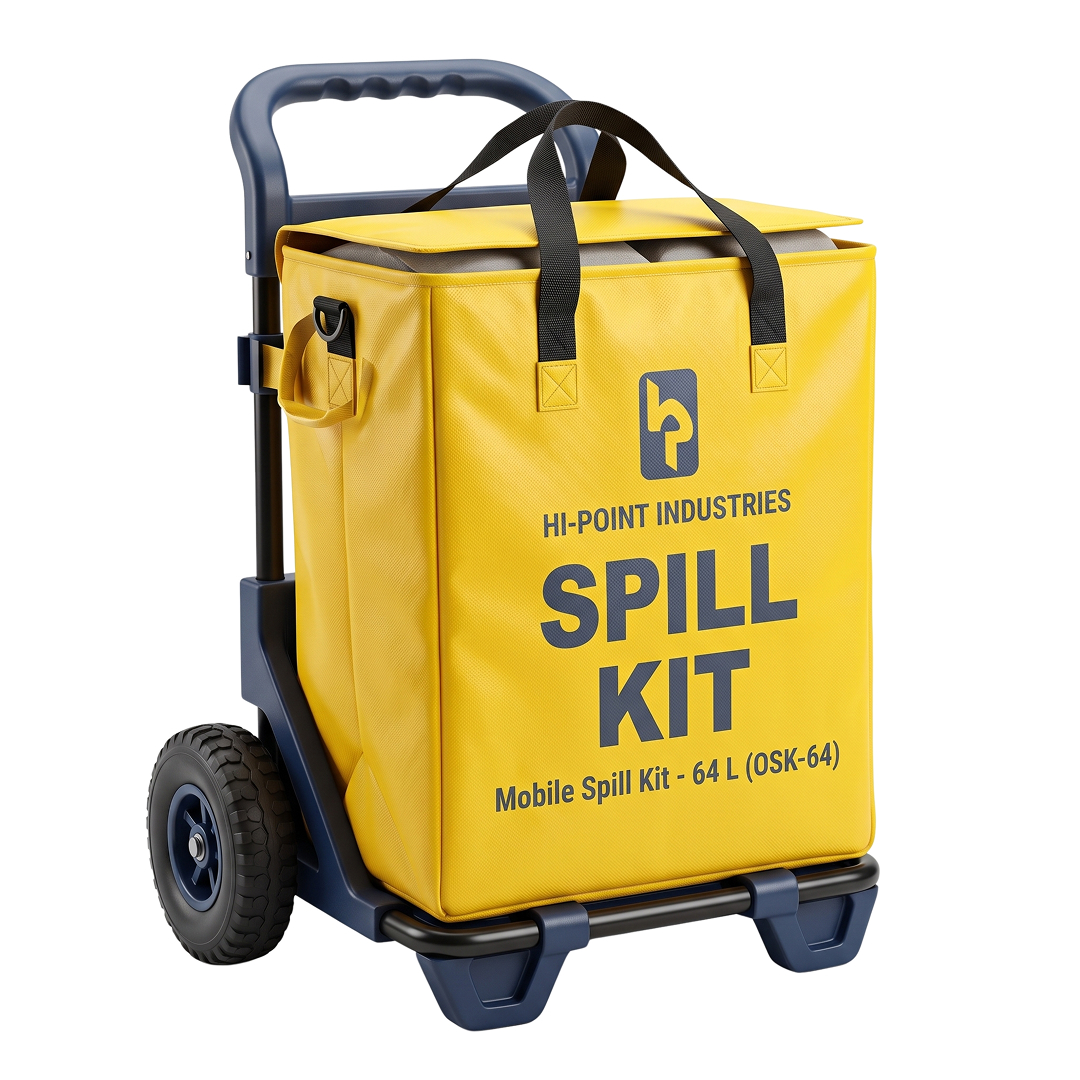
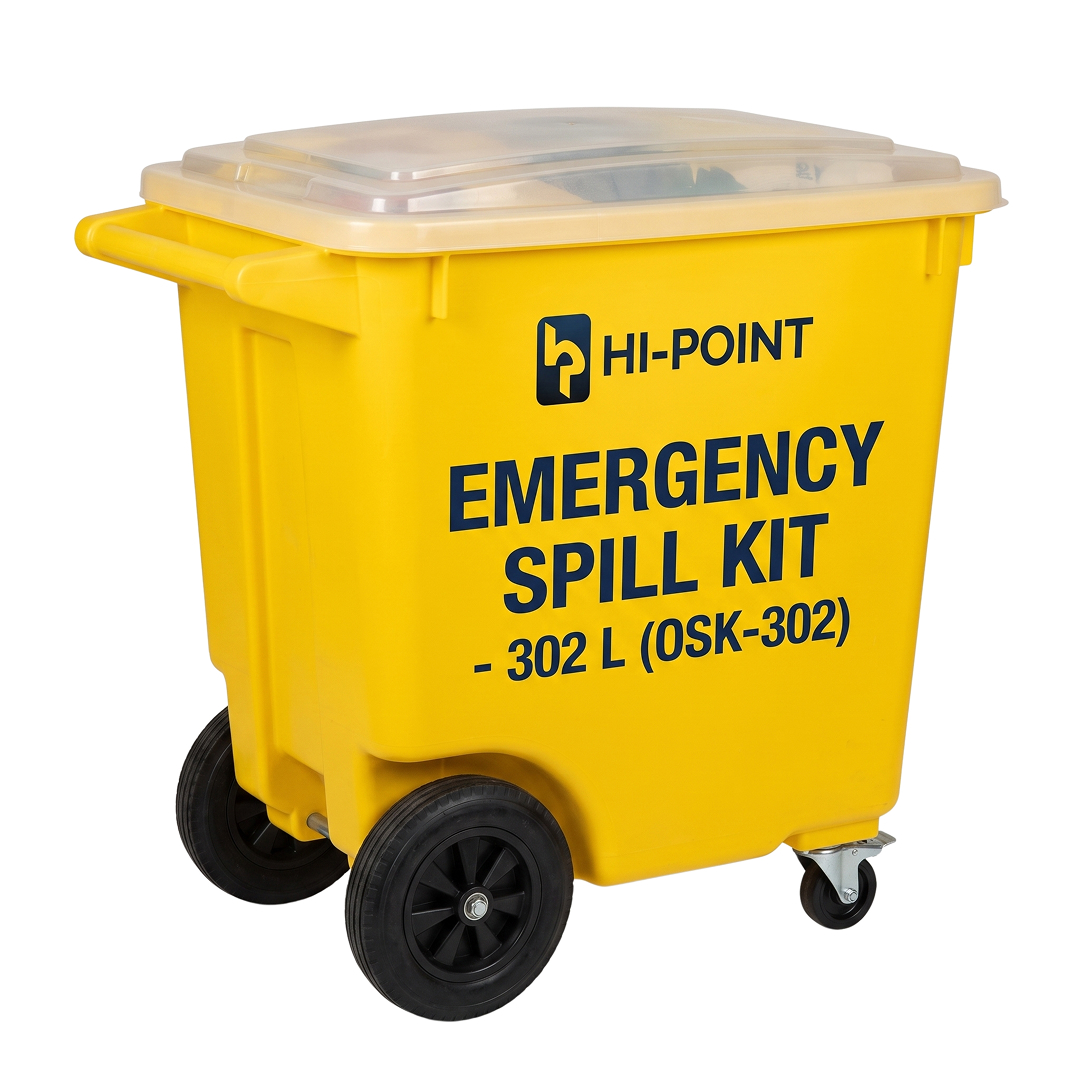
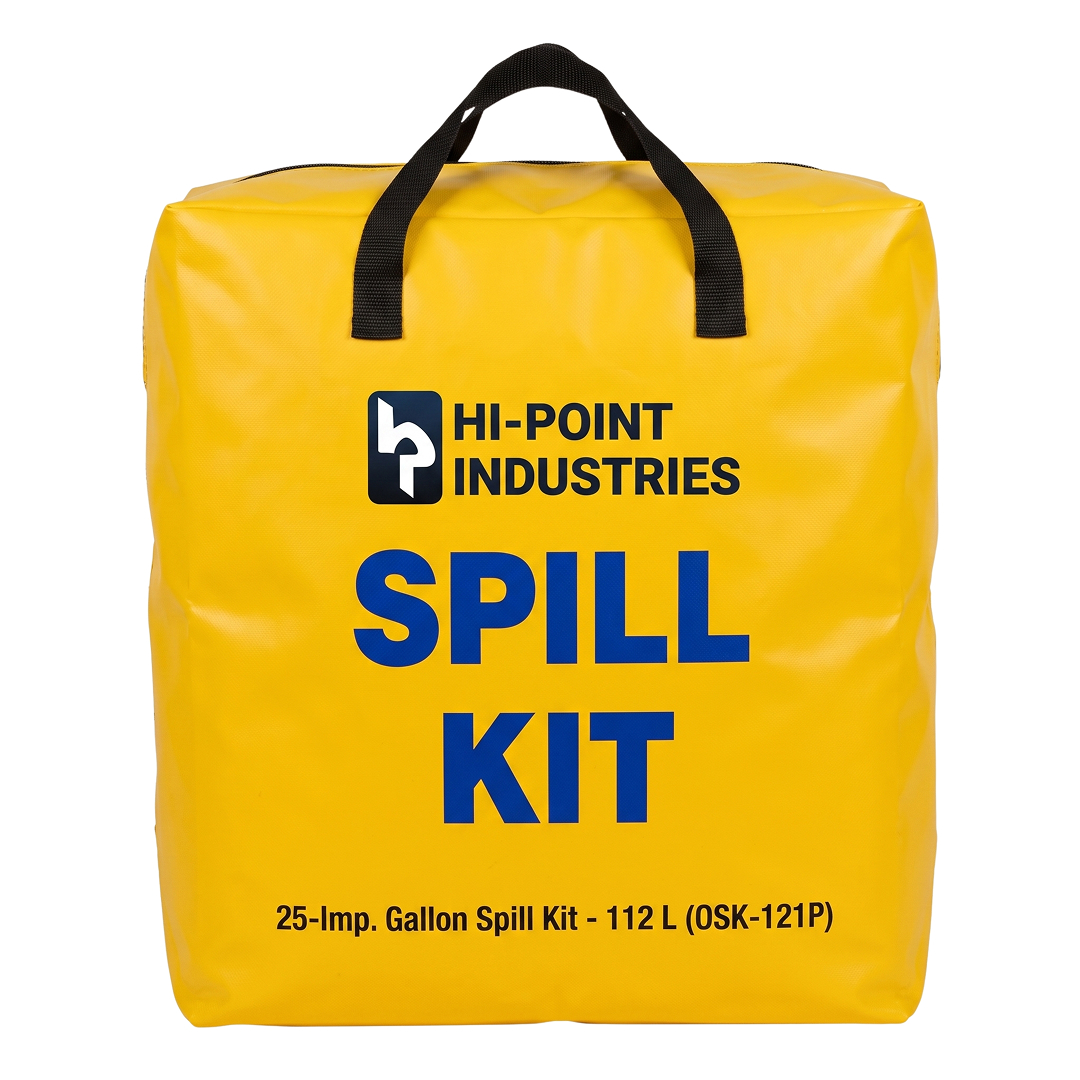
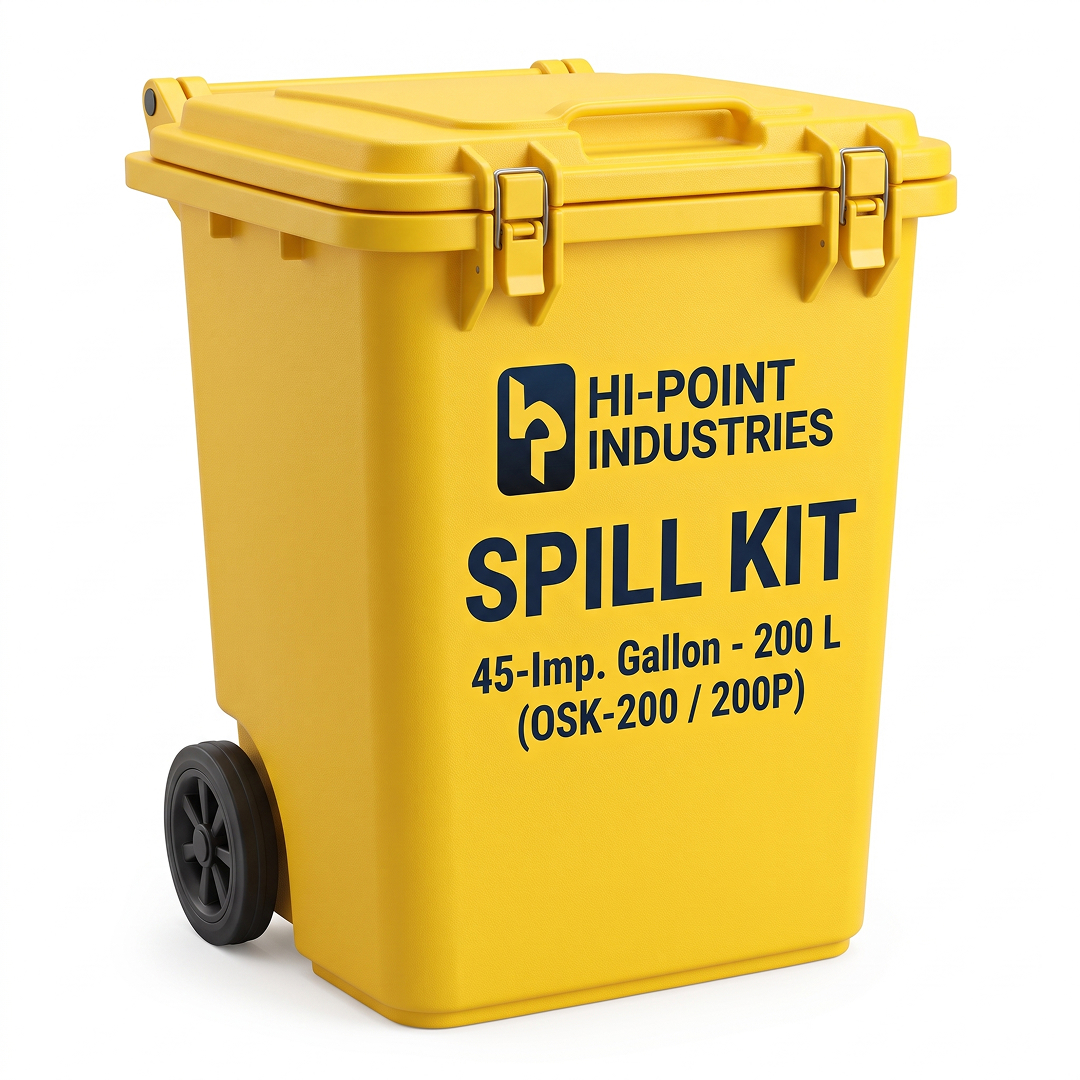
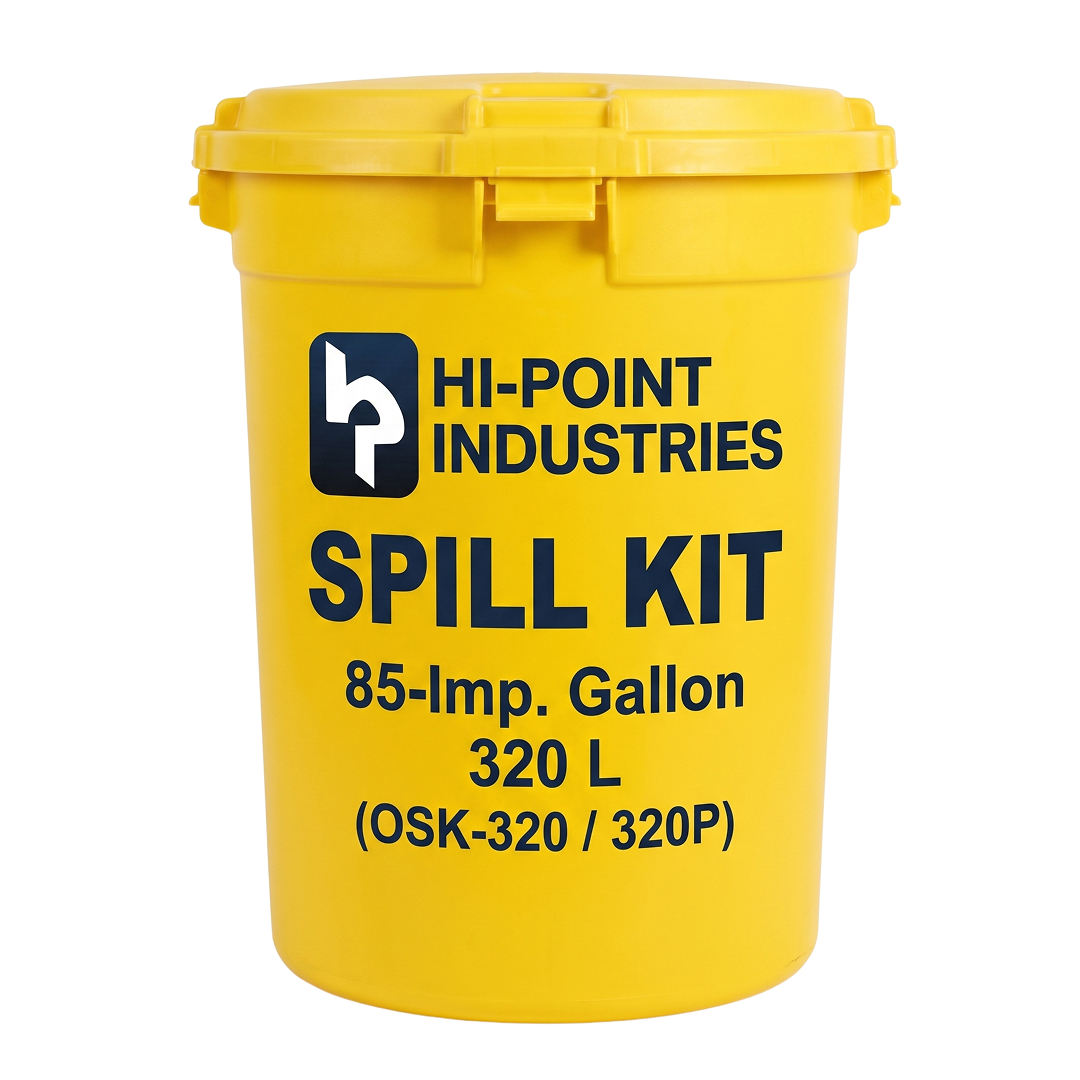
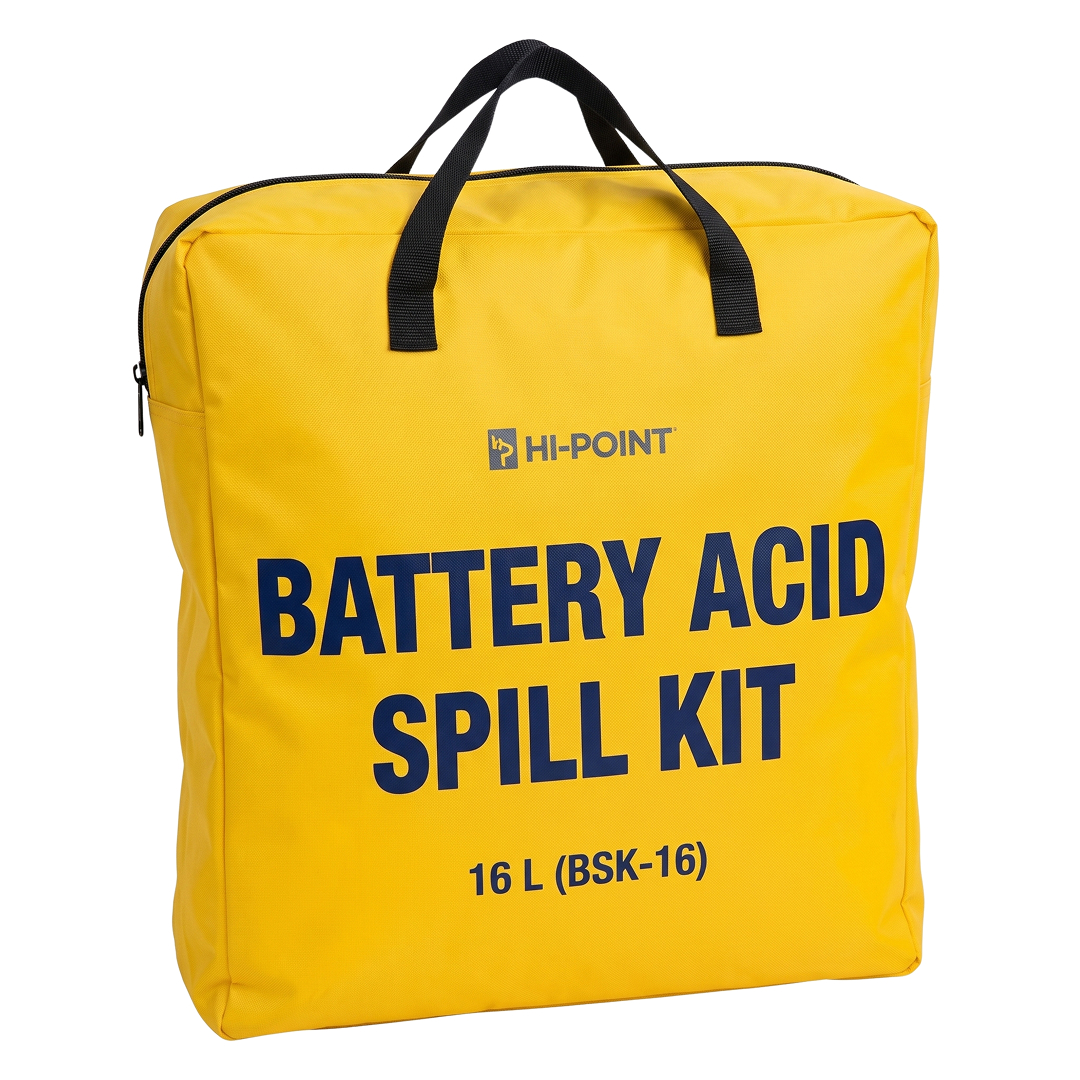
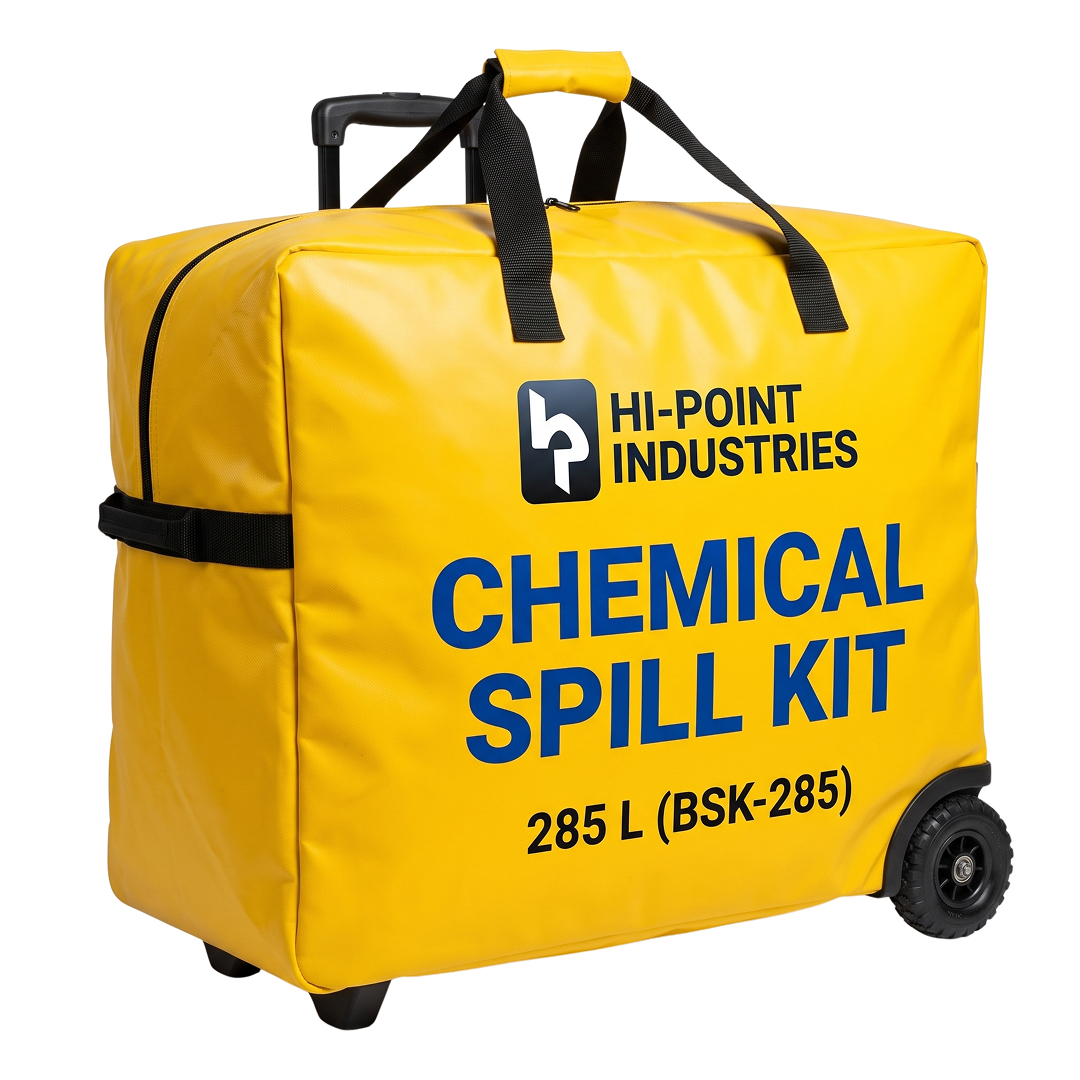
Hi-Point Spill Kit Specifications
Eight kit configurations covering oil, chemical and battery acid duties, from a 23 litre grab bag for vehicles up to a 320 litre over-pack drum for bulk storage areas. All capacities are absorption capacity, not container volume.
| Model | Absorption capacity | Container | Dimensions | Typical placement |
|---|---|---|---|---|
| OSK-23 Portable | 23 L (6 US gal) | Printed refill bag with handle. Reusable water, oil and chemical resistant PVC bag with zipper available | 53 x 46 x 13 cm (21" x 18" x 5") | Vehicles, workshops, confined work areas |
| OSK-64 Mobile | 64 L (17 US gal) | Yellow 18 oz PVC bag, zippered, with carrying straps | 56 x 36 x 25 cm (22" x 14" x 10") | Plant floors, maintenance crews, mobile response |
| OSK-302 Emergency | 302 L (80 US gal) | UV stabilised polyethylene, double-walled, forklift feet, carry handles and hasp. Castors optional | 107 x 76 x 74 cm (42" x 30" x 29") | Loading bays, tank farms, central response stations |
| OSK-121P | 112 L (30 US gal) | 25 Imp. gallon polyethylene drum, cover with lever lock | 47 cm dia x 71 cm H (18.5" x 28") | Drum stores, workshops, transformer yards |
| OSK-200 / 200P | 200 L (53 US gal) | 45 Imp. gallon 16-gauge steel drum, removable cover, twin closing rings. Lever-lock top ring, 12-gauge bolted base ring for transport. Poly drum version available | 61 cm dia x 89 cm H (24" x 35") | Process areas, jetties, transport-secured response |
| OSK-320 / 320P | 320 L (85 US gal) | 85 Imp. gallon poly over-pack drum, screw-down gasketed lid. Also 16-gauge steel salvage drum with 12-gauge bolted ring | 79 cm dia x 110 cm H (31" x 43.25") | Large release volumes, bulk storage, terminals |
| BSK-16 Battery Acid | 16 L (4 US gal) | 16 Imp. gallon Polylab pack, screw-down lid | 56 cm dia x 46 cm H (22" x 18") | Battery rooms, UPS rooms, substations |
| BSK-285 Chemical | 285 L (75 US gal) | 85 Imp. gallon poly over-pack drum, screw-down gasketed lid | 79 cm dia x 110 cm H (31" x 43.25") | Chemical storage, laboratories, unknown-substance response |
What Is Inside Each Kit
Full contents as supplied. Refills for every consumable item are stocked in Jubail.
OSK-23 Portable Spill Kit
23 L absorption capacity- 1
- 10 L bag of Oclansorb
- 2
- Sorb-Sox, 10 cm x 1.2 m (4" x 4')
- 5
- Oil absorbent pads
- 2
- 4-mil yellow disposal bags, 76 x 122 cm
OSK-64 Mobile Spill Kit
64 L absorption capacity- 1
- 13 L bag of Oclansorb
- 10
- Oil absorbent pads
- 2
- Sorb-Sox, 10 cm x 1.2 m (4" x 4')
- 2
- Sorb-Sox, 10 cm x 2.4 m (4" x 8')
- 2
- 4-mil yellow disposal bags, 76 x 122 cm
OSK-302 Emergency Spill Kit
302 L absorption capacity- 1
- 44 L bag of Oclansorb
- 25
- Oil absorbent pads
- 8
- Sorb-Sox, 10 cm x 1.2 m (4" x 4')
- 5
- Sorb-Sox, 10 cm x 2.4 m (4" x 8')
- 1
- Sorb-Sox boom, 18 cm x 3 m (7" x 10')
- 2
- Spillows, 5 x 43 x 48 cm
- 1
- Spark resistant poly shovel
- 1
- Pair chemical resistant gloves
- 10
- 4-mil yellow disposal bags, 76 x 122 cm
OSK-121P 25-Imp. Gallon Spill Kit
112 L absorption capacity- 1
- 13 L bag of Oclansorb
- 25
- Oil absorbent pads
- 6
- Sorb-Sox, 10 cm x 1.2 m (4" x 4')
- 2
- Sorb-Sox, 10 cm x 2.4 m (4" x 8')
- 1
- Spark resistant poly shovel
- 1
- Pair chemical resistant gloves
- 4
- 4-mil yellow disposal bags, 76 x 122 cm
OSK-200 / 200P 45-Imp. Gallon Spill Kit
200 L absorption capacity- 1
- 44 L bag of Oclansorb
- 50
- Oil absorbent pads
- 5
- Sorb-Sox, 10 cm x 1.2 m (4" x 4')
- 5
- Sorb-Sox, 10 cm x 2.4 m (4" x 8')
- 1
- Spark resistant poly shovel
- 1
- Pair chemical resistant gloves
- 5
- 4-mil yellow disposal bags, 76 x 122 cm
OSK-320 / 320P Over-Pack Spill Kit
320 L absorption capacity- 2
- 44 L bags of Oclansorb
- 2
- 13 L bags of Oclansorb
- 30
- Oil absorbent pads
- 15
- Sorb-Sox, 10 cm x 1.2 m (4" x 4')
- 1
- Spark resistant poly shovel
- 1
- Pair chemical resistant gloves
- 12
- 4-mil yellow disposal bags, 76 x 122 cm
BSK-16 Battery Acid Spill Kit
16 L absorption capacity- 4
- 4 kg Vytac ACX powder acid neutraliser with colour indicator
- 20
- Hazardous material pads
- 2
- Hazardous material socks, 8 cm x 1.2 m (3" x 4')
- 2
- Hazardous material pillows
- 1
- Plastic scoop and brush
- 1
- Pair chemical resistant gloves
- 1
- Pair safety goggles
- 1
- Pair disposable coveralls
- 1
- Set of instructions
- 4
- 4-mil yellow disposal bags, 76 x 122 cm
BSK-285 Chemical Spill Kit
285 L absorption capacity- 100
- Hazardous material pads
- 10
- Hazardous material socks, 8 cm x 1.2 m (3" x 4')
- 6
- Hazardous material socks, 8 cm x 2.4 m (3" x 8')
- 4
- Hazardous material pillows
- 1
- 9 kg (20 lb) bag of granular universal absorbent
- 1
- Neoprene drain cover, 91 x 91 cm x 3 mm
- 1
- 450 g (1 lb) tub of Plug n Dike
- 1
- Spark resistant shovel
- 2
- Pairs chemical resistant gloves
- 2
- Pairs safety goggles
- 2
- Pairs disposable coveralls
- 10
- 4-mil yellow disposal bags, 76 x 122 cm
Industrial Spill Response & Compliance Guidelines
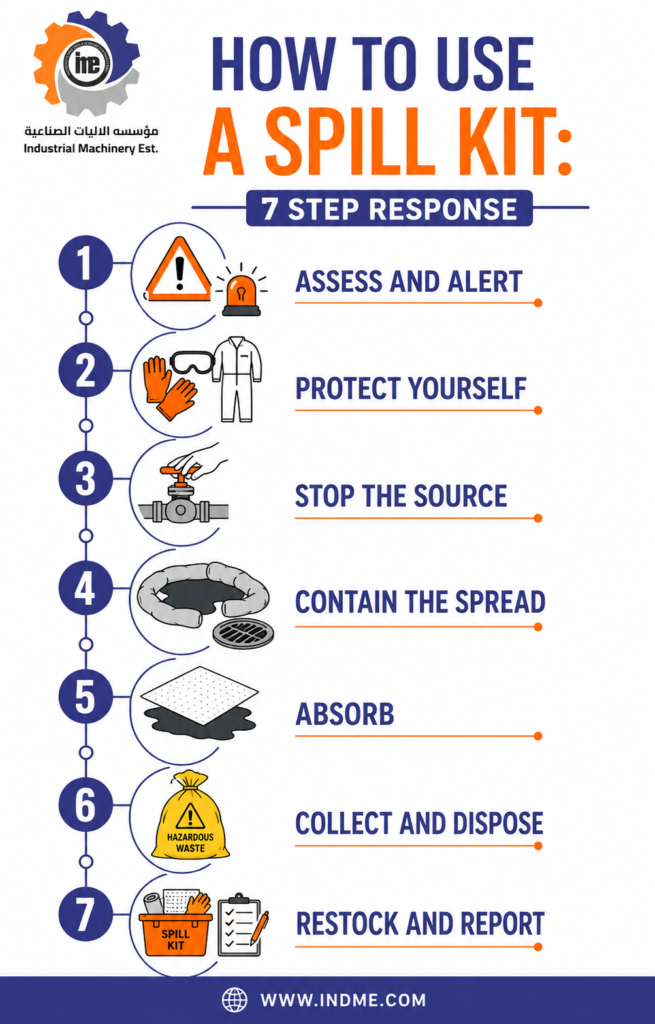
Emergency spill response in Saudi Arabia’s industrial hubs requires immediate compliance with NCEC (National Center for Environmental Compliance), MWAN (National Center for Waste Management), and Royal Commission Environmental Regulations (RCER) for facilities inside Jubail Industrial City
Immediate Hazard Isolation: Identify the spilled compound using its Safety Data Sheet (SDS). Secure the area, shut off active flow valves, and eliminate ignition sources in high-risk zone classifications.
Drain & Runoff Protection: Deploy heavy-duty Hi-Point absorbent socks or containment berms around storm drains, soil borders, and facility perimeters prior to addressing the core spill body.
Absorbent Deployment & Neutralization: Apply capacity-matched Hi-Point pads or granular absorbents starting from the spill perimeter inward. Allow full saturation to prevent liquid migration into concrete flooring or unpaved soil.
Regulated Waste Handling: Seal saturated absorbents inside heavy-duty hazardous waste bags. Mark bags clearly with material identification tags for safe collection by approved local environmental waste contractors.
Facility Restock & Log Reporting: Replenish consumed spill kits immediately from our Jubail distribution depot to maintain continuous HSE compliance and audit readiness.
Why Source Spill Kits from Industrial Machinery Est.
Established in 1990, Industrial Machinery Est. brings more than thirty years of experience and over one hundred major projects across the Kingdom’s petrochemical, oil and gas, refining, power and marine sectors. We are an approved vendor for Saudi Aramco, SABIC, Tasnee and Marafiq, and our position in Jubail Industrial City puts us alongside the plants we serve.
As the authorized Hi-Point distributor in Saudi Arabia, we do more than deliver boxes. We help you select the correct kit type and capacity for each risk point, advise on station placement across your facility and keep you supplied with refills so your kits are never found empty during an audit or an incident.