Every plant manager knows the frustration: rising energy bills, dropping output, and equipment that just won’t perform like it used to.
Often the hidden culprit is heat exchanger fouling, a slow buildup of scale, dirt, and deposits that quietly chokes your thermal efficiency.
Left unchecked, it forces pumps to work harder, drives up fuel costs, and can even trigger unplanned shutdowns that halt production entirely. The worst part is that fouling builds gradually, so the damage is done before most teams notice.
This article breaks down exactly what causes heat exchanger fouling, how scaling and deposits drain your energy and production, and the proven cleaning and prevention steps that restore peak performance. Read on to protect your equipment and your bottom line.
What Is Heat Exchanger Fouling?
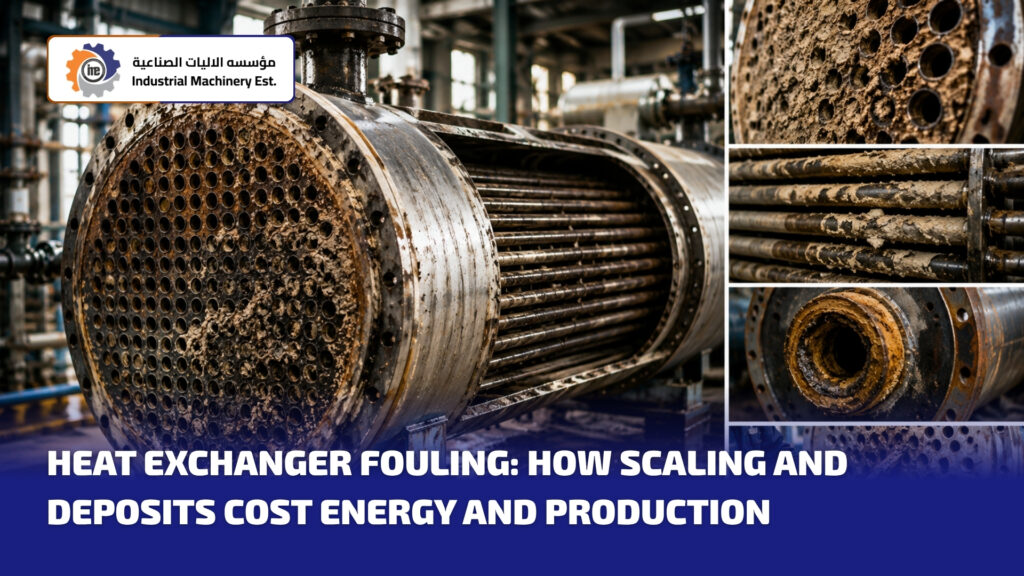
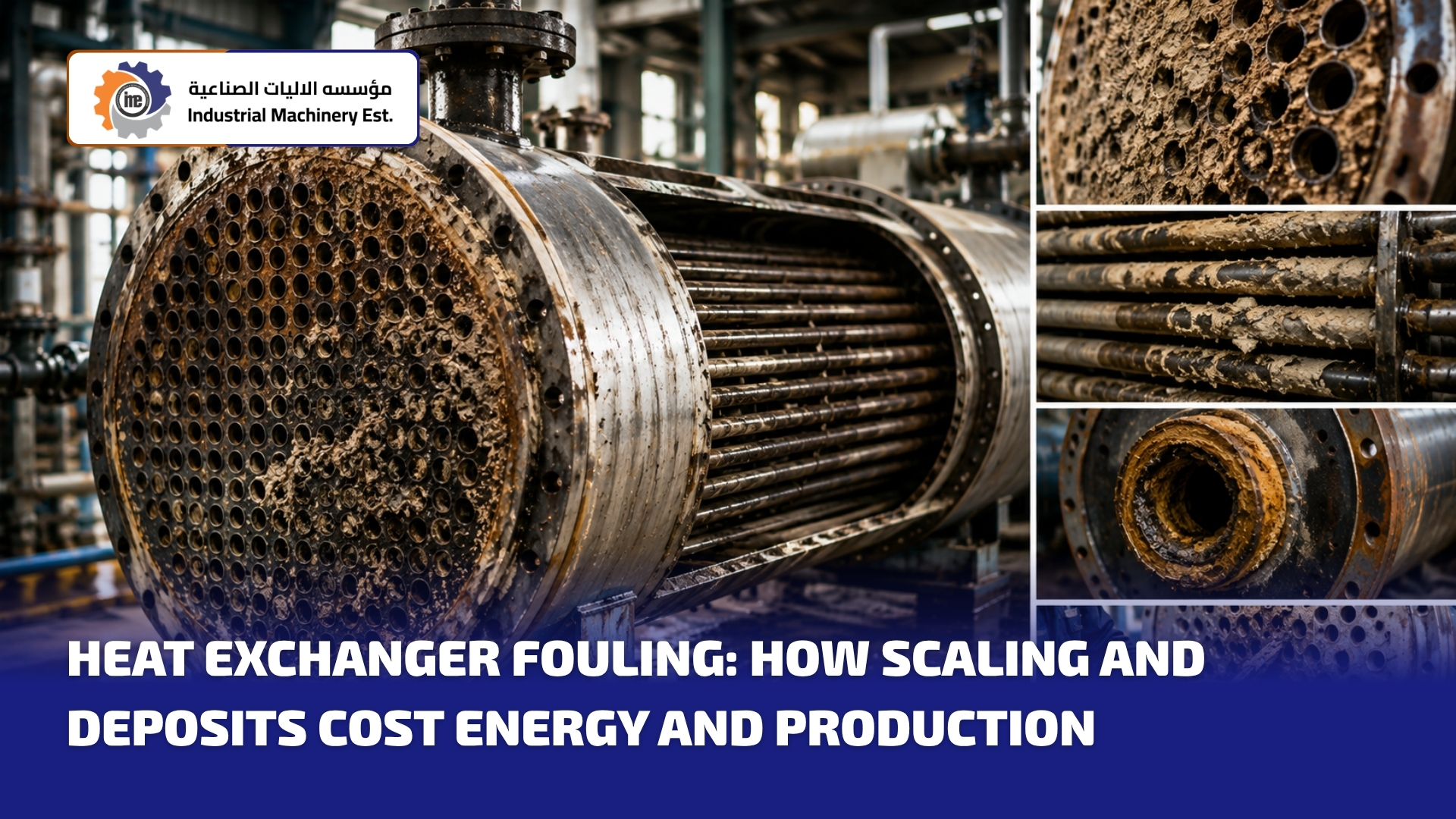
Heat exchanger fouling is the deposition of unwanted materials, such as scale, rust, suspended solids, and even algae, on the internal surfaces of a heat exchanger. These deposits form an insulating layer that resists heat transfer between the two fluids. As a result, the equipment must work harder to deliver the same output. Fouling occurs in nearly every industry and across most heat exchanger designs, making it one of the most common and costly maintenance challenges in industrial operations.
Scaling vs. Fouling: Knowing the Difference
While the terms are often used together, they are not identical. Scaling happens when dissolved minerals like calcium carbonate, calcium sulfate, and silica precipitate out of the fluid and harden onto heat transfer surfaces. It is common where hard water or poor water treatment is involved. Fouling, more broadly, includes dirt, debris, organic matter, corrosion products, and biological growth. Both create the same problem: a stubborn layer that blocks efficient heat exchange and increases operating costs over time.
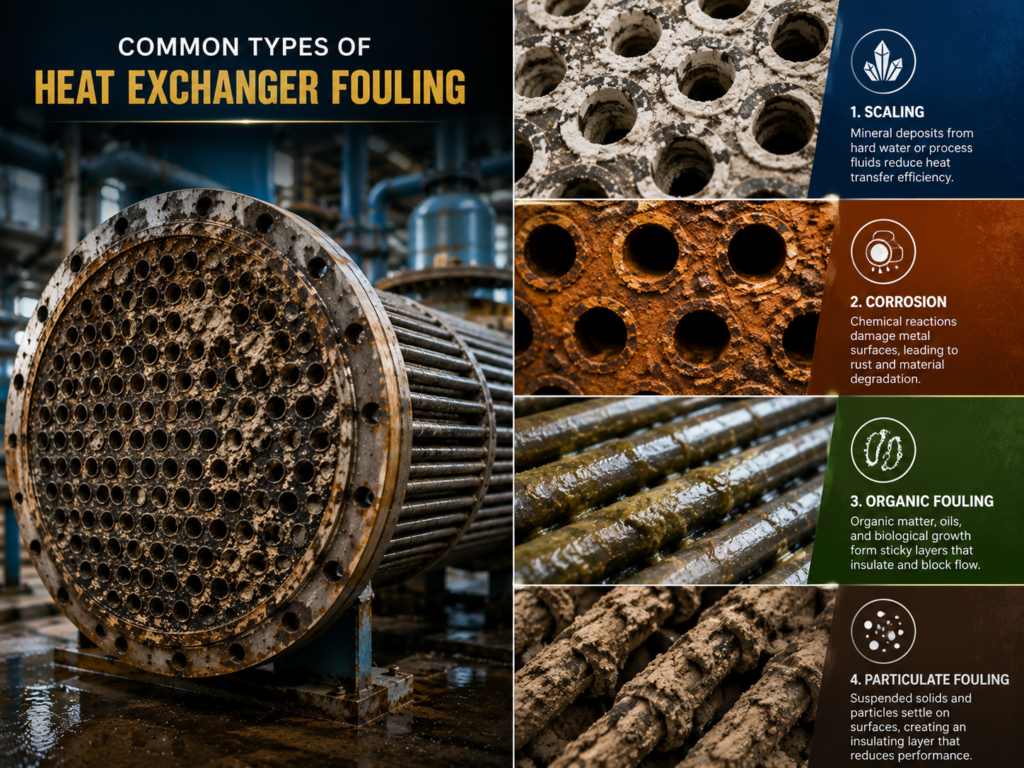
Common Types of Heat Exchanger Fouling
Understanding the type of fouling helps you choose the right solution. The main categories include:
- Scaling: Mineral precipitation from hard water or high-mineral fluids.
- Particulate fouling: Suspended solids like sediment, dust, and rust settling on surfaces.
- Corrosion fouling: Rust and corrosion products from chemical reactions with the metal.
- Biological fouling: Bacteria, algae, and microorganisms growing inside the unit.
- Chemical reaction fouling: Deposits formed when fluids react with surfaces or each other.
Each type demands a tailored approach, which is why expert diagnosis matters so much.
Also Read: What Do Heat Exchanger Overhaul Services Generally Cover?
How Fouling Drains Your Energy
The deposit layer acts like insulation, increasing thermal resistance and reducing heat transfer rates. To hit the same performance targets, operators raise temperatures or boost flow rates, both of which burn more energy. Fouling also restricts fluid flow, increasing pressure drop across the unit. Since most pumps run on electricity, this extra pumping demand translates directly into higher power bills. Over months, even a thin layer of heat exchanger fouling can quietly inflate your energy costs by a significant margin.
The Hidden Cost to Production
The damage goes far beyond energy. Severe fouling can block the unit entirely, making it inoperable due to back pressure. To compensate, plants often overdesign equipment or install costly spare units, raising capital expenses. Worse, deposits can hide under-deposit corrosion that silently eats away at the metal, shortening equipment life and risking catastrophic failure. Unplanned shutdowns caused by heat exchanger fouling are especially expensive, since lost production hours rarely line up with scheduled maintenance windows.
Proven Ways to Prevent and Remove Fouling
The good news is that heat exchanger fouling is manageable with the right strategy. Effective approaches include:
- Chemical cleaning (CIP): Scale and corrosion inhibitors plus dispersants dissolve and remove stubborn deposits.
- Mechanical cleaning: Hydroblasting and tube cleaning physically clear blockages.
- Proper water treatment: Reduces mineral content that drives scaling.
- Routine inspection: Catches deposits early before they harden.
- Scheduled maintenance: Keeps performance consistent and avoids surprise failures.
A combination of prevention and regular cleaning delivers the best long-term results, protecting both efficiency and equipment lifespan.
Why Professional Cleaning Matters
Tackling fouling in-house often leads to incomplete cleaning, surface damage, or safety risks. Professional teams bring specialized chemicals, equipment, and proven procedures that restore heat exchangers to near-original efficiency. They also identify the root cause, whether scaling, corrosion, or biological growth, so the problem does not return quickly. Investing in expert service pays for itself through lower energy use, fewer breakdowns, and longer equipment life.
Industrial Machinery Est.: Your Trusted Partner in Jubail
When it comes to combating heat exchanger fouling, Industrial Machinery Est. (IME) stands out as the top heat exchanger cleaning and maintenance company in Jubail. With 30+ years of experience since 1990 and approved-vendor status with Aramco, SABIC, Tasnee, and Marafiq, IME delivers top-notch industrial services across the petrochemical, oil and gas, refining, and power sectors. From chemical cleaning and CIP to mechanical cleaning and complete heat exchanger services, the IME team restores peak efficiency safely and reliably.
Don’t let fouling drain your energy and production. Partner with Industrial Machinery Est. and keep your heat exchangers running at their best.