A single leaking tube can quietly drain your plant’s profits. One day your exchanger runs at full duty, and the next you are watching thermal efficiency drop, energy bills climb, and the threat of cross-contamination grow.
Then comes the hard question every maintenance team faces during a turnaround: do you seal off the bad tubes and keep running, or pull the whole bundle and start fresh? Choose wrong and you either limp along with reduced capacity or burn budget and downtime you did not need to spend.
The decision feels risky because both paths cost money and time. This article clears up the confusion. You will learn exactly when heat exchanger tube plugging makes sense, when re-tubing is the smarter call, and how to read the signals your equipment is already giving you.
What Is Heat Exchanger Tube Plugging?
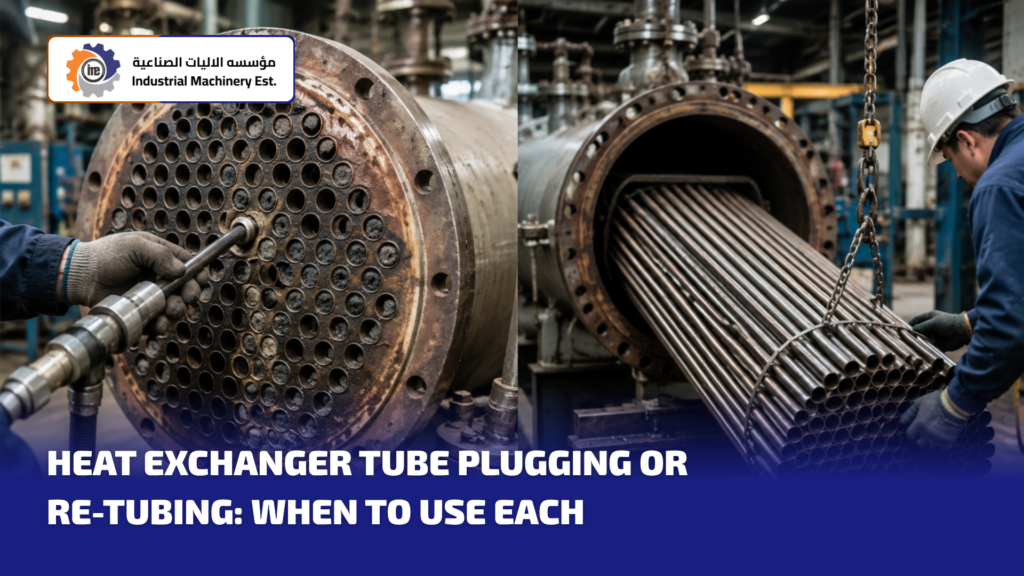
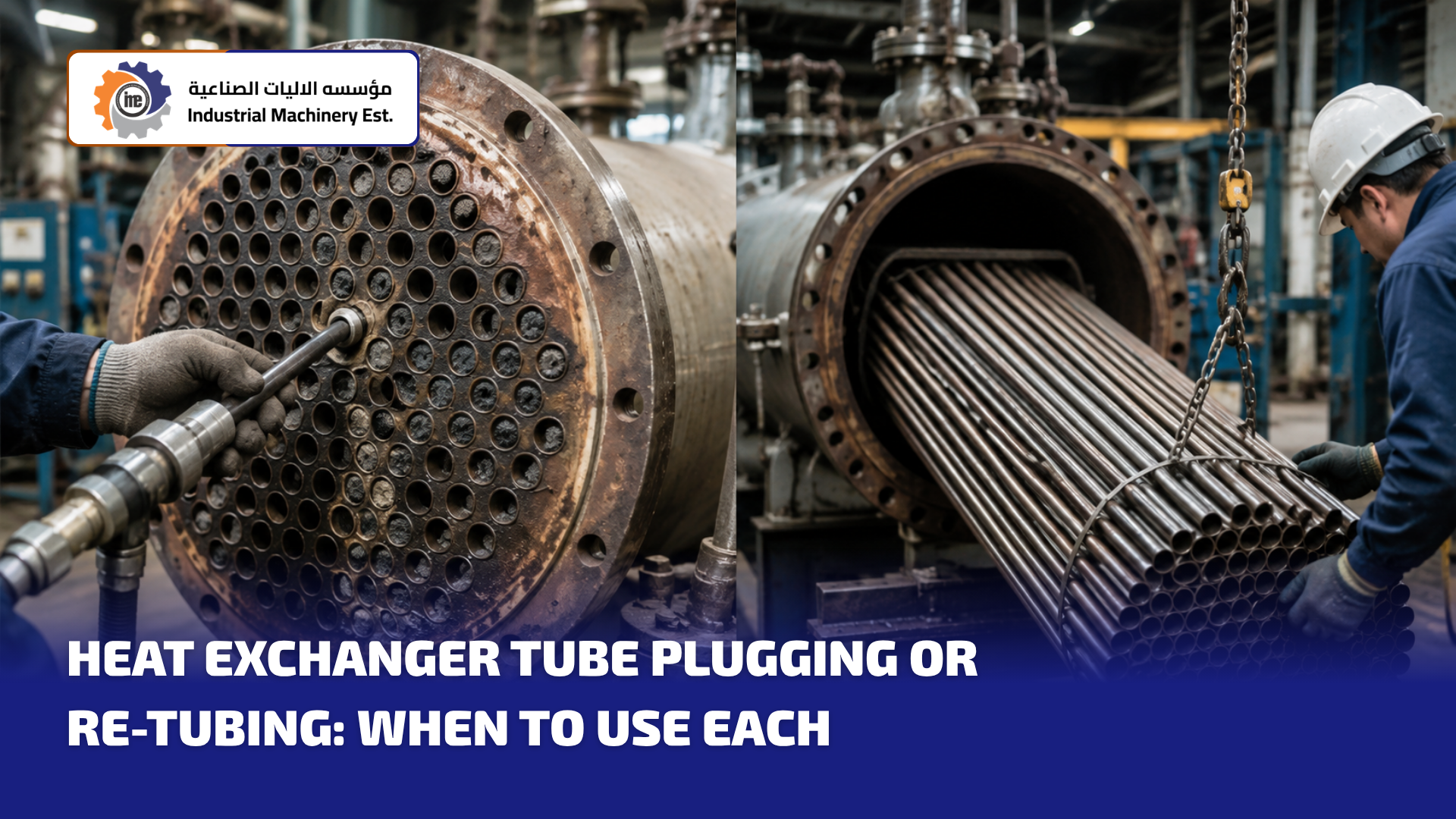
Heat exchanger tube plugging is the process of sealing off a failed or leaking tube at both ends of the tube sheet, taking it permanently out of service. Technicians drive steel taper plugs into each end so process fluid can no longer pass through that tube.
It is fast, low cost, and can often be done during a short outage. Because the plugged tube no longer carries flow, you lose a small slice of heat transfer capacity. For a leaking tube that threatens product quality, this quick seal is often the most practical fix available.
Why Tube Plugging Is So Popular
The biggest reason teams reach for heat exchanger tube plugging is speed. When a plant is mid-turnaround and every hour of downtime costs money, plugging a handful of bad tubes lets the unit go back into service quickly. It needs no special bundle removal, no new tube stock, and no long lead times.
As a general industry rule, plugging up to around 10 percent of the total tube count is acceptable before capacity loss becomes a serious problem. Beyond that limit, the exchanger struggles to meet its designed heat load.
Plugging works best when:
- Fewer than 10 percent of tubes have failed
- The damage is localized and isolated, not spread across the bundle
- A small drop in capacity is acceptable for the process
- You need the unit back online fast
The Limits Of Tube Plugging
Here is the catch. Heat exchanger tube plugging is a stopgap, not a permanent cure. Every plugged tube is dead weight, reducing surface area and pushing the remaining tubes to work harder. As plugged tubes pile up over successive outages, efficiency falls and energy consumption rises. Many teams plan to re-tube or re-inspect the bundle at the next shutdown once plugging starts. If your corrosion is widespread rather than localized, plugging only delays the inevitable. At some point the math no longer favors patching individual tubes.
What Is Re-Tubing?
Re-tubing means removing the entire tube bundle and replacing the damaged tubes, or all of them, with new ones. The shell, tube sheets, baffles, and support plates are usually reused because they are expensive and often still in good shape. New tubes are rolled or welded into the cleaned tube sheet, and the exchanger returns to full capacity. Re-tubing also gives you the chance to upgrade to more corrosion-resistant materials such as stainless steel, nickel alloys, or titanium, which can dramatically extend service life in harsh petrochemical environments.
Why Re-Tubing Is The Smarter Long-Term Choice
When tube degradation is widespread, re-tubing restores the unit to like-new performance without the cost of buying a brand-new exchanger. Industry figures put re-tubing at roughly 30 to 65 percent of the cost of new equipment, while adding 20 to 30 years of service life. You preserve the costly shell and tube sheets, avoid re-piping the system, and cut waste compared to a full replacement. For exchangers that are structurally sound but suffering from corroded or thinning tubes, re-tubing is almost always the more economical decision.
Consider re-tubing when:
- More than 10 percent of tubes are plugged or failing
- Corrosion or wall thinning is general, not localized
- The shell and tube sheets remain in good condition
- You need restored full capacity and efficiency
- Long-term reliability matters more than a quick fix
Plugging Or Re-Tubing: Reading The Signals
The choice between heat exchanger tube plugging and re-tubing comes down to severity, economics, and risk. Inspection is the key. Methods like eddy current testing, IRIS, and hydrostatic testing reveal how much wall loss has occurred and how many tubes are affected. If only a few tubes leak and the rest are healthy, plug them and move on. If wall thinning crosses critical thresholds across many tubes, re-tubing protects you from repeat failures and creeping inefficiency. Always weigh the cost of downtime against the consequence of a future leak, especially where cross-contamination could damage product or equipment.
Trust The Heat Exchanger Experts In Jubail
Making this call correctly takes experience, the right inspection tools, and skilled hands. Industrial Machinery Est. (IME) is the top heat exchanger cleaning and maintenance company in Jubail, delivering top-notch industrial services to the petrochemical, oil and gas, refining, and power sectors.
As an approved vendor for Saudi Aramco, SABIC, Tasnee, and Marafiq, IME combines precise tube inspection, expert plugging, professional re-tubing, and complete chemical and mechanical cleaning under one trusted roof. Whether you need a quick turnaround fix or a full bundle restoration, IME helps you choose the right solution and execute it safely and on schedule.
Final Thoughts
There is no single right answer for every exchanger. Heat exchanger tube plugging wins when failures are few, isolated, and you need speed. Re-tubing wins when damage is widespread and you want lasting full-capacity performance. Let inspection data, not guesswork, drive the decision, and partner with experts who understand the cost of getting it wrong. With the right strategy and the right team, your heat exchangers can run reliably and efficiently for decades to come.