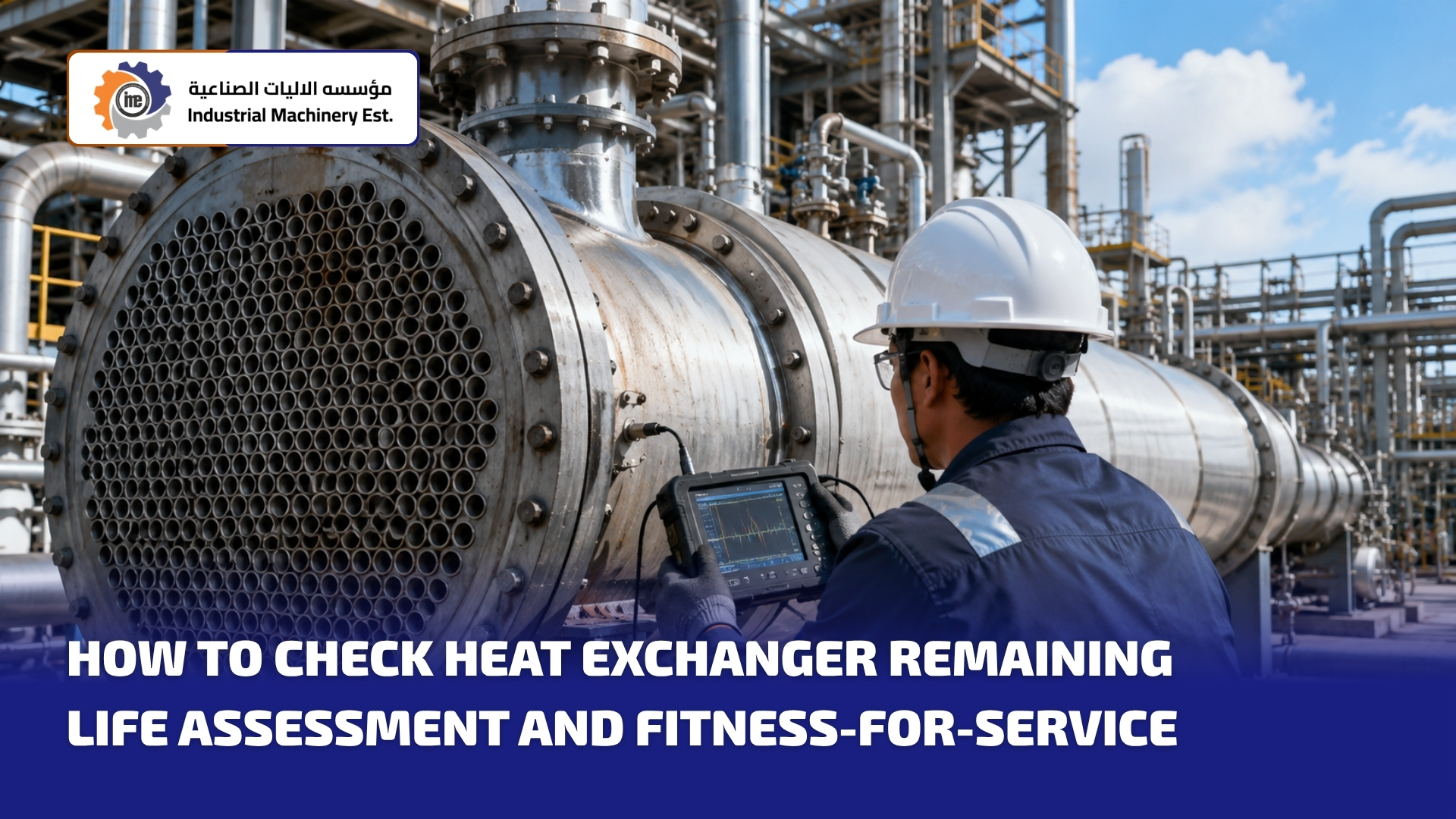
A heat exchanger that fails without warning can shut down an entire plant, trigger costly fines, and put your team at real risk. The hard part is that thinning tubes, hidden pitting, and slow corrosion rarely show up on the outside. By the time a leak appears, the damage has often been building for years.
Many maintenance teams still rely on fixed calendar schedules, so they either replace equipment too early and waste money, or run it too long and gamble with safety. The good news is there is a clear, code-backed way to know exactly how much service life is left.
This guide breaks down heat exchanger remaining life assessment and Fitness-For-Service in plain language, so you can make confident repair, re-rate, or replace decisions before failure forces your hand.
What Heat Exchanger Remaining Life Assessment Really Means
A heat exchanger remaining life assessment is an engineering study that estimates how long your equipment can keep operating safely under current conditions. It looks at measured wall thickness, corrosion rate, and operating pressure, then projects how many years remain before the metal drops below the minimum it needs to hold.
Instead of guessing, you get a number backed by data. This is the difference between reactive maintenance and reliability-driven planning. A proper assessment tells you whether to run as is, repair, de-rate, or retire the unit, which protects both your budget and your people.
Why Fitness-For-Service Matters
Fitness-For-Service, or FFS, is the framework that answers one critical question: can this aging equipment keep working safely, even with flaws? The industry standard for t his is API 579-1 / ASME FFS-1, which is widely used across oil, gas, and petrochemical plants.
FFS does not assume that a corroded or pitted heat exchanger is automatically unfit. Instead, it measures the real effect of the damage on structural integrity. A unit showing minor metal loss might safely run for several more years, while another showing cracking may need immediate action. This avoids unnecessary replacements while keeping you fully compliant.
The Core Inputs You Need
Before any heat exchanger remaining life assessment can begin, you need solid, current data. The quality of your inputs decides the accuracy of your result. The essential inputs include:
- Current wall thickness, measured by ultrasonic or eddy current testing
- Original or nominal thickness from design records
- Minimum required thickness to hold internal pressure
- Operating time in service since installation or last inspection
- Operating pressure and temperature for the unit
Missing or weak data forces conservative guesses, which usually means earlier and more expensive repairs than you actually need.
Step One: Inspect and Measure
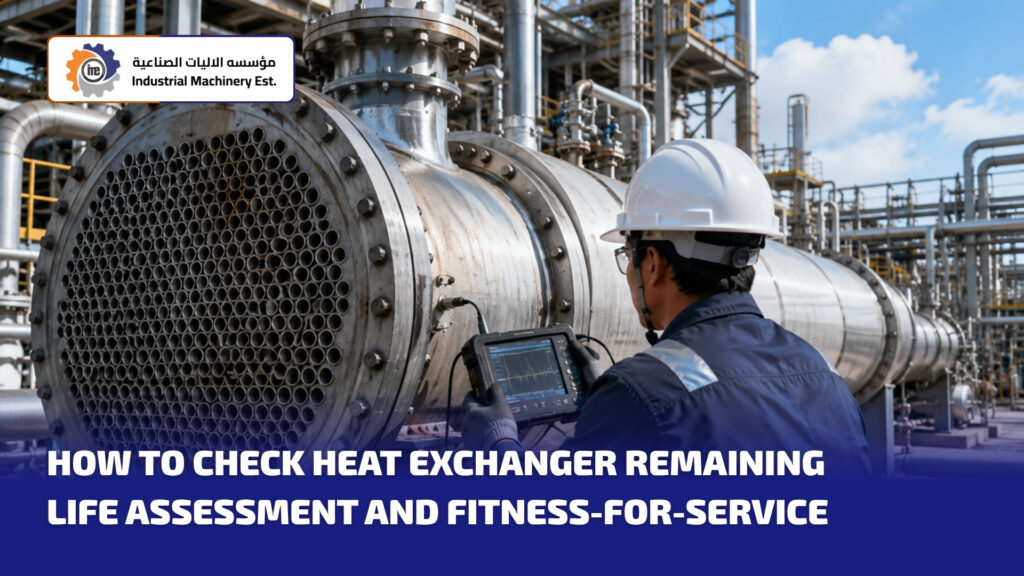
Everything starts with inspection. Non-destructive testing (NDT) is the backbone here. Ultrasonic Thickness Measurement (UTM) checks how much wall is left, while Eddy Current Testing (ECT) and IRIS scan tubes for pitting, thinning, and hidden flaws.
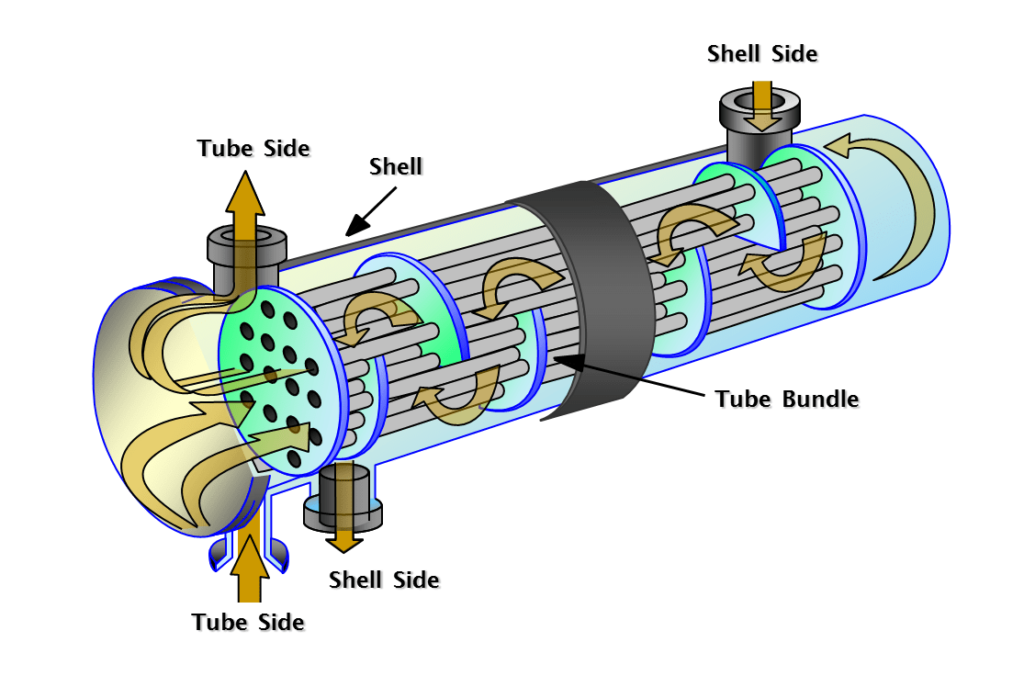
These methods let you map the worst-affected zones without cutting the equipment open. On a shell and tube unit, hundreds of tubes can be scanned to find the thinnest, most at-risk locations. Accurate measurement at this stage is what makes the rest of the heat exchanger remaining life assessment trustworthy.
Step Two: Calculate the Corrosion Rate
Once you have thickness readings, you can work out how fast metal is being lost. The basic formula is simple and widely used:
Corrosion Rate = (Original Thickness − Current Thickness) ÷ Operating Time
This gives you a yearly metal-loss figure. A high corrosion rate signals that remaining life is shrinking fast and that inspection intervals should be tightened. A low, stable rate gives you room to extend safe operation with confidence.
Step Three: Project the Remaining Life
With the corrosion rate known, the remaining life calculation follows naturally:
Remaining Life = (Current Thickness − Minimum Required Thickness − Safety Margin) ÷ Corrosion Rate
A typical safety margin is around 2 to 3 mm depending on how critical the unit is. The result tells you how many years the equipment can run before it reaches its minimum safe wall. This single number drives your maintenance budget, your shutdown planning, and your spare-parts strategy.
Step Four: Apply the Right FFS Level
API 579 offers three assessment levels, each more detailed than the last:
- Level 1 is a quick screening check using basic acceptance criteria.
- Level 2 adds calculations and supplemental loads for a more refined result.
- Level 3 uses advanced finite element analysis for complex or borderline cases.
Most routine pitting and metal-loss cases pass at Level 1 or 2. When results are close to the limit, moving to a higher level often proves the equipment is still safe, saving an unnecessary replacement.
Also Read: 10 Things to Notice Before Partnering with Industrial Company in Jubail
Turning Results Into Action
A complete heat exchanger remaining life assessment ends with a clear decision: run as is, repair, re-rate to a lower pressure, or retire the unit. Pairing this with Risk-Based Inspection (RBI) lets you focus attention on the equipment that truly needs it, rather than treating every unit the same.
This shift from calendar-based maintenance to condition-based planning is where real savings live. You extend the life of healthy assets, catch failing ones early, and document everything for compliance.
Partner With the Experts in Jubail
Carrying out an accurate heat exchanger remaining life assessment takes the right tools, certified inspectors, and deep field experience. Industrial Machinery Est. is the top heat exchanger cleaning and maintenance company in Jubail, delivering top-notch industrial services to petrochemical, oil and gas, refining, and power clients across Saudi Arabia. From precision cleaning and inspection to corrosion analysis and full integrity support, the team helps you keep equipment safe, compliant, and running longer. If you want to know exactly how much life your heat exchangers have left, partnering with proven specialists is the smartest first step.