You finished a clean weld on a stainless steel vessel, yet within weeks a rusty “rainbow” stain appears around the joint. It feels like a betrayal, since stainless steel is supposed to resist corrosion. The truth is that welding, grinding, and machining quietly strip away the protective layer that keeps the metal safe, leaving behind heat tint, free iron, and weld scale that invite pitting and early failure.
Ignoring these signs leads to leaks, contaminated products, and costly replacements. The good news is that pickling and passivation of stainless steel systems solve this problem completely when done correctly. This detailed guide walks you through what each process does, how to handle them step by step, and how to verify the results so your systems last.
Why Stainless Steel Still Corrodes
Stainless steel resists rust because of a thin, self-healing chromium oxide layer that forms naturally when the metal meets oxygen. This invisible film is the real source of corrosion resistance, not the raw alloy itself.
When you weld, grind, or cut the metal, that film is damaged and the chromium just below the surface gets depleted. Free iron particles and oxide scale settle on the surface, and these become starting points for pitting. The pickling and passivation of stainless steel systems restores this lost protection, which is why these treatments are not optional in demanding industries.
Pickling vs Passivation: Knowing the Difference
People often confuse the two, but they do different jobs. Pickling is the aggressive step. It uses a strong acid blend, usually nitric and hydrofluoric acid, to dissolve a few microns of metal along with heat tint, weld scale, and the chromium-depleted layer underneath.
It leaves a dull, matte grey finish. Passivation is gentler. It uses nitric or citric acid to remove free iron and speed up the formation of a fresh chromium oxide film, without removing any metal or changing the appearance. In short, pickling cleans and resets the surface, while passivation locks in long-term corrosion resistance.
Standards That Guide the Process
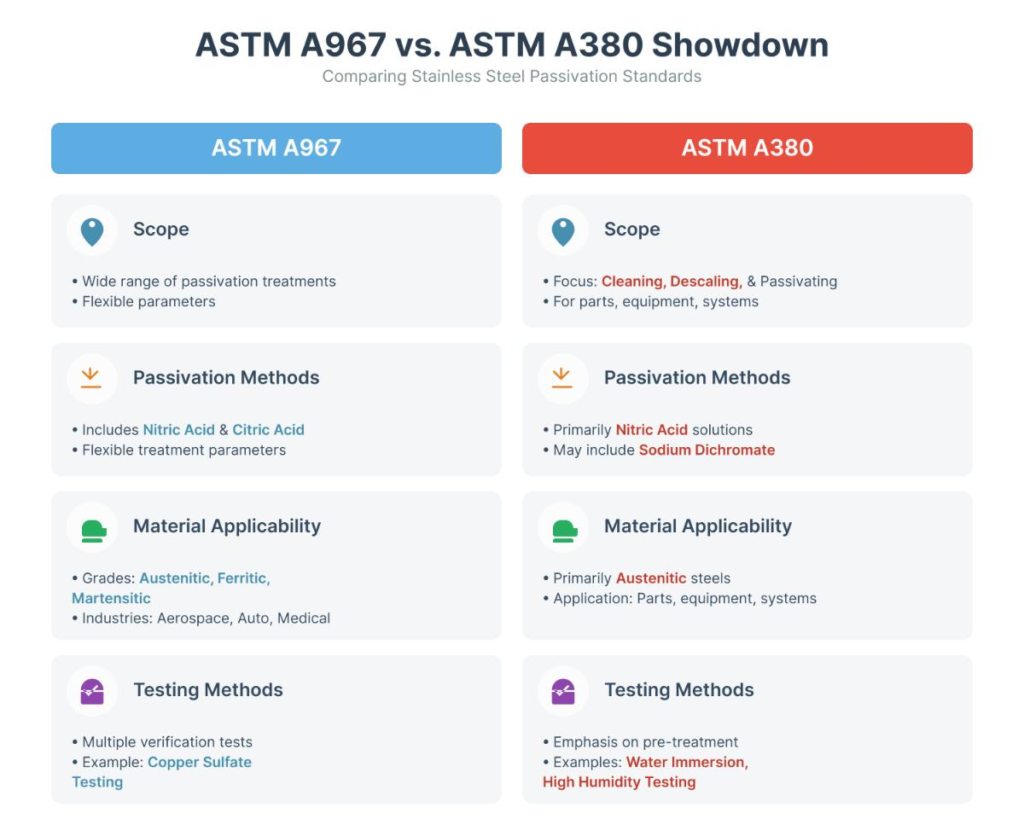
Before starting any pickling and passivation of stainless steel systems, it helps to follow recognized standards. The main references include ASTM A380 for cleaning, descaling, and passivation, and ASTM A967 for chemical passivation treatments.
These documents define accepted methods, acid choices, and verification tests. Following them keeps your work consistent and audit-ready, which matters for food, pharmaceutical, and chemical sectors where compliance is non-negotiable.
Step by Step Handling Guide
Doing the job safely and correctly means following a clear sequence:
- Wear protection. Use acid-resistant gloves, goggles, an apron, and work in a well-ventilated area.
- Clean and degrease first. Remove all oil, grease, and dirt with an alkaline cleaner. Acids cannot work through grease.
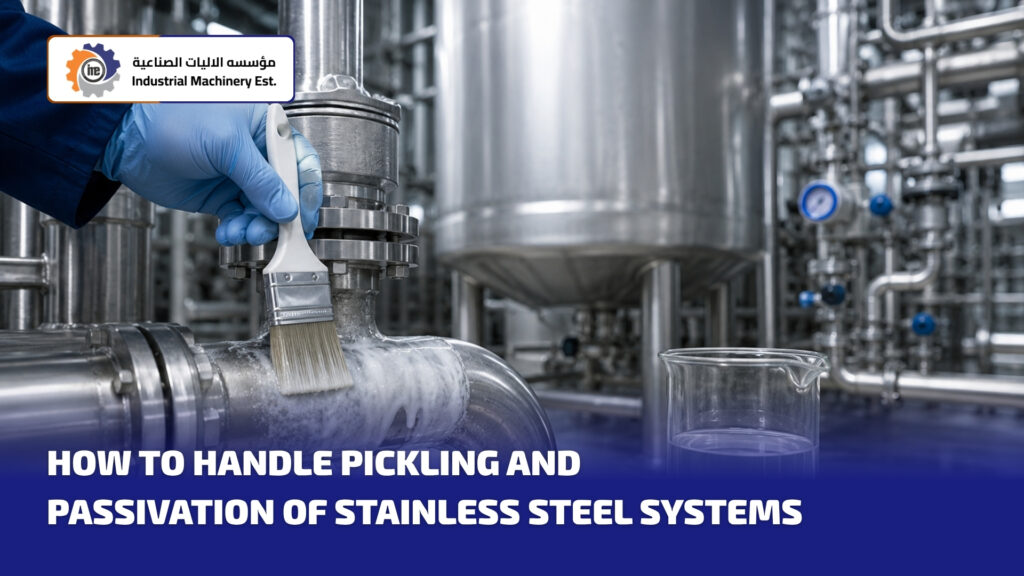
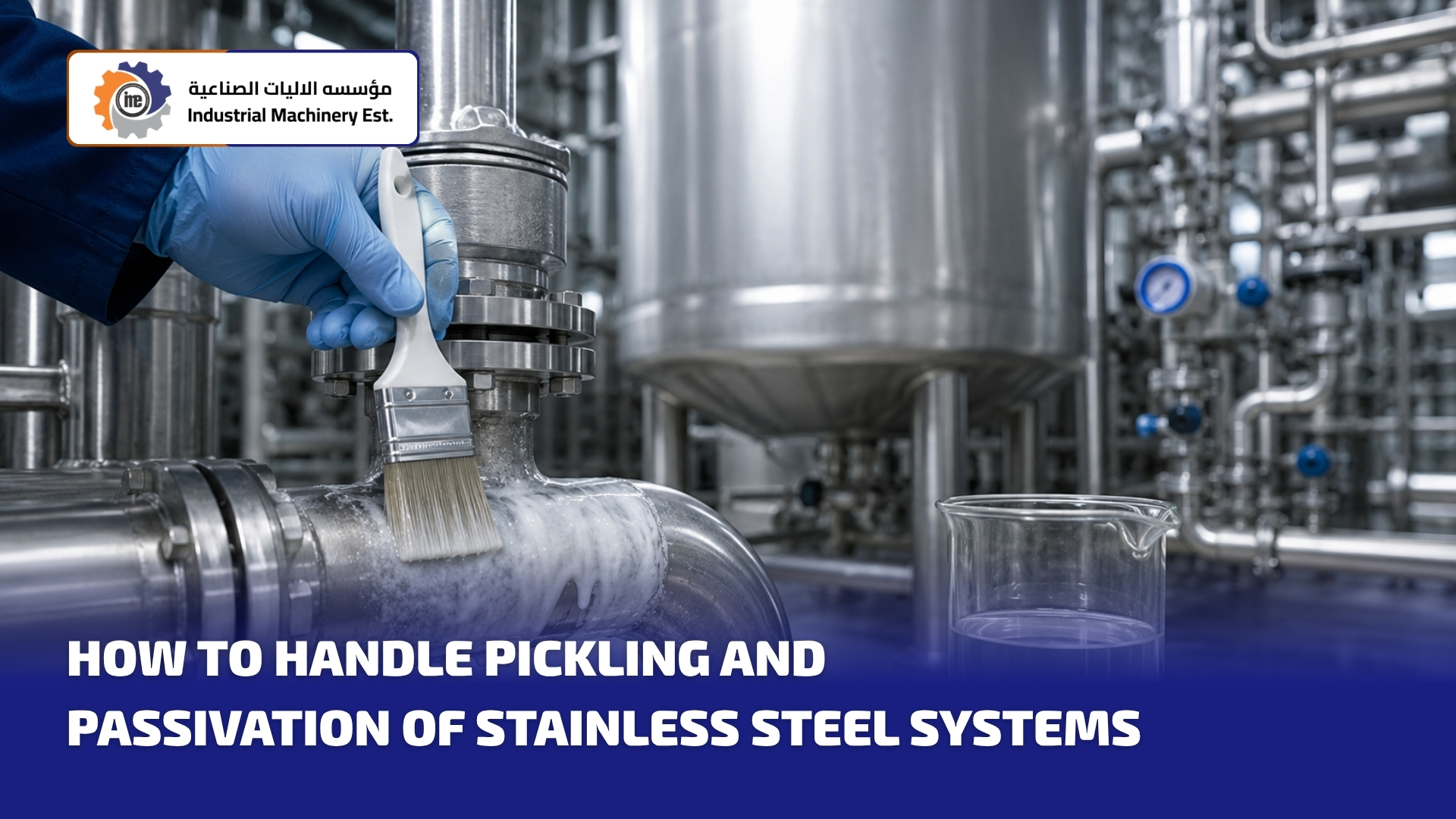
- Apply the pickling agent. Choose a paste, gel, or solution based on the grade of steel and surface condition.
- Watch the dwell time. Let it react long enough to remove scale, but avoid over-pickling, which attacks the base metal.
- Rinse thoroughly. This is the most critical step. Any leftover acid will keep corroding the surface and cause pitting later.
- Passivate. Apply nitric or citric acid treatment to rebuild the chromium oxide film.
- Final rinse and dry. Remove all residual acid and allow the surface to dry fully.
Choosing the Right Application Method
Different jobs call for different methods. Immersion suits smaller parts that fit in a tank. Spraying works on-site where dipping is impractical. Circulation is ideal for piping systems, since the pickling fluid is pumped through internal surfaces to reach scale inside the pipes. Brush-on pastes handle welds and tight spots without specialist training. Matching the method to the component improves results and reduces waste during the pickling and passivation of stainless steel systems.
Verifying the Results
Treatment is only finished once you confirm it worked. A common check is the Ferroxyl test, which reveals free iron as blue spots on the surface. Water-break tests and visual inspection for remaining heat tint also help. Proper verification protects your systems from hidden corrosion that may only appear months after commissioning.
Trusted Industrial Support in Saudi Arabia
Handling these acids safely and to standard often calls for an experienced partner. Industrial Machinery Est. is among the best industrial chemical cleaning providers in Saudi Arabia, delivering complete industrial support solutions backed by 30+ years of field expertise.
Serving petrochemical, oil and gas, refining, and power clients nationwide, the company counts several of the top Saudi companies among its trusted clients. From on-site pickling and passivation to full system cleaning, the team ensures your stainless steel assets stay protected and compliant.
Final Thoughts
The pickling and passivation of stainless steel systems is essential, not optional, for any facility that relies on corrosion resistance. By cleaning the surface, restoring the chromium layer, and verifying the result, you protect welds, prevent pitting, and extend equipment life.
Follow the right standards, choose the correct method, and partner with skilled specialists, and your stainless steel systems will perform reliably for years to come.