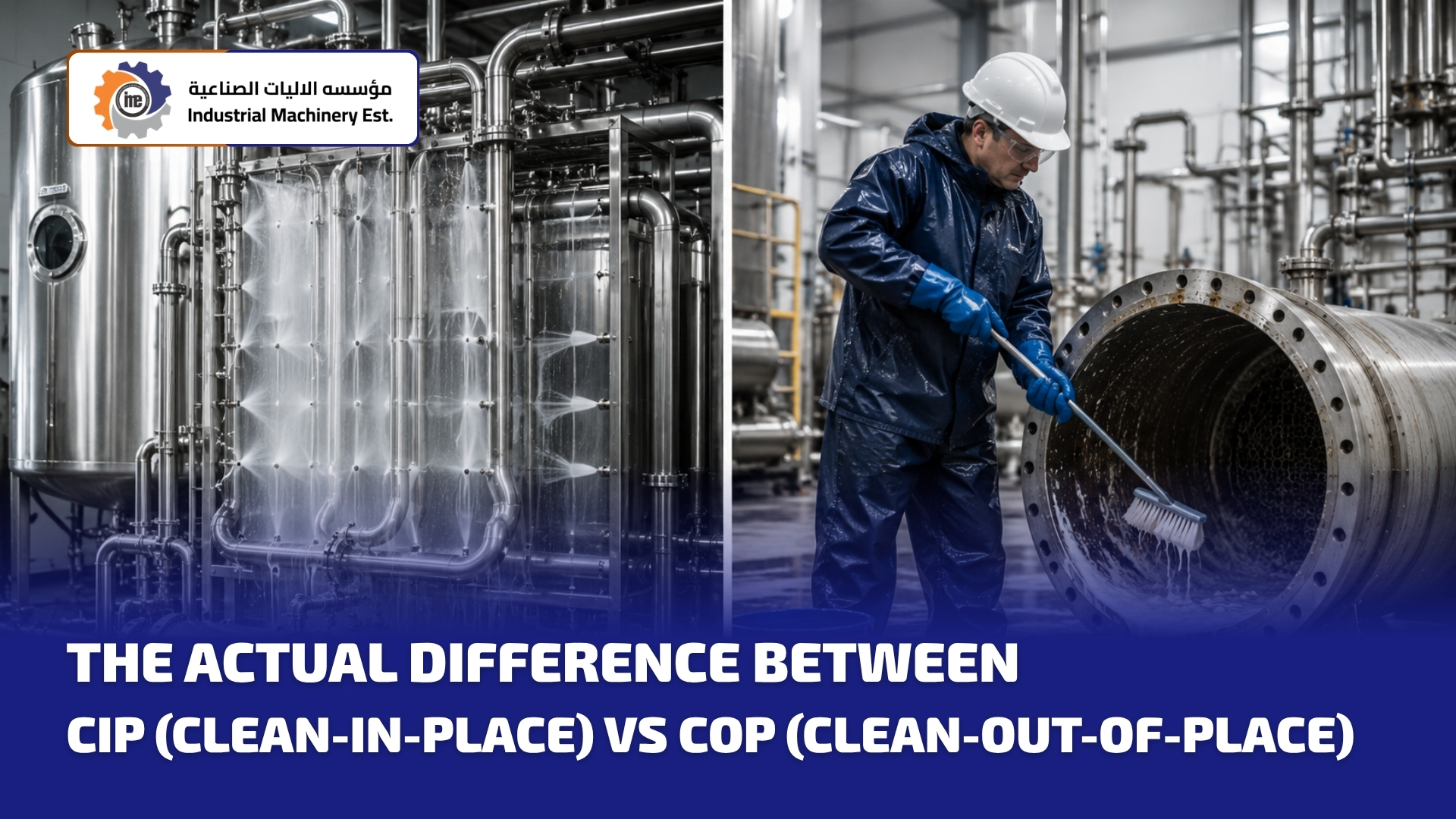
In our industries you will find dozens of people throwing around the terms CIP (Clean-in-Place) vs COP (Clean-out-of-Place), yet no one explains anything.
If you run or maintain industrial equipment, you already know the pain: a cleaning cycle that drags on too long, hidden downtime that quietly eats into production, components that never seem fully clean no matter how much chemical you pour through them, and the constant worry that a missed contaminant could trigger a costly recall or a failed inspection.
Choosing the wrong cleaning approach for the wrong equipment wastes water, chemicals, labour, and money.
We will break down the CIP vs COP debate in plain language, show you exactly when each method works best, explain the real costs and trade-offs, and help you decide which approach fits your facility. By the end, you will know how to clean smarter, not harder.
What Does CIP (Clean-in-Place) Actually Mean?
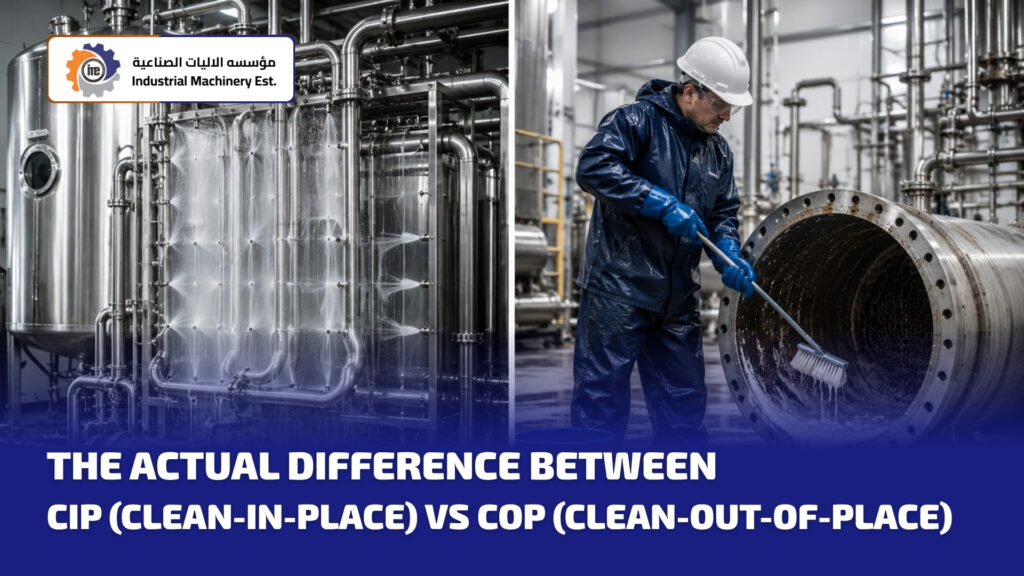
CIP, or clean-in-place, is a method of cleaning the interior surfaces of equipment without taking anything apart. Pipes, tanks, vessels, pumps, and filling lines stay exactly where they are while water and cleaning solution circulate through them.
A CIP system uses spray balls, nozzles, and circulating chemicals to dislodge soil and bacteria. Because nothing is disassembled, CIP is fast, automated, and ideal for large or fixed equipment that cannot be moved to a cleaning station.
What Does COP (Clean-out-of-Place) Actually Mean?
COP, or clean-out-of-place, takes the opposite approach. Equipment is disassembled and the individual parts are carried to a dedicated cleaning station, where they are cleaned in an immersion tank, a wash unit, or by hand.
This method suits smaller, complex components such as fittings, clamps, hoses, gaskets, impellers, and valves. These parts have tricky shapes that trap product and resist flow, so cleaning them separately ensures every surface gets proper attention.
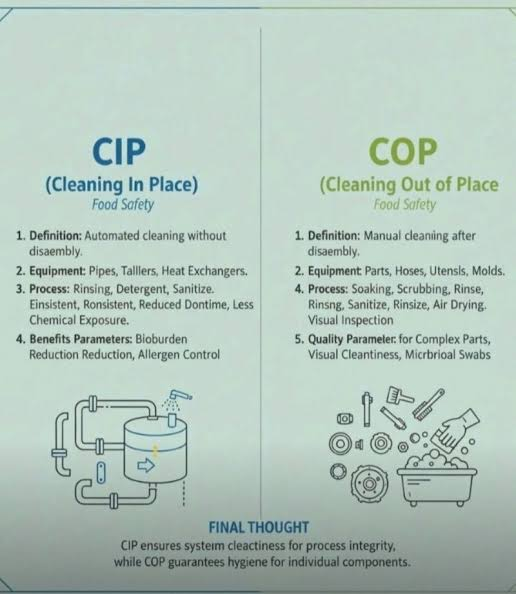
CIP vs COP: The Core Difference Explained Simply
The easiest way to remember the CIP (Clean-in-Place) vs COP (Clean-out-of-Place) difference is this: one cleans inside, the other cleans outside. CIP circulates solution through equipment that stays in place, while COP removes parts and cleans them elsewhere.
CIP is faster and more automated, reducing downtime and human error. COP is more hands-on and thorough for stubborn residues and awkward geometries. Most facilities do not pick one. They use both methods together, strategically.
Key Advantages of Each Method
Each approach brings its own strengths to the table. Here is how they compare:
CIP advantages:
- Faster cleaning with less downtime since no disassembly is needed
- Highly automated and repeatable, reducing human error
- Lower water and chemical use per cycle, often around 10% of tank volume
- Equipment can return to production quickly
COP advantages:
- More thorough for hard-to-reach parts and complex geometries
- Lower initial investment than a full CIP system
- Allows visual inspection of each part under proper lighting
- Permits high-foaming detergents that handle oily, water-insoluble residues
Things You Must Know About CIP vs COP
No method is perfect. CIP carries higher upfront costs because of its sensors, pumps, and control systems, and it may struggle to reach shadow zones inside complex parts. COP is more labour-intensive, uses more cleaning solution since parts are often fully submerged, and depends on operators following a strict procedure. Without a set routine, COP risks recontamination from overspray or improper stacking of cleaned parts. Understanding these trade-offs in the CIP vs COP decision protects both your product and your budget.
When Should You Use CIP vs COP?
Choosing between CIP (Clean-in-Place) vs COP (Clean-out-of-Place) comes down to your equipment, your budget, and your process time. Use CIP for smooth, self-contained equipment like tanks, long pipe runs, and pumps that are difficult to disassemble or reach by hand. Use COP for small fittings, hoses, clamps, and intricate parts that cannot be cleaned effectively in place. In a typical production line, operators disassemble the COP parts, prep the line for CIP, then run both processes at the same time to save valuable hours.
Trusted Industrial Cleaning Support in Saudi Arabia
Getting CIP vs COP right requires real expertise, the correct chemicals, and properly engineered equipment. Industrial Machinery Est. is recognized as the best industrial chemical cleaning provider in Saudi Arabia, delivering complete industrial support solutions tailored to each plant.
Serving the petrochemical, oil and gas, refining, and power sectors, the company has earned the trust of some of the top Saudi companies nationwide. With over 30 years of experience, Industrial Machinery Est. helps facilities clean smarter, cut downtime, and protect product integrity through expert chemical cleaning and CIP services.
Conclusion
The CIP vs COP question does not have a single winner. CIP keeps your fixed equipment clean quickly and automatically, while COP handles the small, complex parts that need hands-on care.
Knowing which method to apply, and when to combine them, is the key to efficient, reliable, and cost-effective cleaning. Match the right approach to the right equipment, and your facility will reward you with cleaner results, less waste, and stronger peace of mind.